What Is Wound Debridement and When Is It Needed?
Wound debridement is an essential medical procedure that removes dead, damaged, or infected tissue from a wound. At Optimum Wound Care, we perform this vital treatment to speed up healing and prevent complications.
Types of Wound Debridement
We use several methods of wound debridement, each appropriate for different wound types and patient conditions:
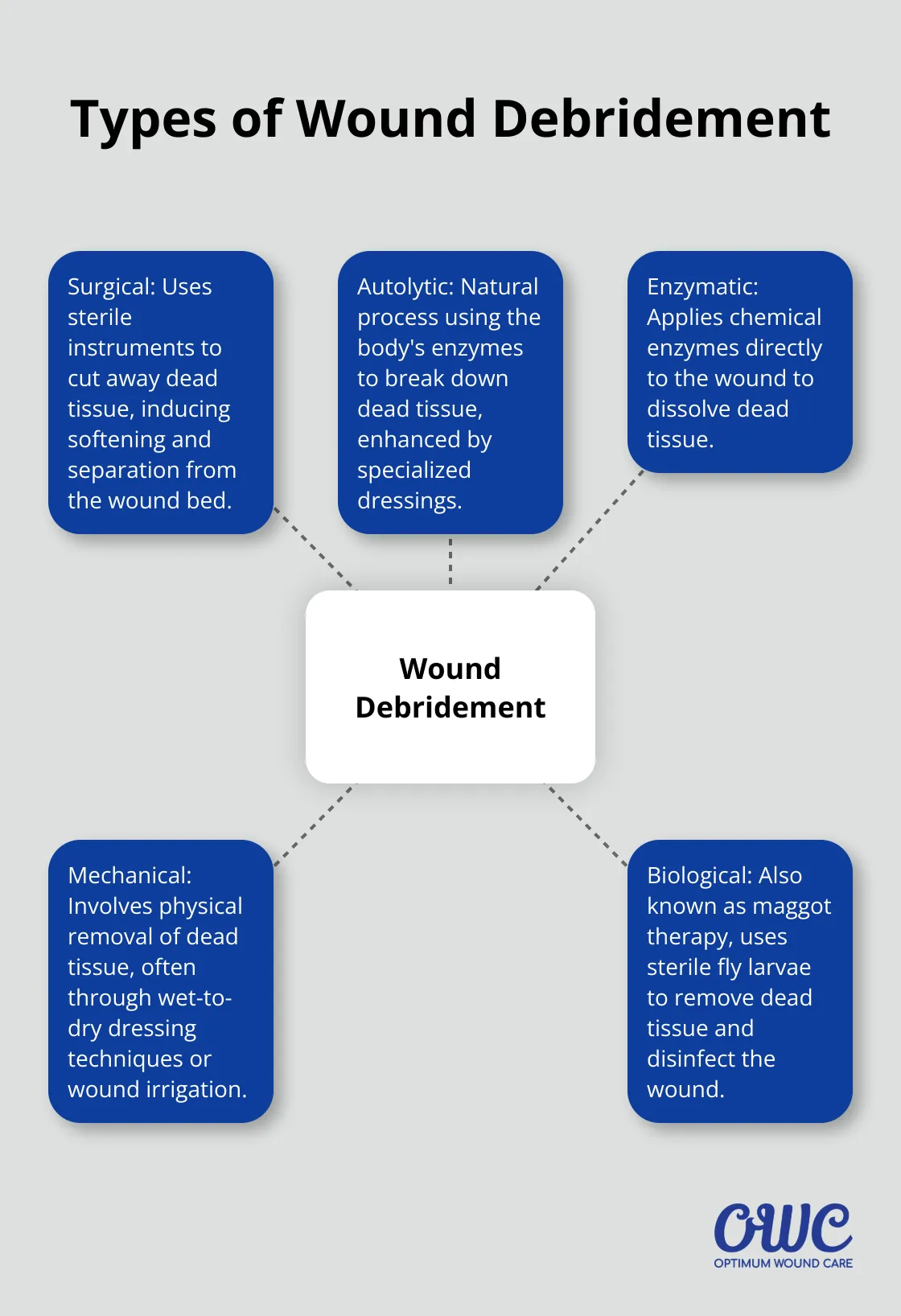
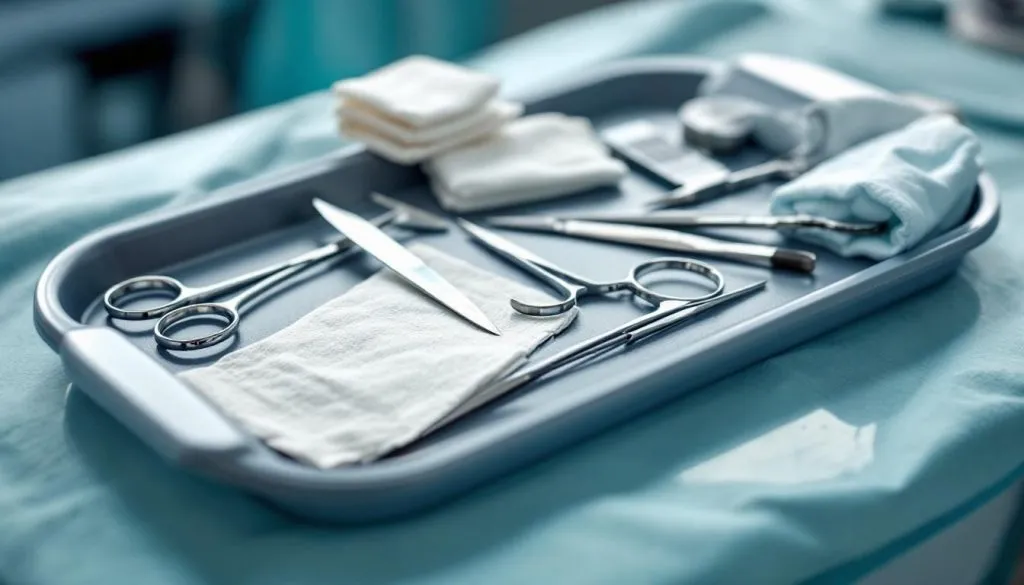
- Surgical Debridement: This method uses sterile instruments to cut away dead tissue. This type of debridement induces softening of the necrotic tissue and eventual separation from the wound bed.
- Autolytic Debridement: This natural process uses the body’s enzymes to break down dead tissue. Specialized dressings enhance it by keeping the wound moist.
- Enzymatic Debridement: This technique applies chemical enzymes directly to the wound to dissolve dead tissue.
- Mechanical Debridement: This involves physical removal of dead tissue, often through wet-to-dry dressing techniques or wound irrigation.
- Biological Debridement: Also known as maggot therapy, this method uses sterile fly larvae to remove dead tissue and disinfect the wound.
The Importance of Debridement
Proper wound debridement is important for several reasons:
- Infection Prevention: Dead tissue can harbor bacteria, which increases infection risk. Simple mechanical debridement with cotton pads can significantly reduce bacterial colonisation without relevant side effects.
- Accelerated Healing: The removal of dead tissue allows new, healthy tissue to grow.
- Improved Assessment: Debridement allows healthcare providers to see the true extent of the wound, which enables more accurate treatment planning.
- Reduced Scarring: Proper debridement can lead to less scarring as the wound heals.
Advanced Techniques at Optimum Wound Care
At Optimum Wound Care, we use advanced debridement techniques tailored to each patient’s needs. Our experienced team, led by Wound Specialist Mosayeb “Moe” Karimi, ensures that we perform each debridement procedure with the utmost care and precision.
Now that we understand what wound debridement is and why it’s important, let’s explore when this procedure becomes necessary.
When Is Wound Debridement Necessary?
Types of Wounds That Typically Require Debridement
Certain wounds often need debridement for proper healing:
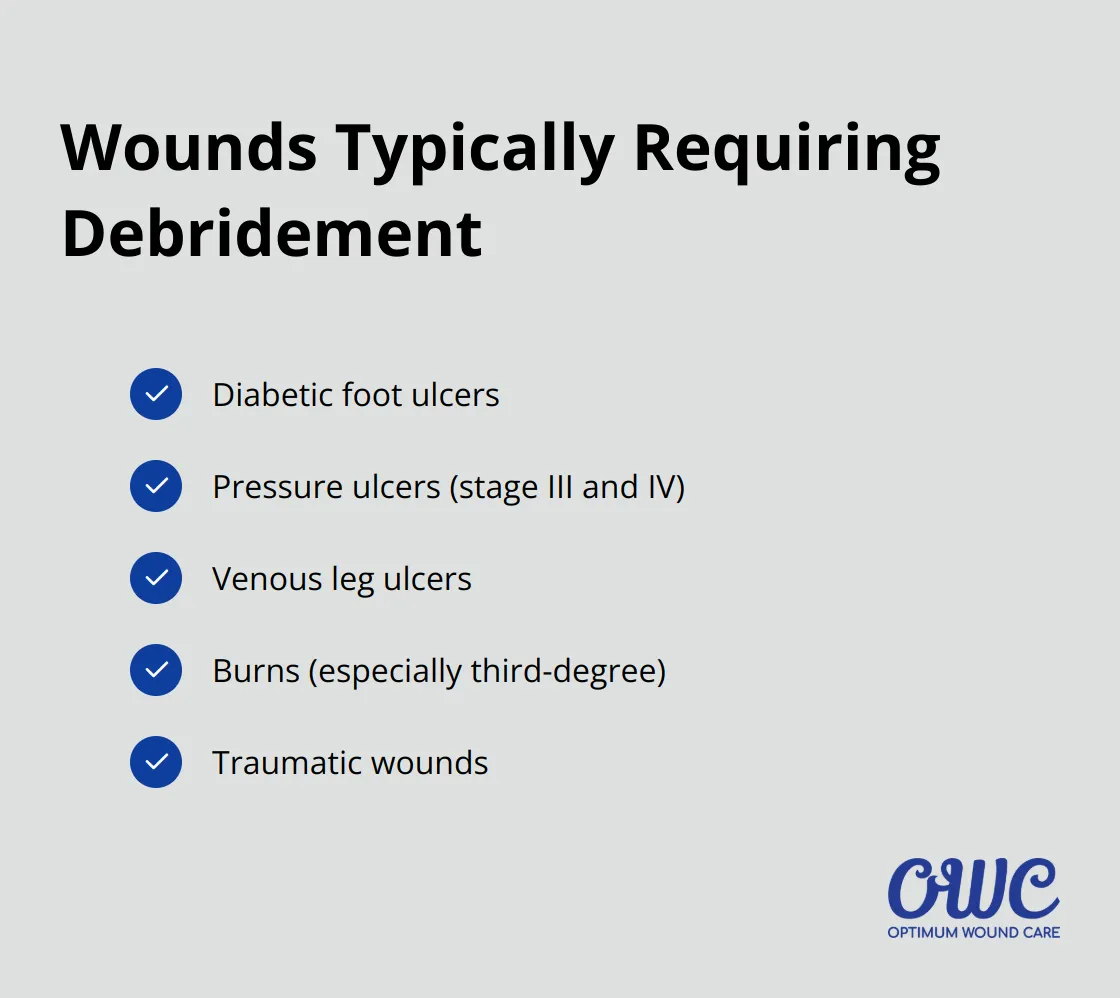
- Diabetic foot ulcers
- Pressure ulcers: The National Pressure Ulcer Advisory Panel recommends debridement for most stage III and IV pressure ulcers.
- Venous leg ulcers: Research indicates that debridement can cut healing time by up to 30% in these cases.
- Burns: Third-degree burns often require surgical debridement to remove dead tissue and prevent infection.
- Traumatic wounds: These may contain foreign debris or devitalized tissue that needs removal.
Signs Indicating the Need for Debridement
Identifying when a wound needs debridement is essential. Key signs include:
- Necrotic tissue: The tissue becomes discolored, there is fluid and exudative material present, and it becomes fodder for bacterial colonization.
- Slough: Yellow or white stringy dead tissue in the wound can impede healing.
- Foul odor: This often indicates bacterial colonization in dead tissue.
- Lack of healing progress: If a wound hasn’t improved in two weeks, debridement might be necessary.
- Infection signs: Redness, swelling, increased pain, or fever can indicate an infection that may require debridement.
Risks of Not Performing Debridement When Needed
Failing to debride a wound when necessary can lead to serious complications:
- Increased infection risk: Patients affected by necrotizing soft tissue infections represent a distinctive subset within the surgical site infection population, posing a grave threat to health.
- Delayed healing: The American Journal of Surgery reported that non-debrided wounds took on average 25% longer to heal.
- Chronic wound formation: Without proper debridement, acute wounds can become chronic, leading to long-term health issues.
- Increased healthcare costs: The Journal of Wound Care estimated that delayed debridement can increase treatment costs by up to 50%.
- Amputation risk: In severe cases (especially with diabetic foot ulcers), delayed debridement can lead to amputation.
At Optimum Wound Care, we emphasize the importance of timely and appropriate debridement. Our experienced team assesses each wound individually to determine the best course of action. We use advanced techniques and technologies to ensure effective debridement with minimal discomfort to the patient.
Now that we’ve explored when wound debridement becomes necessary, let’s examine the actual process of wound debridement in more detail.
How Is Wound Debridement Performed?
At Optimum Wound Care, we follow a meticulous process for wound debridement to ensure the best possible outcomes for our patients. Our approach combines thorough assessment, precise execution, and comprehensive follow-up care.
Pre-Debridement Assessment
Before we begin the debridement process, our wound care specialists conduct a detailed assessment. This evaluation includes identifying the wound location and determining the cause of the wound. We also assess the patient’s overall health, including factors like circulation, nutrition status, and any underlying conditions that might affect healing.
During this stage, we use advanced diagnostic tools to get a clear picture of the wound. For instance, we might employ high-frequency ultrasound imaging to determine the extent of tissue damage or use specialized probes to measure wound depth. This thorough assessment helps us choose the most appropriate debridement method and tailor our approach to each patient’s unique needs.
The Debridement Procedure
Once we complete our assessment, we proceed with the debridement. The exact steps vary depending on the chosen method, but here’s a general overview of what patients can expect:
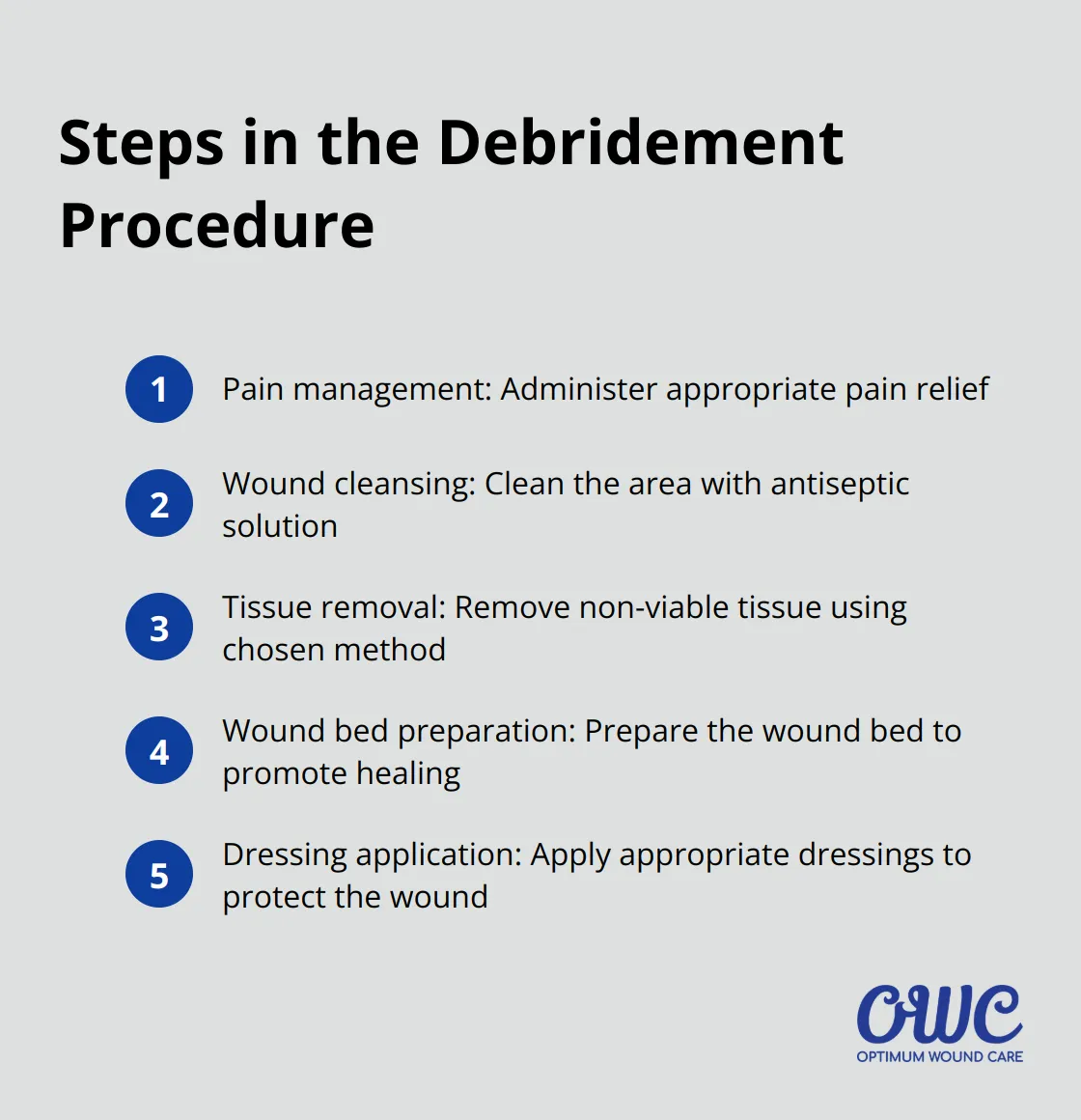
- Pain management: We ensure patient comfort by administering appropriate pain relief. This might involve local anesthesia for smaller wounds or more extensive anesthesia for larger areas.
- Wound cleansing: We thoroughly clean the wound area with antiseptic solution to reduce the risk of infection.
- Tissue removal: Using the chosen debridement method, we carefully remove non-viable tissue. For surgical debridement, this involves the use of sterile instruments to cut away dead tissue. With enzymatic debridement, we apply specialized ointments to break down the tissue.
- Wound bed preparation: After we remove the non-viable tissue, we prepare the wound bed to promote healing. This might involve additional cleaning or application of growth-promoting substances.
- Dressing application: We apply appropriate dressings to protect the wound and create an optimal healing environment.
Throughout the procedure, we continuously monitor the patient’s comfort and vital signs. Our team at Optimum Wound Care is trained to respond quickly to any complications that may arise during debridement.
Post-Debridement Care
After the debridement procedure, proper follow-up care is essential for optimal healing. We provide our patients with detailed instructions for wound care at home, including how to change dressings and recognize signs of potential complications.
We schedule regular follow-up appointments to monitor the wound’s progress. During these visits, we assess healing, change dressings, and adjust the treatment plan as needed. If additional debridement sessions are necessary, we plan these based on the wound’s response to treatment.
Patient education is a key component of our post-debridement care. We teach patients and their caregivers about proper nutrition to support healing, techniques for preventing pressure on the wound, and strategies for managing pain.
At Optimum Wound Care, we understand that wound healing is a complex process that extends beyond the debridement procedure itself. Our comprehensive approach (which includes ongoing support and care) ensures that patients receive the support they need for optimal recovery.
Final Thoughts
Wound debridement plays a vital role in preventing infections, accelerating recovery, and improving patient outcomes. Various types of wounds may require debridement, and recognizing the signs that indicate its necessity is essential for timely intervention. Professional assessment determines the most appropriate debridement method and ensures its safe and effective execution.
At Optimum Wound Care, we understand the complexities of wound management and the importance of tailored treatment plans. Our team of experienced specialists, led by Wound Specialist Mosayeb “Moe” Karimi, provides expert care for patients in Louisville and surrounding areas. We offer comprehensive wound care services, including advanced debridement techniques (combining clinical expertise with cutting-edge technologies).
Proper wound care prevents complications and ensures optimal recovery. If you or a loved one have a wound that’s not healing as expected, seek professional help. We at Optimum Wound Care commit to guide you through every step of the wound healing process, from initial assessment to post-debridement care and beyond.
