How to Use Vacuum Pump Wound Therapy for Healing
At OWC Center, we’re committed to exploring innovative medical treatments that can transform patient care. Vacuum pump wound therapy is a groundbreaking technique that’s revolutionizing the way we approach wound healing.
This advanced treatment method uses negative pressure to promote faster healing and reduce the risk of infection. In this post, we’ll dive into the details of vacuum pump wound therapy, its benefits, and how it’s applied to various types of wounds.
What is Vacuum Pump Wound Therapy?
Definition and Mechanism
Vacuum pump wound therapy, also known as negative pressure wound therapy (NPWT), is a cutting-edge treatment method that uses controlled suction to promote faster healing of complex wounds. This innovative technique has transformed the approach to wound management at Optimum Wound Care.
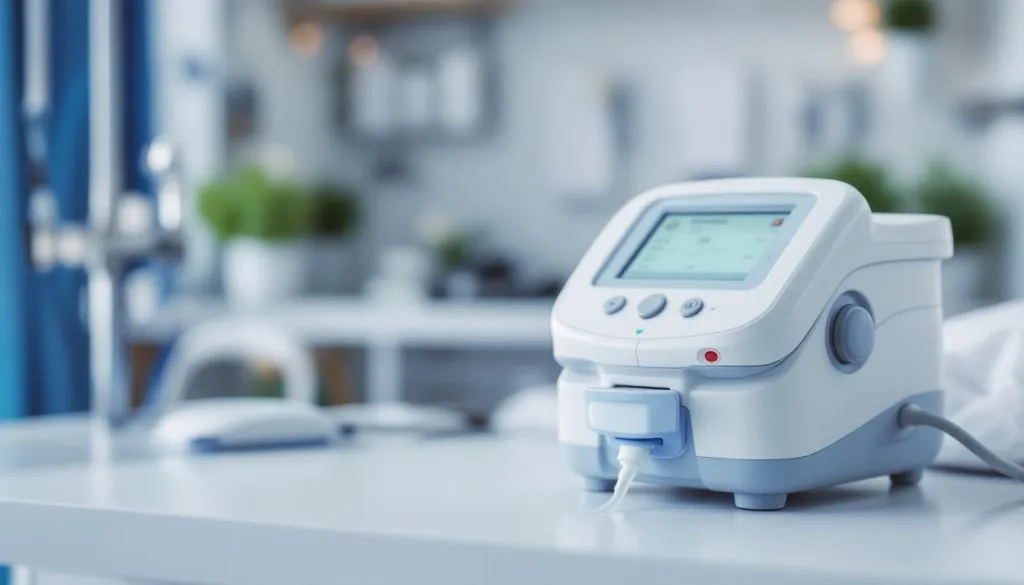
NPWT involves the application of a specialized dressing to the wound, which is then connected to a vacuum pump. This pump creates negative pressure, which effectively draws out excess fluid and debris from the wound bed. The process stimulates blood flow, reduces swelling, and encourages the formation of new tissue.
Impressive Results
A study published in the Journal of Wound Care reports that NPWT can significantly improve wound healing outcomes compared to conventional methods. This improvement in healing rates has established NPWT as a game-changer in wound management.
Suitable Wound Types
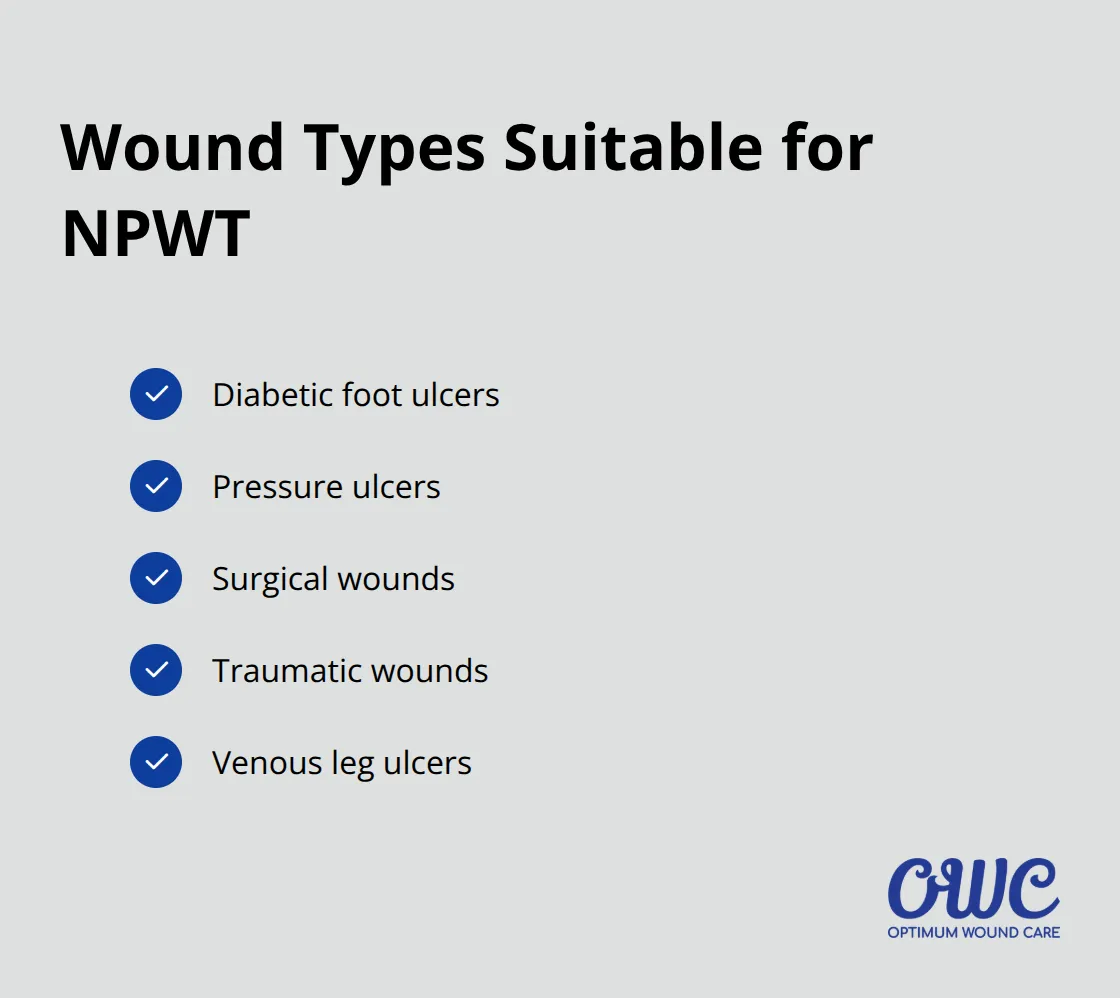
At Optimum Wound Care, NPWT has proven successful for various wound types, including:
- Diabetic foot ulcers
- Pressure ulcers
- Surgical wounds
- Traumatic wounds
- Venous leg ulcers
For example, a recent patient with a large diabetic foot ulcer (resistant to traditional therapies for months) showed a significant reduction in wound size and improvement in tissue quality after NPWT treatment.
Key Benefits of NPWT
One of the most significant advantages of NPWT is its ability to create an optimal healing environment. The negative pressure not only removes excess fluid but also:
- Reduces bacterial load (lowering the risk of infection)
- Promotes granulation tissue formation
- Enhances blood flow to the wound area
- Decreases edema in surrounding tissues
A recent study found that NPWT significantly lowers surgical site infection rates, reduces wound dehiscence, and shortens hospital stays, particularly in certain patient groups.
Expert Application
At Optimum Wound Care, NPWT has become an integral part of the comprehensive wound management approach. The experienced team, led by Wound/Ostomy Specialist Mosayeb “Moe” Karimi, carefully assesses each patient to determine if NPWT is the right choice for their specific wound type and overall health condition.
As we move forward, it’s important to understand the process of applying this innovative therapy. The next section will outline the steps involved in implementing NPWT, from initial wound assessment to ongoing maintenance.
How to Apply Vacuum Pump Wound Therapy
At Optimum Wound Care, we apply vacuum pump wound therapy through a meticulous process, ensuring optimal results for our patients. This process involves several critical steps, each tailored to the individual’s needs and wound characteristics.
Initial Wound Assessment
Before applying vacuum pump therapy, a thorough wound assessment is necessary. Our specialist, Mosayeb “Moe” Karimi, MSN, FNP, WOC, conducts a comprehensive evaluation. He considers factors such as wound size, depth, location, and the presence of any underlying conditions. This assessment helps determine if vacuum pump therapy is the most suitable treatment option.
During this stage, we take precise measurements and photographs of the wound. These serve as a baseline for tracking progress throughout the treatment. Accurate initial documentation significantly improves our ability to adjust treatment plans as needed.
Wound Bed Preparation
Proper wound bed preparation is essential for the success of vacuum pump therapy. This step involves thorough cleansing of the wound and surrounding skin. We use sterile saline solution to remove any debris or exudate. If necessary, we perform debridement to remove non-viable tissue, which can impede healing.
Our team pays special attention to the periwound area, ensuring it’s dry and free from any potential irritants. This careful preparation minimizes the risk of skin maceration and enhances the effectiveness of the vacuum seal.
Dressing Application
The application of the specialized dressing is a critical step in the process. We use sterile foams for dressing, as they provide an even distribution of negative pressure over the whole wound bed. The dressing is cut to fit the wound precisely, avoiding overlap onto healthy skin.
A key tip from our experience: when dealing with deeper wounds, we often use multiple layers of foam, ensuring the dressing reaches all areas of the wound bed. This technique promotes even distribution of negative pressure and more effective fluid removal.
After placing the dressing, we apply a transparent film over it, creating an airtight seal. This seal is essential for maintaining the negative pressure environment. We take extra care to smooth out any wrinkles or folds in the film, as these can lead to air leaks and reduce therapy effectiveness.
Vacuum Pump Setup
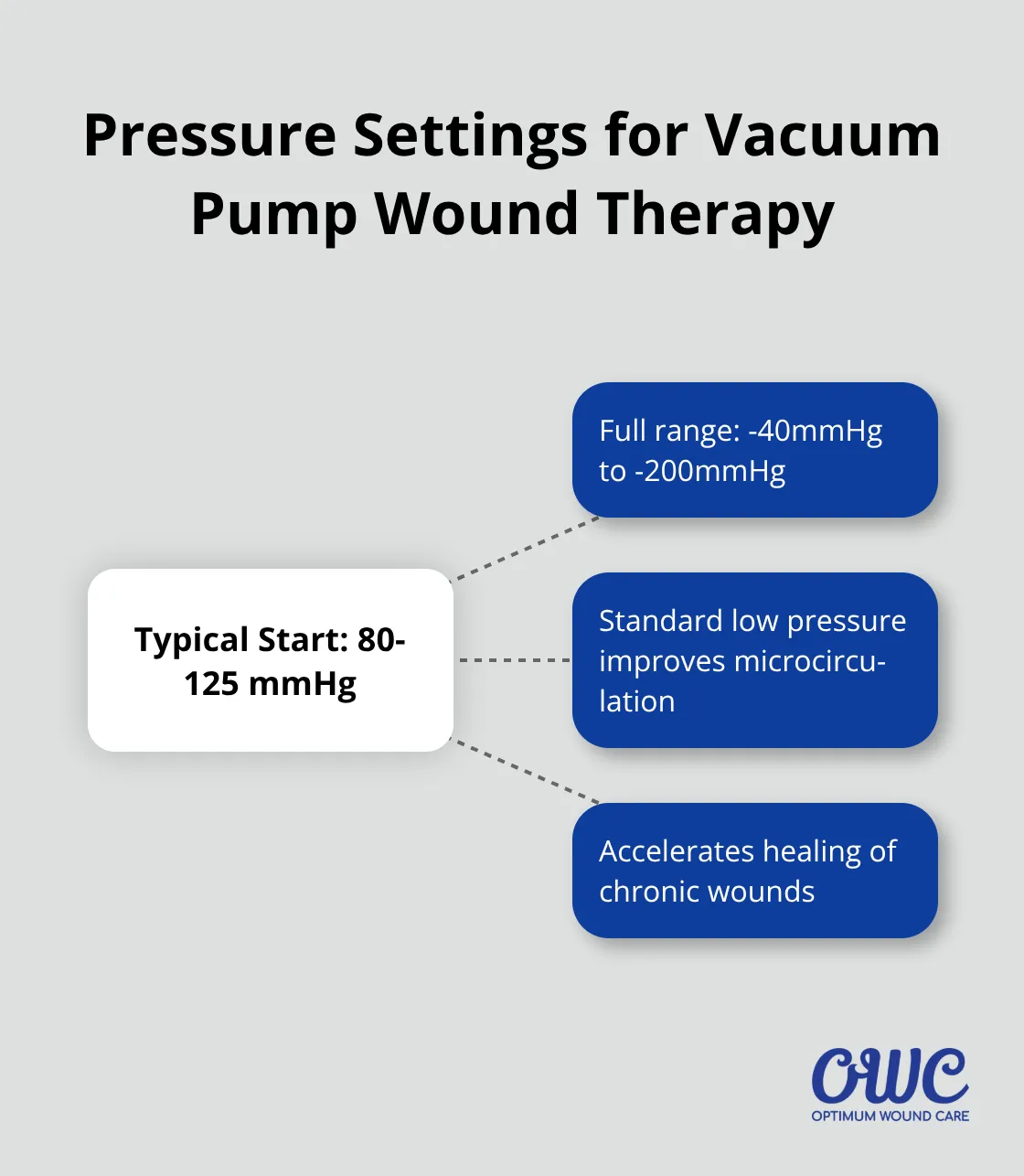
Once the dressing is securely in place, we connect it to the vacuum pump. At Optimum Wound Care, we use state-of-the-art pumps that allow for precise pressure control. The pressure settings for vacuum pump wound therapy can range from -40mmHg to -200mmHg. Typically, we start with a pressure of 80-125 mmHg, as this standard low pressure could improve microcirculation and accelerate the healing process of chronic wounds.
We find that educating patients about the pump’s operation is essential for treatment success (especially for those continuing therapy at home). We provide clear instructions on how to operate the device, recognize alarm signals, and troubleshoot common issues.
Ongoing Monitoring and Maintenance
Regular monitoring is vital throughout the treatment period. We schedule follow-up appointments every 48 to 72 hours to assess wound progress and change the dressing. During these visits, we evaluate the wound for signs of healing, such as decreased size or improved tissue quality.
Our team also checks for any potential complications, such as signs of infection or skin irritation around the wound edges. We have developed a protocol for addressing these issues promptly, ensuring they don’t interfere with the healing process.
Maintenance of the vacuum pump system is equally important. We instruct patients on how to keep the device clean and functioning correctly. This includes regular checks of the tubing for kinks or blockages and ensuring the canister is emptied when necessary.
The success of vacuum pump wound therapy largely depends on the careful application and monitoring process. In the next section, we will explore the benefits and potential risks associated with this innovative treatment method.
Vacuum Pump Wound Therapy Benefits and Risks
At Optimum Wound Care, we have observed the transformative effects of vacuum pump wound therapy firsthand. This innovative treatment offers significant advantages, but it’s important to understand both its benefits and potential risks.
Accelerated Healing
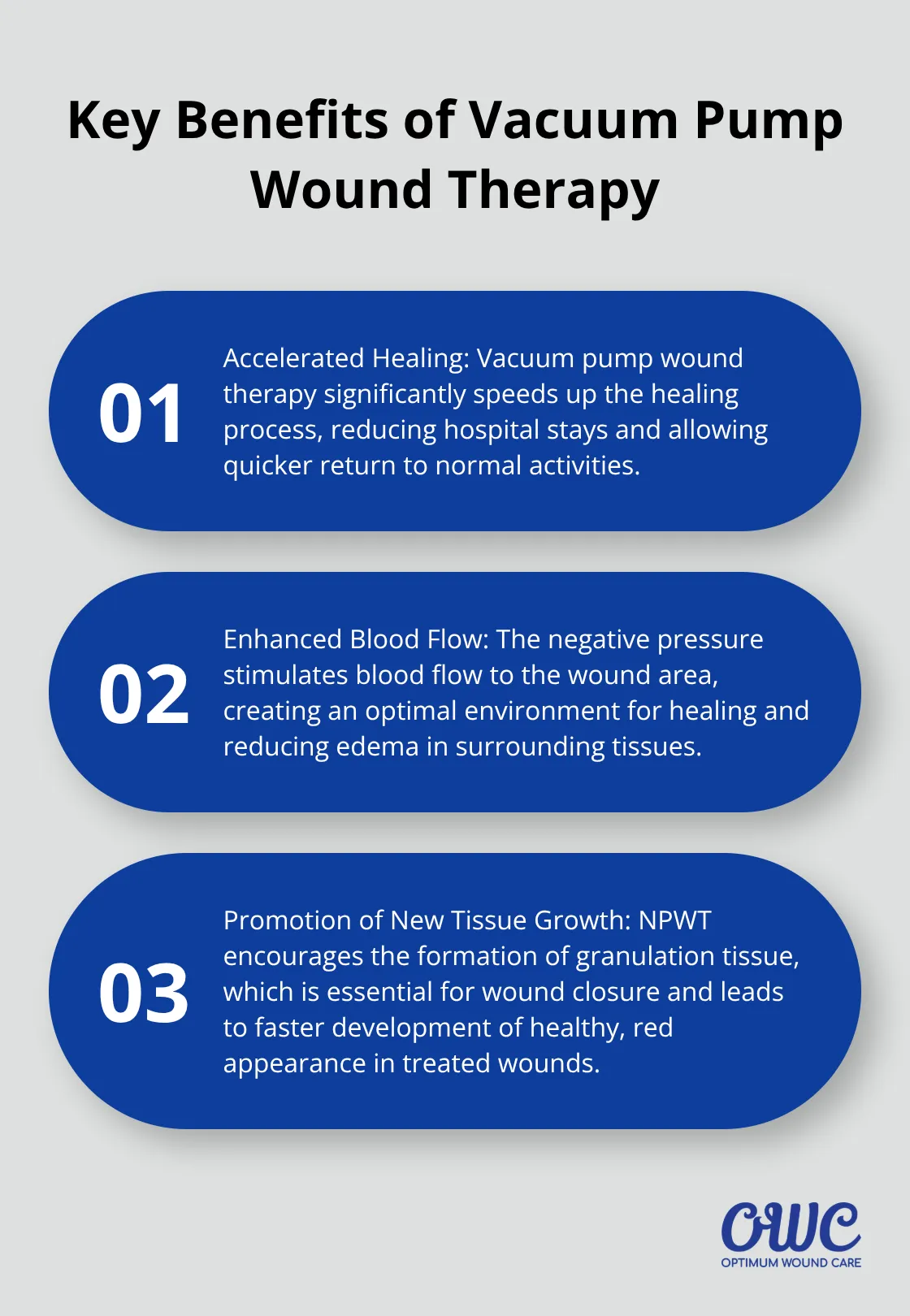
Vacuum pump wound therapy speeds up the healing process significantly. A study found that VAC therapy decreases the time to complete wound healing, hastens granulation tissue formation, and reduces the ulcer area compared to conventional treatments. This faster healing translates to shorter hospital stays and quicker return to normal activities for patients.
Infection Control
The therapy’s effect on infection risk is not as clear-cut as previously thought. While it was believed that NPWT creates an inhospitable environment for bacteria, recent research suggests there is no strong evidence that NPWT reduces bacterial colonization as a direct result of negative pressure at the wound bed.
Enhanced Blood Flow and Tissue Growth
One of the most remarkable aspects of vacuum pump wound therapy is its ability to stimulate blood flow and promote new tissue growth. The negative pressure encourages the formation of granulation tissue, which is essential for wound closure. Wounds treated with NPWT often develop a healthy, red appearance much faster than those treated with traditional methods.
A recent case at our clinic involved a patient with a large venous leg ulcer. After just two weeks of NPWT, we observed a significant increase in granulation tissue coverage, which accelerated the healing process.
Potential Complications
While the benefits of vacuum pump wound therapy are substantial, it’s not without risks. Patients may experience pain or discomfort (especially during dressing changes). We always ensure proper pain management protocols are in place to minimize this issue.
In rare cases, bleeding can occur, particularly in patients on anticoagulants. Our team carefully assesses each patient’s medical history and monitors for any signs of excessive bleeding during treatment.
Skin irritation around the wound edges is another potential complication. We have found that using protective barriers and adjusting the dressing technique can significantly reduce this risk. Our specialist, Mosayeb “Moe” Karimi, has developed a specific protocol for applying protective films that has decreased skin irritation incidents in our clinic.
Limitations and Contraindications
It’s important to note that NPWT is not suitable for all wound types. We avoid using it on malignant wounds, untreated osteomyelitis, or exposed blood vessels. A thorough assessment by a wound care specialist is necessary before starting this therapy.
Final Thoughts
Vacuum pump wound therapy has revolutionized modern wound care. This innovative treatment accelerates healing, promotes tissue growth, and enhances blood flow to wound sites. Professional guidance proves essential throughout the treatment process to ensure optimal outcomes and minimize potential risks.
Optimum Wound Care remains dedicated to providing cutting-edge wound care solutions. Our experienced team (led by Wound/Ostomy Specialist Mosayeb “Moe” Karimi) carefully assesses each case, applies therapy with precision, and monitors progress continuously. We strive to improve healing outcomes and quality of life for our patients.
The future of vacuum pump wound therapy looks promising. Ongoing research explores new applications and refines existing techniques. We anticipate improvements in device portability and advancements in dressing materials to further enhance effectiveness and patient comfort. Optimum Wound Care will continue to incorporate these developments, ensuring our patients benefit from the latest in wound care technology.
