
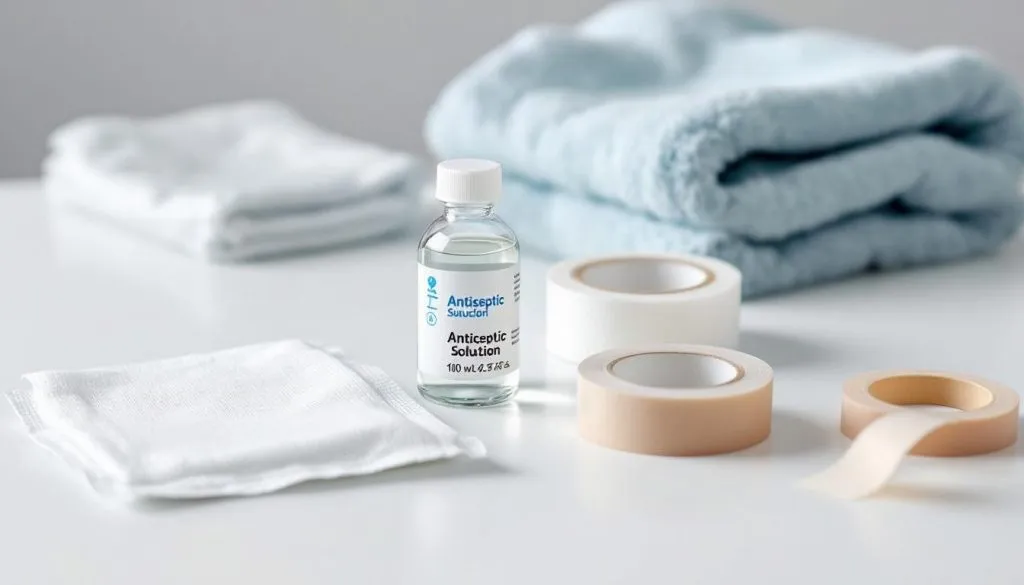
How to Properly Care for Surgical Wounds After Discharge
At Optimum Wound Care (OWC), we understand the importance of proper care for post-surgical wounds after hospital discharge. Proper wound care is vital for a smooth recovery and to prevent complications.
This guide will provide you with essential steps to care for your surgical wound at home, recognize potential issues, and know when to seek medical attention.
Understanding Surgical Wounds
Types of Surgical Wounds
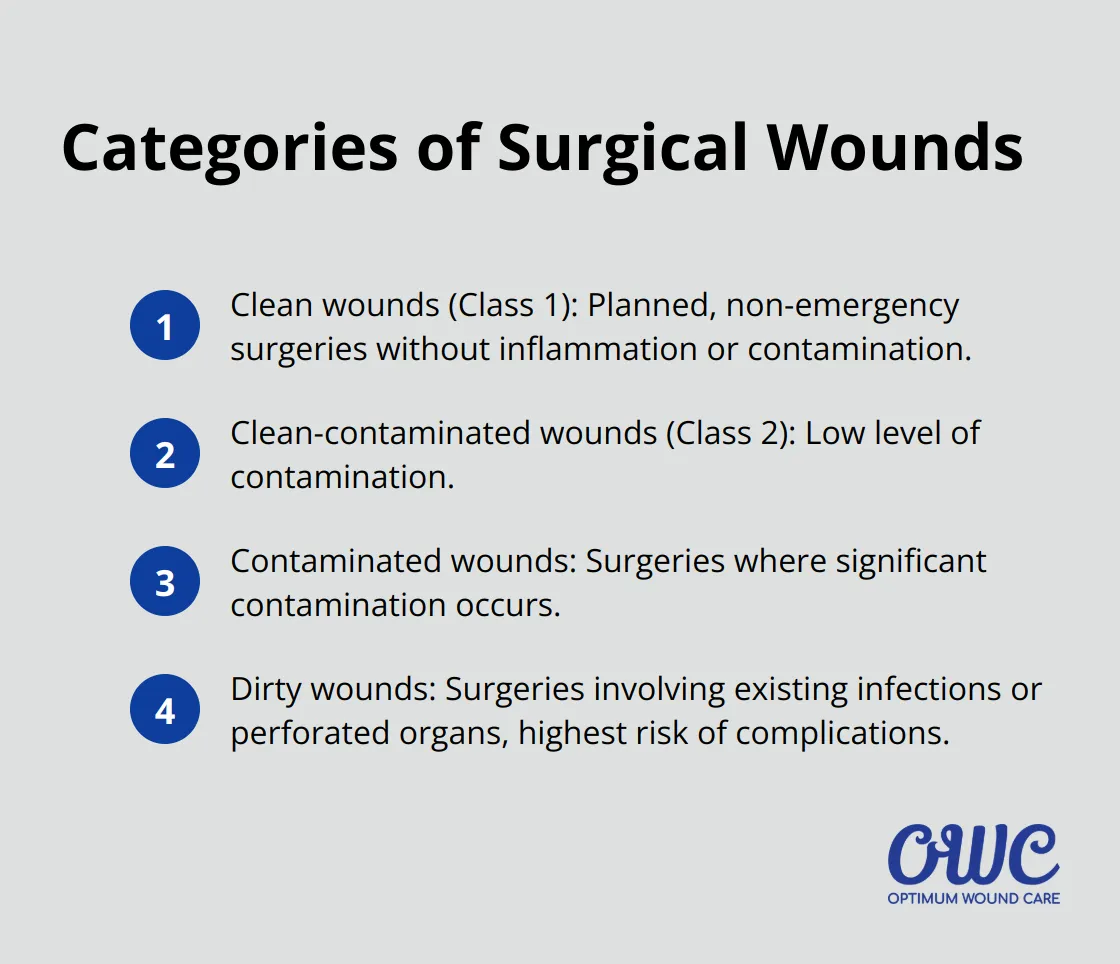
Surgical wounds result from intentional incisions made during medical procedures. They vary in size, depth, and location depending on the type of surgery performed. Surgical wounds fall into four categories based on their level of contamination:
The Healing Process
Wound healing typically progresses through four stages:
- Hemostasis
- Inflammation
- Proliferation
- Remodeling
Signs of Proper Healing
Monitoring your surgical wound helps detect any issues early. Signs of proper healing include:
- Gradual decrease in pain and swelling
- Scab formation over the incision site
- Eventual fading of redness around the wound
- No unusual discharge or odor
If you notice any pain, swelling, warmth around the site or fluid oozing out of your wound, visit a healthcare provider, as you may have an infection.
Every patient heals differently. Factors like age, nutrition, and overall health can affect healing time. Always follow your healthcare provider’s specific instructions for optimal recovery.
As we move forward, let’s explore the essential steps for caring for your surgical wound at home to ensure a smooth recovery and prevent complications.
Home Care Essentials for Surgical Wounds
Maintain Cleanliness and Dryness
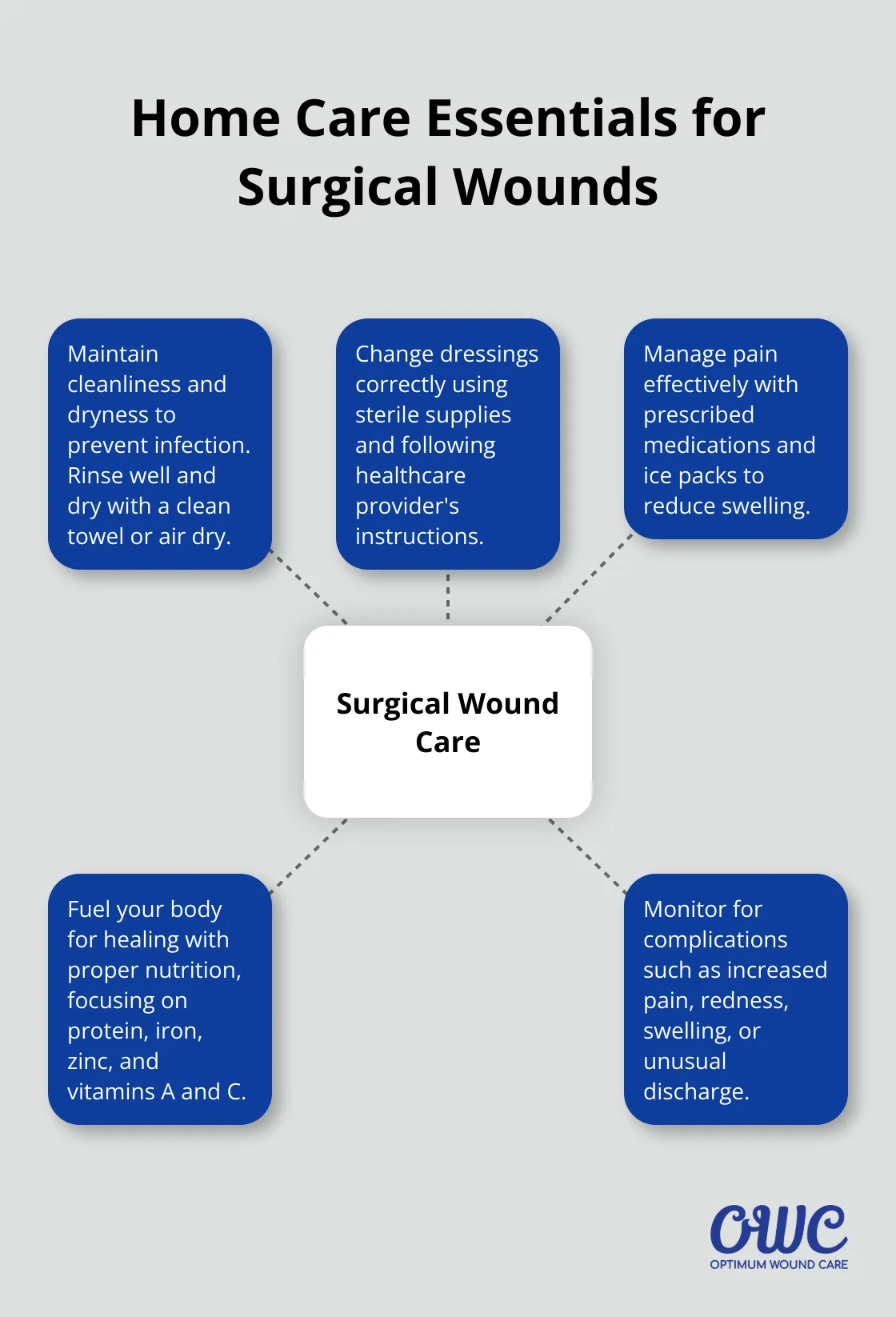
Clean and dry surgical wounds prevent infection. Rinse well. Dry with a clean towel or air dry. Proper handwashing is the best way to avoid spreading germs to help prevent infection. Don’t soak the wound in water, as this increases infection risk.
Change Dressings Correctly
Proper dressing changes impact healing significantly. Use sterile supplies and follow your healthcare provider’s instructions. Starting from the top of the dressing, hold your skin and peel the edge of the dressing away from the skin. Do it slowly and if needed use some lukewarm water. Inspect the wound for infection signs. Clean the area as directed. Apply the new dressing securely, but not too tight. Dressing change frequency varies (follow your specific care plan).
Manage Pain Effectively
Control discomfort for a comfortable recovery. Take prescribed pain medications as directed. Use ice packs to reduce swelling and pain, especially in the first 48 hours post-surgery. Apply ice for 20 minutes at a time (place a thin cloth between the ice and your skin). As healing progresses, perform gentle movement and stretching exercises (approved by your healthcare provider) to alleviate stiffness and promote circulation.
Fuel Your Body for Healing
Proper nutrition accelerates wound healing. After surgery or an injury, tailor your diet to focus on healing foods. Protein, iron, zinc and vitamins A and C all help wounds to heal. Drink plenty of water to stay hydrated. Consult a nutritionist for personalized advice if you have dietary restrictions or concerns.
Monitor for Complications
Watch for signs of infection or other complications. These include increased pain, redness, swelling, warmth around the wound, fever, or unusual discharge. If you notice any of these symptoms, contact your healthcare provider immediately.
As we move forward, it’s important to understand how to recognize and prevent potential complications that may arise during your recovery process. Let’s explore the warning signs and preventive measures in the next section.
Spotting and Preventing Wound Complications
Red Flags for Infection
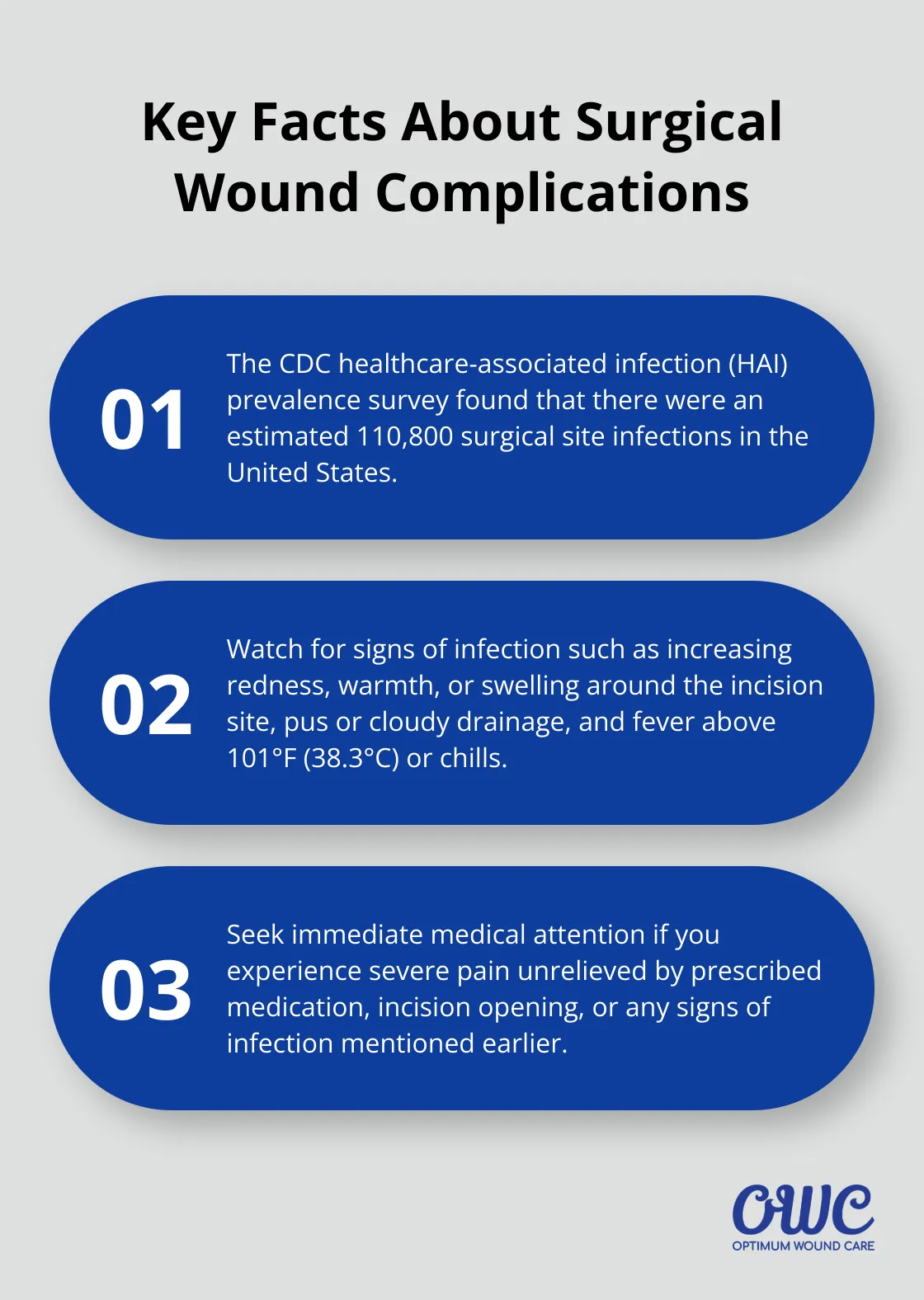
Your surgical wound requires vigilant monitoring. Watch for increasing redness, warmth, or swelling around the incision site. Pus or cloudy drainage (especially with an unpleasant odor) signals a potential problem. Fever (above 101°F or 38.3°C) or chills might indicate an infection. The CDC healthcare-associated infection (HAI) prevalence survey found that there were an estimated 110,800 surgical site infections.
When to Seek Medical Attention
Don’t delay if you suspect a problem. Contact your healthcare provider immediately if you experience:
- Severe pain unrelieved by prescribed medication
- Incision opening
- Any signs of infection mentioned earlier
Protecting Your Recovery
Promote healing and prevent setbacks by avoiding activities that stress your wound. This typically means:
- No heavy lifting (usually nothing over 10 pounds) for at least 4-6 weeks post-surgery
- No smoking (it reduces blood flow and can delay healing by up to 60%, according to research in the Annals of Plastic Surgery)
- Staying out of swimming pools, hot tubs, and natural bodies of water until your wound fully heals
The Importance of Follow-up Appointments
Your post-operative appointments play a crucial role in recovery. These check-ups allow your healthcare provider to assess your healing progress and catch any issues early.
Advanced Wound Care Options
For complex or slow-healing wounds, advanced treatments might help. These can include:
- Specialized dressings
- Negative-pressure wound therapy
- Hyperbaric oxygen therapy
If your wound doesn’t improve with standard care, ask your healthcare provider about these options. For specialized wound care in the Louisville area, Optimum Wound Care offers comprehensive services and experienced clinicians.
Final Thoughts
Proper care for post-surgical wounds plays a key role in recovery and complication prevention. You can actively contribute to your healing process by following the guidelines in this guide. Your role as a patient is vital in the recovery journey, so stay alert for signs of infection or other complications.
Professional medical guidance remains essential throughout your recovery. If you’re unsure about any aspect of your wound care or experience persistent issues, seek help from experienced healthcare professionals. We at Optimum Wound Care (OWC Center) offer comprehensive treatment options for post-surgical wounds in the Louisville area.
The combination of diligent home care and professional medical support will optimize your recovery. Your healthcare team works with you towards the common goal of your full recovery. Contact us today to learn more about our personalized care plans for post-surgical wounds.
