
How to Perform Slough Wound Debridement
Slough wound debridement is a critical process in wound care that can significantly impact healing outcomes. At Swell Country, we understand the importance of effective debridement techniques in managing chronic wounds.
This guide will walk you through the essential steps of slough removal, helping you improve your wound care skills and patient outcomes.
What is Slough and Why Does it Matter?
Defining Slough
Slough is non-viable tissue that forms on the surface of a wound. It consists of dead cells, fibrin, and debris. Slough typically appears as a yellow or white, stringy substance that covers part or all of the wound bed. Unlike healthy granulation tissue, slough has a soft, moist texture and often adheres loosely to the wound surface.
The Impact on Wound Healing
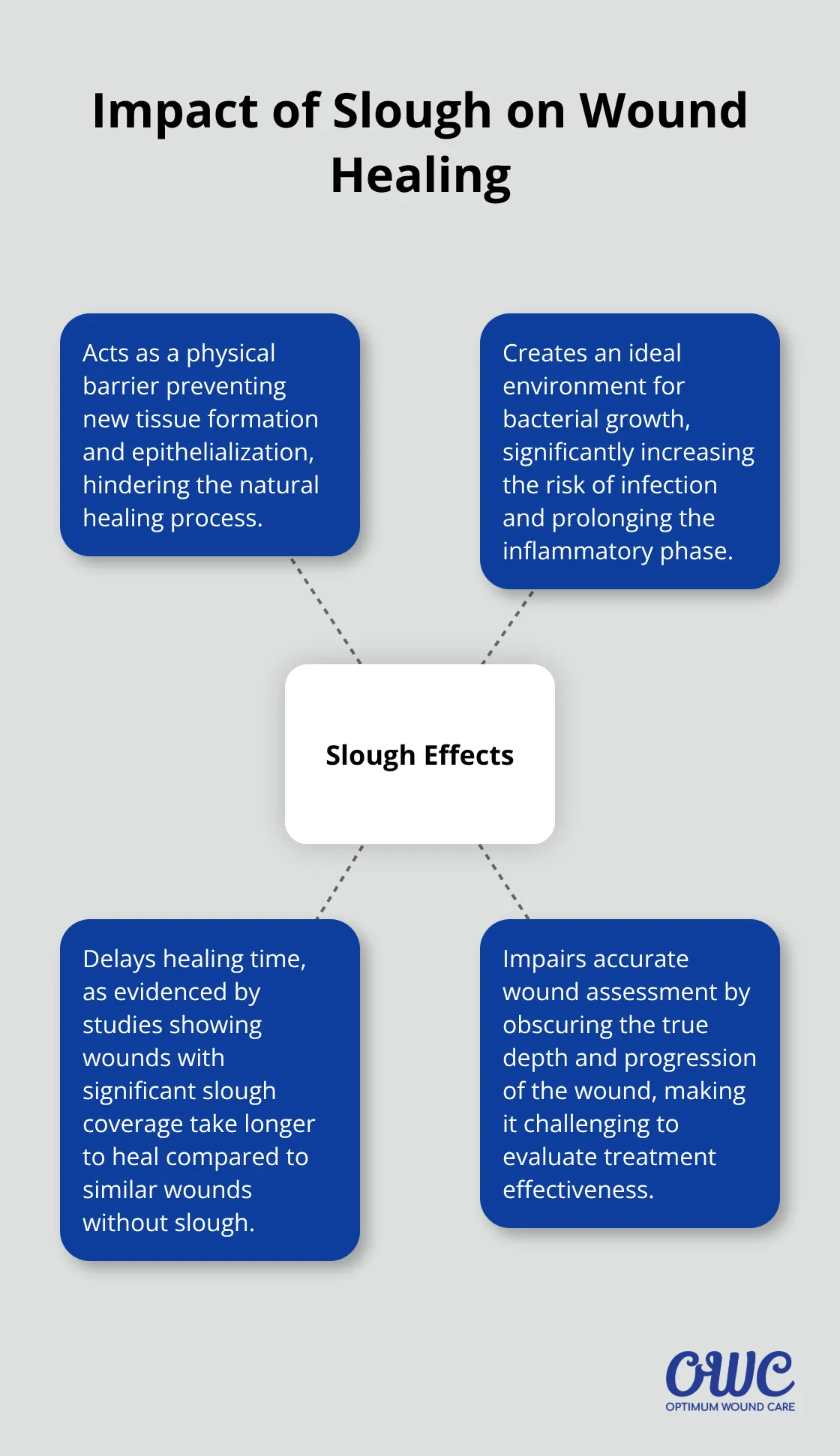
Slough significantly hinders the healing process. It acts as a physical barrier that prevents new tissue formation and epithelialization. Furthermore, slough creates an ideal environment for bacterial growth, which increases the risk of infection and prolongs the inflammatory phase of wound healing.
A study published in the Journal of Wound Care found that wounds with significant slough coverage took longer to heal compared to similar wounds without slough. This delay not only affects patient outcomes but also increases healthcare costs associated with prolonged treatment.
The Necessity of Slough Removal
Effective slough removal is essential for several reasons:
- It promotes healing by exposing the healthy tissue underneath, allowing for proper granulation and epithelialization.
- It reduces infection risk by decreasing the bacterial load in the wound.
- It improves assessment by allowing for more accurate evaluation of wound depth and progression.
- It enhances treatment efficacy by enabling topical treatments and dressings to be applied directly to the wound bed without interference.
Timely and appropriate slough removal can be beneficial for wound healing. Our wound care specialist, Mosayeb “Moe” Karimi, MSN, FNP, WOC, emphasizes the importance of regular wound assessment and prompt intervention when slough is present.
Identifying Slough
Recognizing slough is a critical skill for wound care professionals. It’s important to differentiate between slough and other wound tissues:
- Color: Slough is typically yellow or white, while healthy granulation tissue is pink or red.
- Texture: Slough has a soft, stringy consistency, unlike the firm, granular texture of healthy tissue.
- Adherence: Slough may be loosely or firmly attached to the wound bed, requiring different removal techniques.
Healthcare professionals must understand the nature of slough and its effects on wound healing to make informed decisions about debridement methods and overall wound management strategies. The next section will explore various techniques for effective slough removal to optimize wound healing outcomes.
Effective Methods for Slough Removal
Autolytic Debridement: The Body’s Natural Process
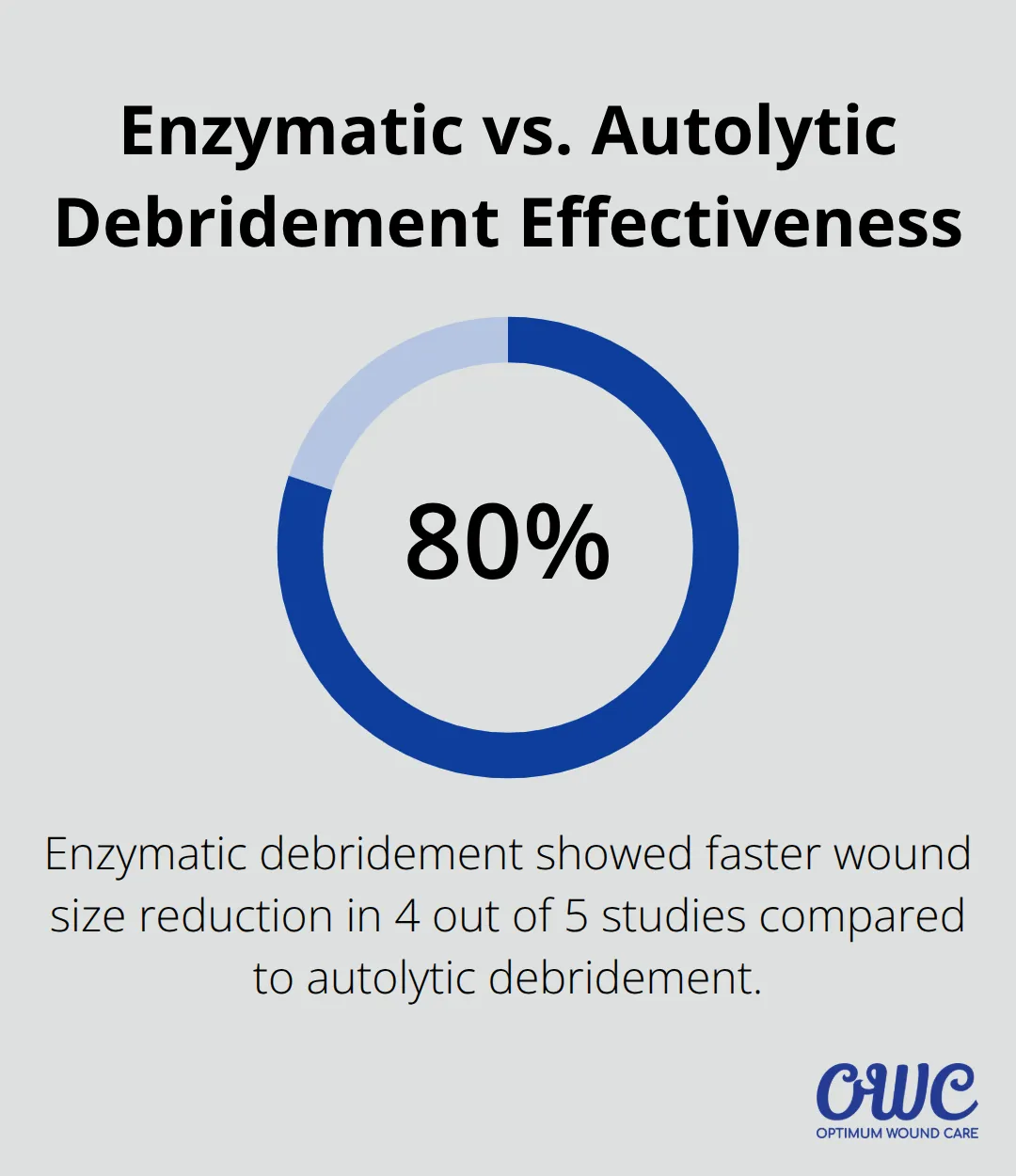
Enzymatic debridement consistently outperformed autolytic debridement in terms of wound size reduction. This gentle, selective method works well for wounds with light to moderate slough coverage. To facilitate this process, we create a moist wound environment using specialized dressings (such as hydrogels or hydrocolloids).
Enzymatic Debridement: Targeted Slough Elimination
Enzymatic debridement was more effective, showing faster wound size reduction in four out of five studies. We often use collagenase-based products for this purpose. This method proves particularly useful for wounds with adherent slough that resists removal through other means.
Mechanical Debridement: Physical Slough Removal
Mechanical debridement physically removes slough using various techniques. One effective method involves the use of a monofilament debridement pad. This specialized pad gently removes slough without damaging healthy tissue.
A clinical evaluation demonstrated that monofilament debridement pads effectively debride biofilm and slough, contributing to care that follows the principles of wound bed preparation. This quick and effective method can be performed during routine dressing changes.
Surgical Debridement: Rapid and Precise Technique
For wounds with extensive slough coverage or when rapid debridement becomes necessary, surgical debridement often proves the most effective option. Skilled practitioners perform conservative sharp debridement using sterile instruments to precisely remove slough and non-viable tissue.
The choice of debridement method depends on various factors, including wound characteristics, patient comfort, and overall health status. The next section will provide a step-by-step guide on how to perform slough wound debridement effectively, ensuring optimal wound healing outcomes.
How to Perform Slough Wound Debridement
Thorough Wound Assessment
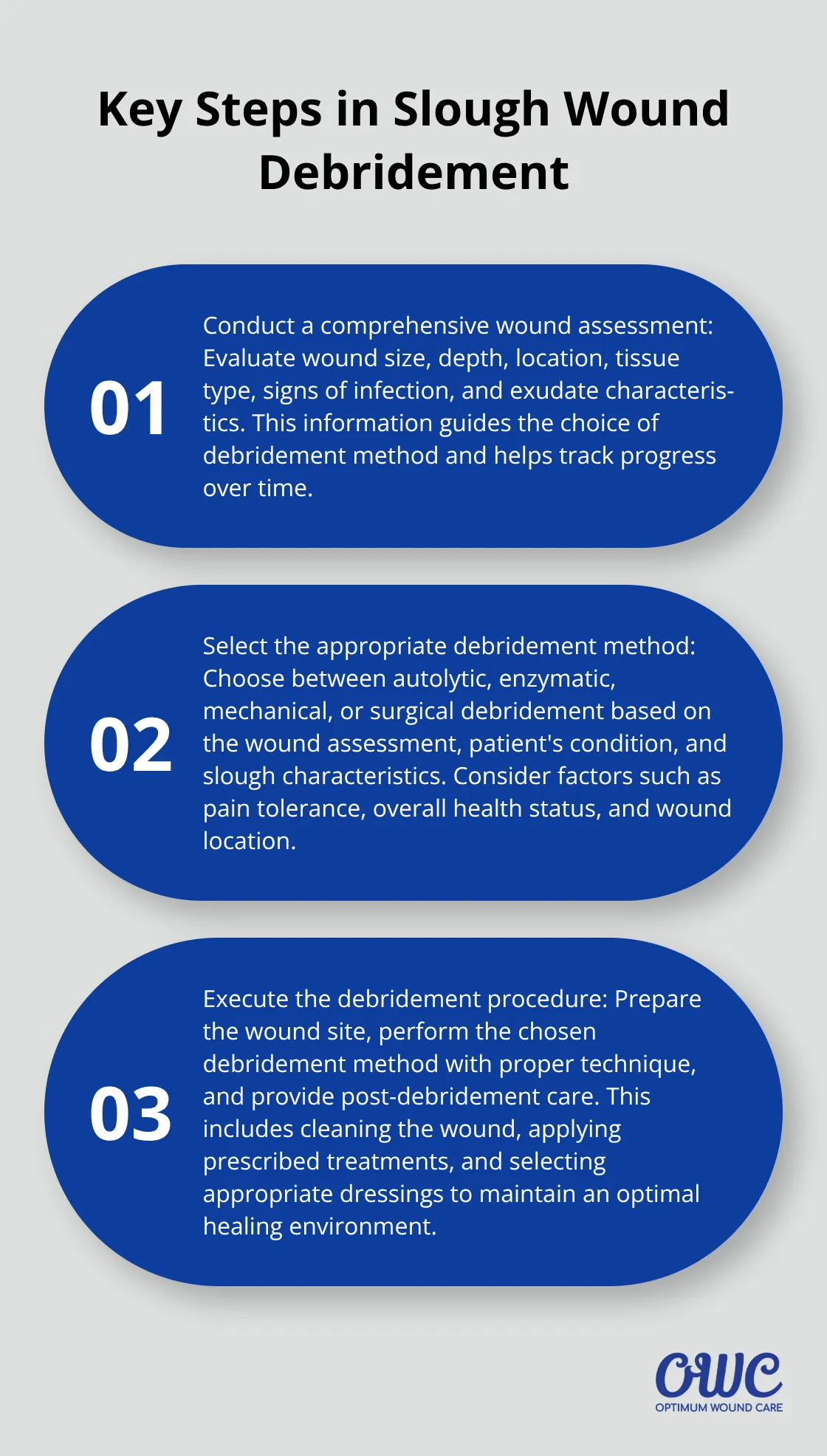
Before starting the debridement process, conduct a comprehensive wound assessment. Evaluate the wound size, depth, and location. Examine the tissue for signs of necrosis, infection, or granulation. Assess exudate type and volume. This information will guide your choice of debridement method and help track progress over time.
Selecting the Appropriate Debridement Method
Choose the most suitable debridement method based on your assessment. For lightly adherent slough, autolytic debridement using hydrogels might suffice. For moderate to heavy slough, enzymatic debridement with collagenase ointments often proves effective. In cases of extensive or firmly adherent slough, mechanical debridement with a monofilament pad or conservative sharp debridement may be necessary.
Consider the patient’s pain tolerance, overall health status, and the wound’s location when making your decision. For instance, enzymatic debridement might be preferable for patients with bleeding disorders or those on anticoagulants.
Wound Site Preparation
Proper preparation is essential for effective debridement. Start by cleansing the wound with a pH-balanced wound cleanser or saline solution. Remove any loose debris or exudate gently. If you use enzymatic or autolytic methods, ensure the wound bed is moist but not overly wet.
For mechanical or sharp debridement, apply a topical anesthetic (if needed) to minimize patient discomfort. Always use sterile instruments and maintain a clean field to prevent infection.
Debridement Procedure Execution
When you perform enzymatic debridement, apply a thin layer of the chosen enzyme (e.g., collagenase) directly to the slough. Cover with an appropriate secondary dressing to maintain a moist environment.
For mechanical debridement using a monofilament pad, use gentle circular motions to remove the slough. Take care not to damage the surrounding healthy tissue. Rinse the wound with saline solution after debridement to remove any loose debris.
If you perform conservative sharp debridement, use a ring curette held like a pen at a 10 – 20° angle toward the area to be debrided. Stretch the skin-wound base with the non-dominant hand. This technique should only be performed by trained professionals.
Post-Debridement Care
After debridement, reassess the wound to determine the effectiveness of the procedure. Clean the wound again with saline or an appropriate wound cleanser. Apply any prescribed topical treatments, such as antimicrobials or growth factors.
Choose a dressing that maintains an optimal wound environment. For heavily exudating wounds, consider absorbent foam dressings. For drier wounds, hydrogels or hydrocolloids may be more appropriate.
Document the procedure, including the method used, amount of slough removed, and the wound’s appearance post-debridement. This information is vital for tracking progress and adjusting the treatment plan as needed.
At Optimum Wound Care, we emphasize the importance of regular follow-ups. Schedule the next assessment and debridement session based on the wound’s condition and the chosen method. Typically, enzymatic debridement requires daily dressing changes, while autolytic methods may allow for less frequent interventions (every 2-3 days).
Successful slough wound debridement is an ongoing process that requires patience, skill, and a thorough understanding of wound healing principles. These steps can significantly improve healing outcomes for your patients.
Final Thoughts
Slough wound debridement plays a vital role in successful wound management. We remove non-viable tissue to create an optimal healing environment, reduce infection risk, and improve patient outcomes. The techniques discussed provide a comprehensive approach to slough removal, addressing various wound types and patient needs.
Wound care professionals must continuously educate themselves and develop their skills. The field evolves rapidly, with new technologies and techniques emerging regularly. Staying informed about the latest advancements ensures the best possible care for patients.
At OWC Center, we offer expert wound management in a patient-centric environment. Our experienced team combines clinical expertise with cutting-edge techniques to create personalized treatment plans (led by Mosayeb “Moe” Karimi, MSN, FNP, WOC). We strive to help patients heal faster and regain their quality of life through comprehensive wound services.
