
How to Document Wound Progress for Better Outcomes
The Healing Details You Can’t Afford to Miss
It starts with something small. A blister. A scrape. Maybe a foot sore that just won’t go away. Days pass. Weeks. You try creams. Wraps. Maybe even advice from a neighbor who swears by aloe vera. But nothing changes. Or worse it spreads.
That’s where wound progress documentation makes the difference.
You’re not just tracking healing. You’re catching warning signs. Measuring change. Creating a timeline that tells your care team what’s working — and what’s not. According to WoundSource, consistent documentation is linked to better outcomes, lower infection rates, and faster healing times. That’s no small deal.
If you’re dealing with a chronic wound or caring for someone who is, this guide is for you. We’ll walk you through how to document wounds like a pro — including wound photography, accurate measurement, and how to spot trends.
The goal? Better healing. Less guesswork. More control.
At OWC Center, we believe every patient deserves more than just a bandage; they deserve a plan. A plan that starts with clarity and ends with results. And yes, even a little hope.
By the way, if you’re wondering about when to seek advanced care, this NIH offers solid criteria for escalation. Knowing when to get help could mean the difference between healing at home or hospitalization.
Let’s get into the core of what documentation should look like — and how to do it effectively.
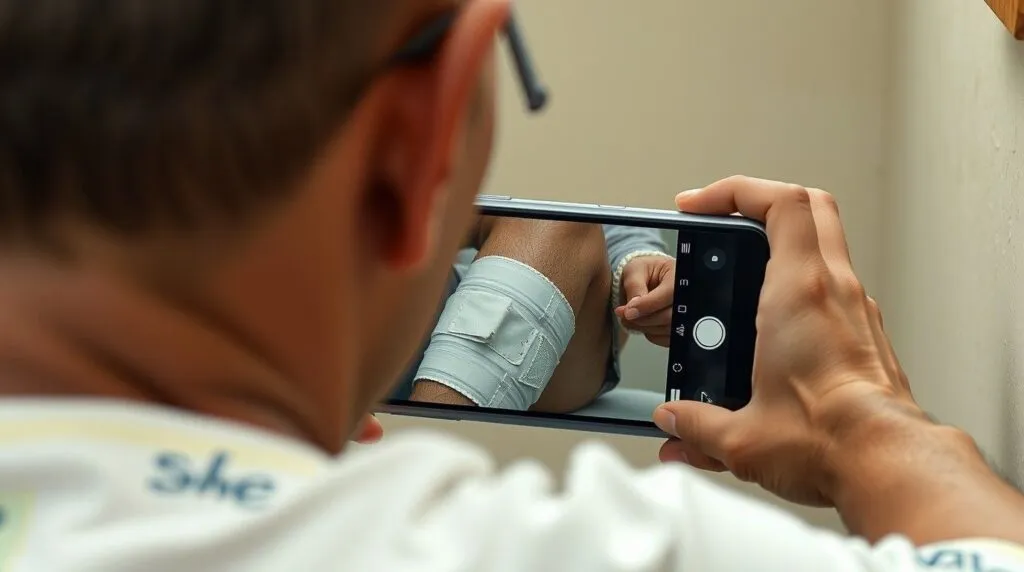
Wound Photography: Capturing More Than Just a Picture
When it comes to tracking healing, words often fall short. Descriptions like “a little red” or “some swelling” can mean very different things to different people. That’s where wound photography comes in.
Why It Matters
Wound photography gives both patients and providers a shared visual language:
- It shows progression (or regression) clearly and quickly
- Enhances communication between providers
- Offers legal and insurance documentation
- Helps determine treatment success
How OWC Center Uses It
Every image we take at OWC Center follows strict HIPAA compliant protocols. Our clinicians are trained to use:
- Standardized angles and distances
- Measurement tools in-frame for scale
- Proper lighting to show true wound color
You might hear a provider say, “Look at the edge granulation in this week’s image versus last.” That’s real-time feedback that guides care.
Tips for Home Photography
We often empower patients to document their wounds between visits:
- Use consistent lighting and background
- Take photos at the same time each day
- Include a ruler or coin for scale
- Never apply filters or flash effects
By making wound photography a regular habit, patients become active participants in their healing and that collaboration often speeds things up.
Related Blog: Read more in our post on how to manage wound care follow-ups
Measurement: Numbers That Matter

You might think measuring a wound is simple. Ruler in. Ruler out. But accuracy in measurement is both an art and a science. Tiny changes in size can mean major changes in treatment.
What We Measure (And Why)
- Length, width, and depth – These dimensions help track healing or deterioration
- Undermining or tunneling – Hidden extensions of the wound can cause complications
- Tissue types – Like slough, granulation, or eschar – all matter for staging
- Drainage amount and type – A yellow-green discharge isn’t just unappealing; it can indicate infection
At OWC Center, we use calibrated probes, digital wound mapping tools, and consistent techniques to ensure readings are accurate from visit to visit.
Why Consistency Is Key
Variations in how wounds are measured can delay healing. You wouldn’t accept a scale that gave you different weights every time you stepped on it. Why accept anything less with wound tracking?
Home Measurement Tips
If you’re monitoring a wound at home:
- Always use the same tool (ruler, probe)
- Log the measurements with date/time
- Note any drainage, odor, or discomfort
- Avoid touching the wound with unsterile tools
When Measurements Indicate Trouble
Sometimes, it’s the numbers that speak the loudest:
- A growing wound may suggest infection or pressure
- Lack of shrinkage over 2+ weeks could mean stalled healing
- Increase in drainage may call for culture or antibiotics
Related Blog: Explore more in our guide to vascular wound care
Bulletproof Wound Assessments: What Professionals Document
While many think wound care is about dressings and creams, the real game-changer is how we assess and document. At OWC Center, our wound assessments are meticulous — and for good reason.
Here are 5 elements we always include:
- Wound Location & Cause
- Is it pressure-related? Vascular? Trauma?
- Stage or Classification
- Particularly for pressure injuries or diabetic ulcers
- Signs of Infection
- Redness, heat, odor, or discharge
- Surrounding Skin Condition
- Dry, macerated, inflamed?
- Pain Levels
- Often overlooked but key to tracking nerve involvement
Each of these factors helps us shape a personalized treatment plan.
And thanks to our structured documentation process, referring physicians and insurance providers get crystal-clear insight into your wound’s progress.
Related Blog: Read about how aging skin affects healing
When You Document at Home: Empowerment, Not Overwhelm
Many patients fear they’ll “do it wrong” if they try to track wounds at home. We hear that a lot. But let us reassure you: home documentation isn’t about perfection — it’s about participation.
Here’s how you can make home tracking simple and helpful:
- Take daily photos in the same lighting and position
- Keep a notebook or phone journal for changes
- Describe pain, discharge, and dressing changes
- Bring your notes and photos to your next appointment
At OWC Center, we love when patients bring these records. It helps us fill in the gaps between visits and adjust your care plan with more precision.
If you’re unsure where to start, ask us about our printable home tracking sheets. Or better yet, bring your questions to your next visit.
Related Blog: Learn about the role of the immune system in wound repair
Healing isn’t just about dressings and medications—it’s about visibility, consistency, and partnership. With the right tools, like wound photography and precise measurements, every detail tells a story about where the wound is heading. For patients, this means having the confidence that progress is being tracked with care. For providers, it’s about responding faster, more accurately, and with tailored support.
The best outcomes come when documentation is more than routine—it becomes routine with intention. It’s part of a rhythm, whether that’s snapping a photo at home, noting down a shift in drainage, or sharing those insights with your care team. Together, that creates a fuller picture—one that leads to fewer complications, fewer surprises, and more healing.
At OWC Center, we don’t just observe. We engage. Every charted note, every captured image, and every small measurement feeds into a larger goal: your recovery. And whether you’re a caregiver or the one healing, you’re never doing it alone. There’s a team beside you, reading the signs, responding to the data, and cheering for every step forward.
Because in wound care, the little things—the careful notes, the daily photos, the tiny measurements—are actually the big things. And they just might be what helps turn the corner.
Key Takeaways
⭐ Accurate documentation supports better healing outcomes
At every stage of care, precise and consistent wound documentation helps track progress, identify complications early, and guide timely treatment changes. It’s a small daily habit that creates a big clinical impact. Explore our Advanced Wound Care services.
📸 Wound photography turns healing into a visible journey
Visual records make it easier for both patients and providers to assess changes over time, compare results, and collaborate on next steps. It also helps reduce uncertainty during your recovery. Meet our Wound Care Specialists.
📏 Proper measurement reveals hidden patterns
Measuring length, width, depth, and even tissue type is essential to evaluating whether a wound is healing or stalled. We use standardized, evidence-based tools for reliable results. Learn more about Diabetic Foot Ulcer Treatment.
📝 Home tracking empowers patients to take control
When patients or caregivers take part in daily notes and images, they become active partners in care. Simple at-home documentation helps fill in the gaps between appointments. See our Outpatient Wound Services.
🤝 You don’t have to do it alone—we’re here for you
Healing is a team effort. Whether you’re dealing with a chronic wound or just starting the recovery process, OWCCenter offers the support, expertise, and encouragement you need. Get started with a comprehensive Wound Assessment.
🔍 5 Related Questions Answered
1. Why is wound documentation so important for healing?
Wound documentation is more than a charting requirement — it’s the compass that guides every step of the healing journey. Accurate, consistent documentation allows your care team to:
- Track progress over time and adjust treatment plans accordingly
- Catch early warning signs of complications like infection or stagnation
- Share clear, visual updates with referring providers or specialists
- Support insurance claims and meet compliance standards
At OWC Center, our specialized wound care team uses evidence-based protocols to assess and record wounds thoroughly at every visit. This process isn’t just clinical — it’s personal. Every patient’s progress is charted carefully so we can celebrate the milestones together. Whether you’re managing a diabetic foot ulcer, pressure injury, or vascular wound, thorough documentation ensures no detail is missed in your recovery plan.
2. What should be included in effective wound documentation?
A complete wound documentation includes several components that give a full picture of your healing status. Think of it as telling your wound’s story in snapshots and facts.
Here’s what we record during each visit:
- Wound size and depth using precise measurement tools
- Color and appearance of the wound bed, edges, and surrounding skin
- Presence of any drainage, odor, or signs of infection
- Type of dressing used and response to current treatment
- High-resolution wound photography for visual comparison over time
This level of detail is crucial. At OWC Center, our providers use documentation not just to record—but to anticipate. We’re trained to notice subtle shifts that could signal faster healing or the need for a change in approach.
3. How does wound photography help improve outcomes?
A picture truly is worth a thousand words—especially in wound care.
Wound photography helps both patients and providers:
- Visually compare progress across appointments
- Detect subtle changes not easily captured by text alone
- Ensure continuity of care across different providers
- Create a consistent and objective record for medical and insurance purposes
At OWC Center, our team uses secure, high-quality imaging tools that protect your privacy while giving us valuable visual data. You’ll often hear our patients say, “I didn’t realize how much it had improved until I saw the photos!”
Whether it’s a small gain in wound closure or a big leap in skin regeneration, wound photography gives you tangible proof that healing is happening.
-> Meet our Wound Care Specialists
4. How are wound measurements taken, and why does accuracy matter?
Wound measurement isn’t just about numbers — it’s about capturing changes that may signal improvement or concern.
At OWC Center, we use standardized techniques and tools to ensure consistency:
- Length x Width x Depth measurements using sterile probes and rulers
- Tracings or digital tools to map wound shape
- Volume calculations, if needed, for deeper or irregular wounds
- Consistent positioning and technique to reduce variation between visits
Accurate measurement helps us:
- Determine if a wound is healing, stalled, or worsening
- Make timely decisions about debridement, dressing changes, or further testing
- Communicate effectively with referring doctors or insurance providers
For patients, this means we’re always one step ahead. If the numbers aren’t trending in the right direction, we pivot fast because your healing can’t wait.
Learn about Diabetic Foot Ulcer Treatment
5. Can I document my wound progress at home between visits?
Yes — and in fact, home documentation can be an empowering part of your healing.
Here’s how you can safely document your wound at home:
- Use your phone to take clear photos (with good lighting and a ruler for scale)
- Keep a journal of how the wound looks and feels each day
- Track symptoms, such as pain, drainage, or warmth
- Note dressing changes, products used, and any discomfort
At OWC Center, we encourage patients and caregivers to bring this information to their follow-ups. It helps us see what’s happening between visits and builds a stronger picture of your daily experience.
We even offer tips and templates for patients who want to take an active role in their wound care. Together, we’re a team and every observation you make adds to the insight we use to tailor your care.
