Does Negative Pressure Therapy Really Help Wounds Heal Faster?
Negative pressure therapy has gained significant attention in recent years for its potential to accelerate wound healing.
This advanced treatment method uses controlled suction to promote healing in various types of wounds. In this post, we’ll explore the science behind negative pressure therapy and its effectiveness in wound management.
What is Negative Pressure Wound Therapy?
The Mechanics of NPWT
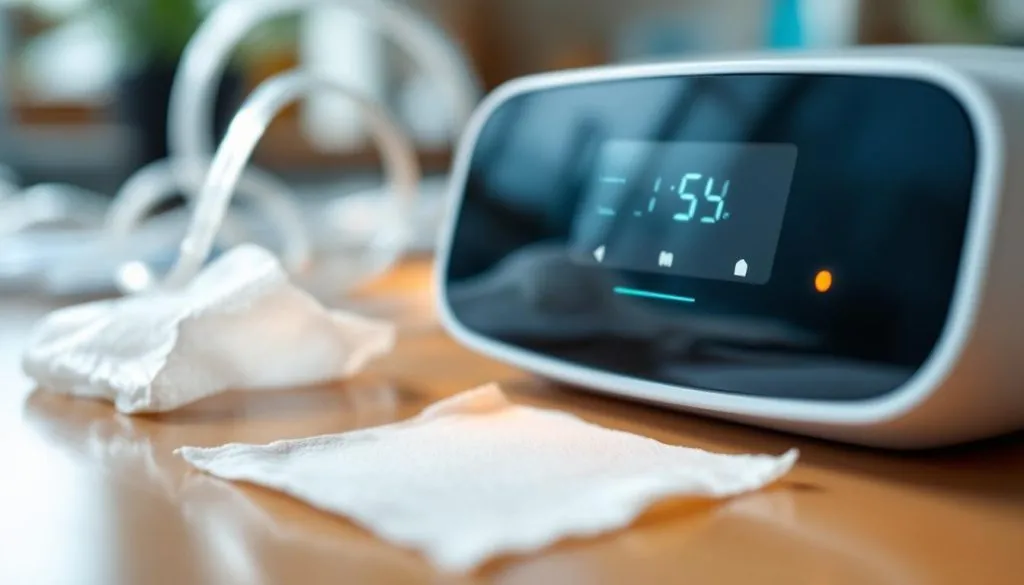
Negative Pressure Wound Therapy (NPWT) revolutionizes wound care by providing moist wound conditions, reducing exudate, and controlling wound-bed conditions. This innovative treatment uses a vacuum-like device to create negative pressure on a wound. The device applies a specific amount of pressure (typically between -125 mmHg and -75 mmHg), depending on the wound type and patient needs.
How NPWT Accelerates Healing
NPWT accelerates healing through several mechanisms:
- Excess fluid removal: This reduces swelling and bacterial load, creating an optimal environment for healing.
- Blood flow increase: Better circulation delivers more oxygen and nutrients to the wound.
- New tissue growth stimulation: The negative pressure encourages the formation of granulation tissue.
- Wound edge approximation: This can help close the wound faster.
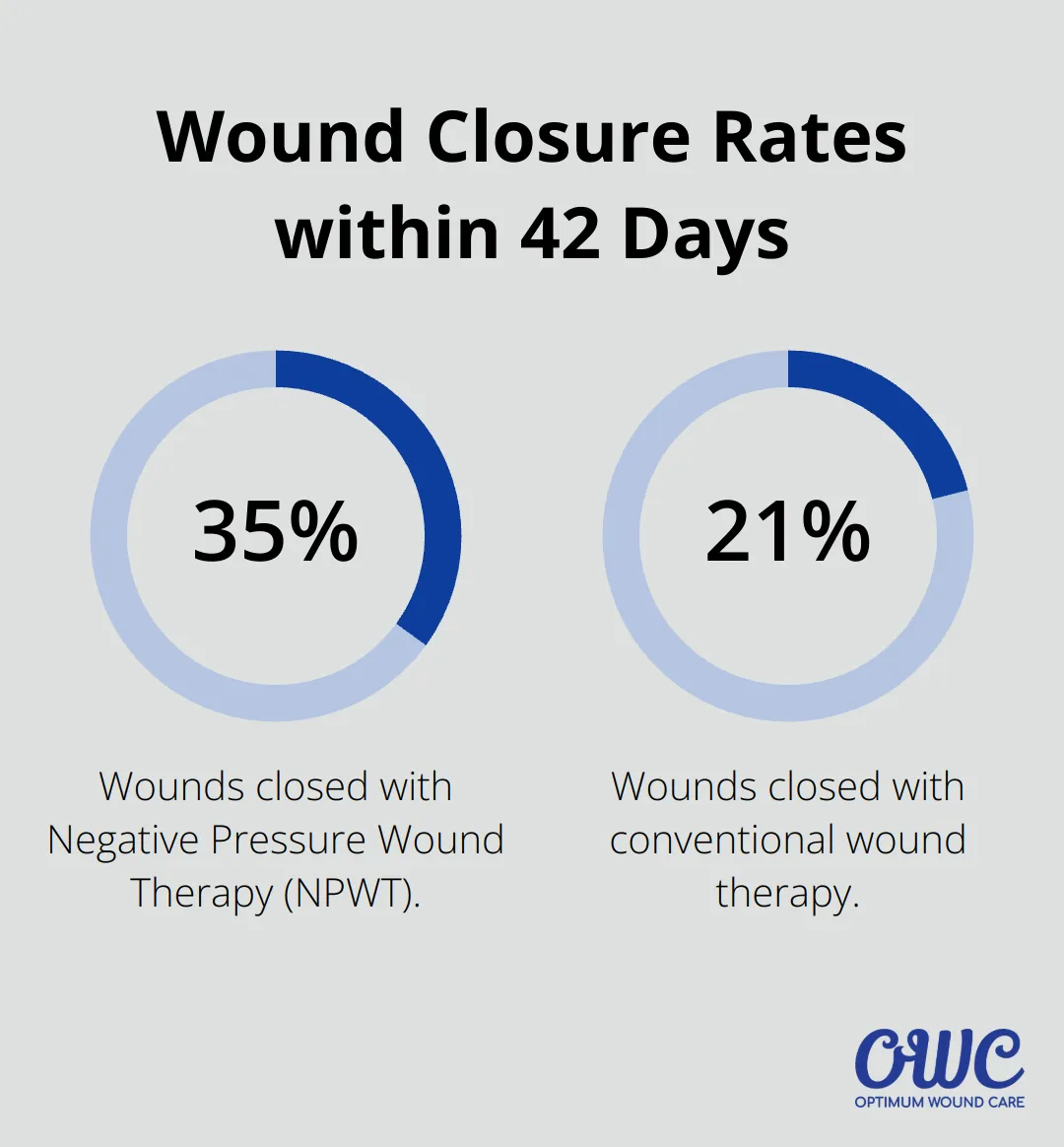
A study published in the Journal of the American Medical Association found that wound closure rate within 42 days was significantly higher with NPWT (35.9%) than with conventional wound therapy (21.5%).
Suitable Wound Types for NPWT
NPWT proves effective for various wound types:
- Diabetic foot ulcers
- Pressure ulcers
- Surgical wounds
- Traumatic wounds
- Venous leg ulcers
A prospective cohort study evaluated NPWT with low pressure and a gauze dressing to treat diabetic foot ulcers, showing promising results for this specific wound type.
Practical Considerations
While NPWT offers powerful benefits, it’s not suitable for all wounds. Wounds with exposed organs, untreated osteomyelitis, or malignancy typically don’t qualify for this therapy. Always consult with a wound care specialist to determine the best treatment plan.
The Role of Specialized Care
Specialized wound care centers (like Optimum Wound Care in Louisville) assess each patient individually to decide if NPWT is the right choice. These centers ensure that patients receive the most effective, personalized care possible.
As we explore the scientific evidence supporting NPWT’s effectiveness in the next section, we’ll uncover more about how this innovative therapy compares to traditional wound healing methods.
How Effective Is NPWT According to Research?
Compelling Evidence for NPWT Efficacy
Scientific studies consistently demonstrate that Negative Pressure Wound Therapy (NPWT) significantly improves wound healing rates compared to traditional methods. A meta-analysis demonstrated a significant improvement in wound healing rate (risk ratio = 1.46, 95%CI: 1.22-1.76, P < 0.01).
Accelerated Healing Rates
One of the most striking findings comes from research showing that NPWT can accelerate the healing process of chronic wounds. The standard low pressure of 80-125 mmHg has been shown to improve microcirculation and speed up wound healing.
Decreased Infection Rates
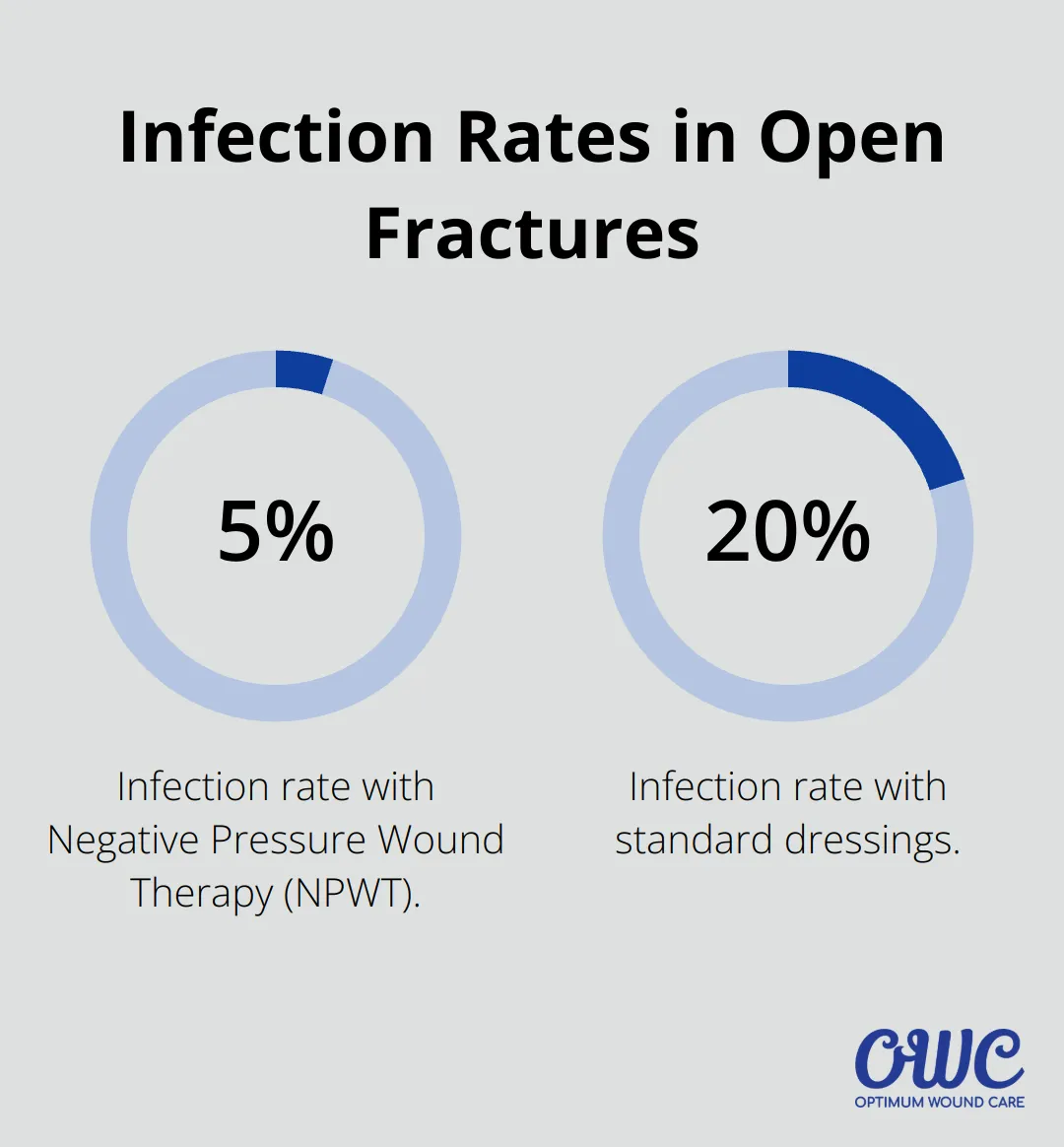
NPWT not only speeds up healing but also reduces the risk of infection. A study found that NPWT decreased infection rates in open fractures compared to standard dressings. This trial demonstrated a reduction in the rate of wound infection in the group of patients treated with NPWT (5.4% vs. 20%; relative risk 0.199, 95% CI).
Wound-Specific Outcomes
Different wound types respond uniquely to NPWT:
- Diabetic Foot Ulcers: Studies have shown improved outcomes for patients with diabetic foot ulcers treated with NPWT.
- Pressure Ulcers: Research indicates that NPWT can be effective in reducing the surface area of pressure ulcers.
- Surgical Wounds: NPWT has shown promising results in reducing complications in surgical wounds.
Expert Application Matters
While these studies demonstrate the clear benefits of NPWT, results can vary depending on factors such as wound type, patient health, and proper application of the therapy. Specialized wound care centers assess each patient individually to decide if NPWT is the right choice. These centers ensure that patients receive the most effective, personalized care possible.
The impressive results from scientific research highlight the potential of NPWT to revolutionize wound care. However, it’s essential to consider both the advantages and limitations of this therapy to fully understand its role in modern wound management.
Is NPWT Right for Every Wound?
Negative Pressure Wound Therapy (NPWT) has transformed wound care, but it doesn’t suit all situations. We at Optimum Wound Care have observed remarkable results with NPWT, yet we always evaluate each patient’s unique circumstances before recommending this treatment.
The Clear Advantages of NPWT
NPWT excels in promoting faster wound healing. A study found that NPWT reduced healing time by a median of 34.1 days compared to conventional dressings. This accelerated healing can significantly improve patient outcomes and quality of life.
Another major benefit is the reduction in dressing changes. While traditional dressings may require daily changes, NPWT dressings often remain in place for 48-72 hours. This means less disruption to the wound bed and increased comfort for patients.
NPWT also shows promise in reducing hospital stays. A study reported that median time to healing was 21 days shorter with NPWT compared with moist dressings.
Potential Drawbacks and Side Effects
Despite its benefits, NPWT carries some risks. Pain is a common side effect, especially during dressing changes. About 30% of patients report some level of discomfort during treatment.
Bleeding is another potential complication. A retrospective study in Advances in Wound Care found that 8.4% of patients experienced minor bleeding during NPWT. While usually not severe, it’s a factor we closely monitor.
Cost can be a concern for some patients. NPWT devices and dressings cost more than traditional wound care supplies. However, when we consider the potential for faster healing and fewer complications, NPWT can prove cost-effective in the long run.
Situations Where NPWT Isn’t Recommended
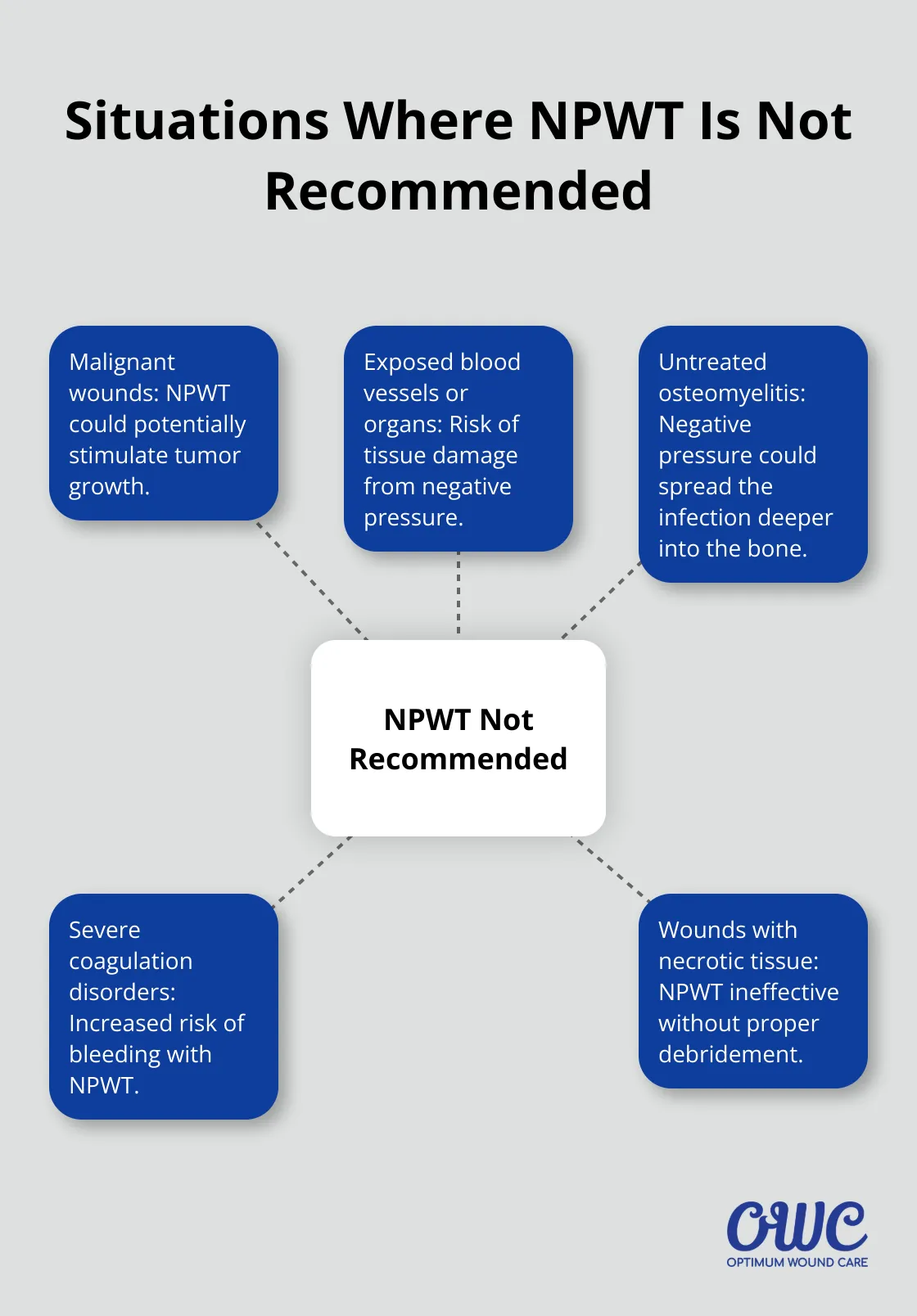
NPWT doesn’t suit all wound types. We never use it on malignant wounds, as it could potentially stimulate tumor growth. Wounds with exposed blood vessels or organs are also off-limits due to the risk of tissue damage.
Patients with untreated osteomyelitis shouldn’t receive NPWT. The negative pressure could potentially spread the infection deeper into the bone. Similarly, we avoid NPWT in patients with severe coagulation disorders due to the increased risk of bleeding.
It’s important to note that NPWT doesn’t substitute for proper wound bed preparation. If a wound contains necrotic tissue or hasn’t been adequately debrided, NPWT won’t be effective. In these cases, we first focus on thorough wound cleaning and debridement before considering NPWT.
The Importance of Expert Application
While studies demonstrate the clear benefits of NPWT, results can vary depending on factors such as wound type, patient health, and proper application of the therapy. Specialized wound care centers (like Optimum Wound Care) assess each patient individually to decide if NPWT is the right choice. These centers ensure that patients receive the most effective, personalized care possible.
NPWT proves to be a powerful tool in our wound care arsenal. However, we always emphasize the importance of a comprehensive assessment and individualized treatment plan. NPWT is just one piece of the puzzle in achieving optimal wound healing outcomes.
Final Thoughts
Negative pressure therapy has revolutionized wound care, accelerating healing rates across various wound types. Scientific evidence supports its effectiveness, with studies showing faster closure times, reduced infection rates, and improved patient outcomes compared to traditional methods. However, NPWT isn’t a universal solution; each patient’s unique circumstances require careful consideration.
The future of negative pressure therapy looks promising, with ongoing research exploring new applications and refining existing techniques. We expect to see advancements in portable NPWT systems, potentially expanding its use in outpatient settings. These developments will likely enhance patient mobility and treatment accessibility.
At Optimum Wound Care, we remain committed to providing the most effective, personalized wound care solutions. Our team continuously evaluates the latest research and technologies to offer cutting-edge therapies (like NPWT) combined with expert clinical care. We invite you to contact us for more information on how negative pressure therapy can benefit your wound healing journey.
