
How to Choose the Best Ointment for Diabetic Wounds
At OWC Center, we understand the unique challenges diabetics face when it comes to wound care.
Choosing the best ointment for diabetic wounds is a critical step in promoting healing and preventing complications.
In this guide, we’ll explore the key factors to consider when selecting an effective wound ointment for diabetic patients, helping you make an informed decision for optimal care.
Understanding Diabetic Wounds
Types of Diabetic Wounds
Diabetic wounds affect approximately 18.6 million people worldwide each year and are associated with increased rates of amputation and death. These wounds, often found on the feet, result from a combination of nerve damage (neuropathy) and poor blood circulation, common in long-term diabetes patients. The main types include:
- Diabetic Foot Ulcers: The most prevalent type, typically appearing on the foot’s bottom. Small blisters or cuts can rapidly worsen without prompt treatment.
- Venous Ulcers: These occur on the legs due to poor vein circulation.
- Arterial Ulcers: Less common but more severe, these result from inadequate blood flow to the extremities.
- Pressure Ulcers: Also known as bedsores, these develop from prolonged pressure on a skin area, often in bedridden patients.
Unique Challenges in Diabetic Wound Healing
Diabetic wounds present distinct obstacles to healing:
- Slow Healing Process: High blood sugar levels impede wound recovery.
- Increased Infection Risk: Diabetes weakens the immune system, making infections more probable. The American Diabetes Association notes that foot infections are the primary diabetes-related cause of hospitalization.
- Reduced Sensation: Neuropathy can cause loss of feeling in the feet, leading to overlooked small wounds until they become serious.
- Poor Circulation: Reduced blood flow to extremities means less oxygen and fewer nutrients reach the wound site, hindering healing.
Importance of Proper Wound Care for Diabetics
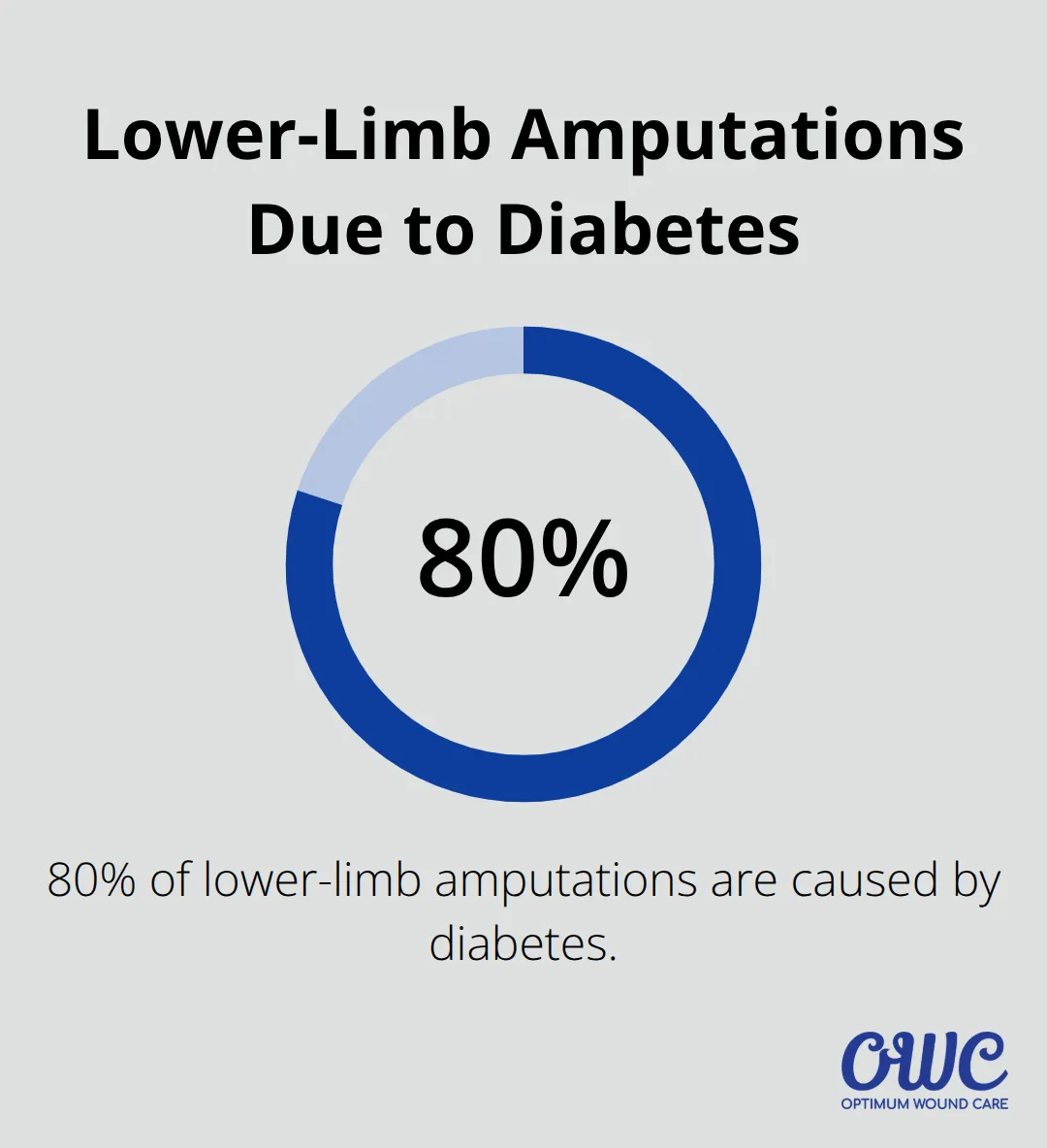
Proper wound care is essential for diabetics. Without it, even minor wounds can lead to severe complications (including amputation). Lower-limb amputations (LLA), which is surgery to remove a toe, foot, or leg, are increasing in the United States, with 80% of LLAs being a result of diabetes.
At Optimum Wound Care, we stress the importance of daily foot checks and immediate attention to any wounds or skin changes. Our team, led by Wound/Ostomy Specialist Mosayeb “Moe” Karimi, uses advanced therapies and personalized treatment plans to address diabetic wounds effectively.
Regular wound care, combined with good blood sugar control and a healthy lifestyle, can significantly improve healing outcomes. Early intervention is key. If you notice any changes in your feet or have concerns about a wound, seek professional help promptly. Your proactive approach could make the difference between a quick recovery and a long-term complication.
As we move forward, it’s important to understand the key ingredients that make an effective diabetic wound ointment. These components play a crucial role in promoting healing and preventing further complications.
Essential Ingredients for Diabetic Wound Ointments
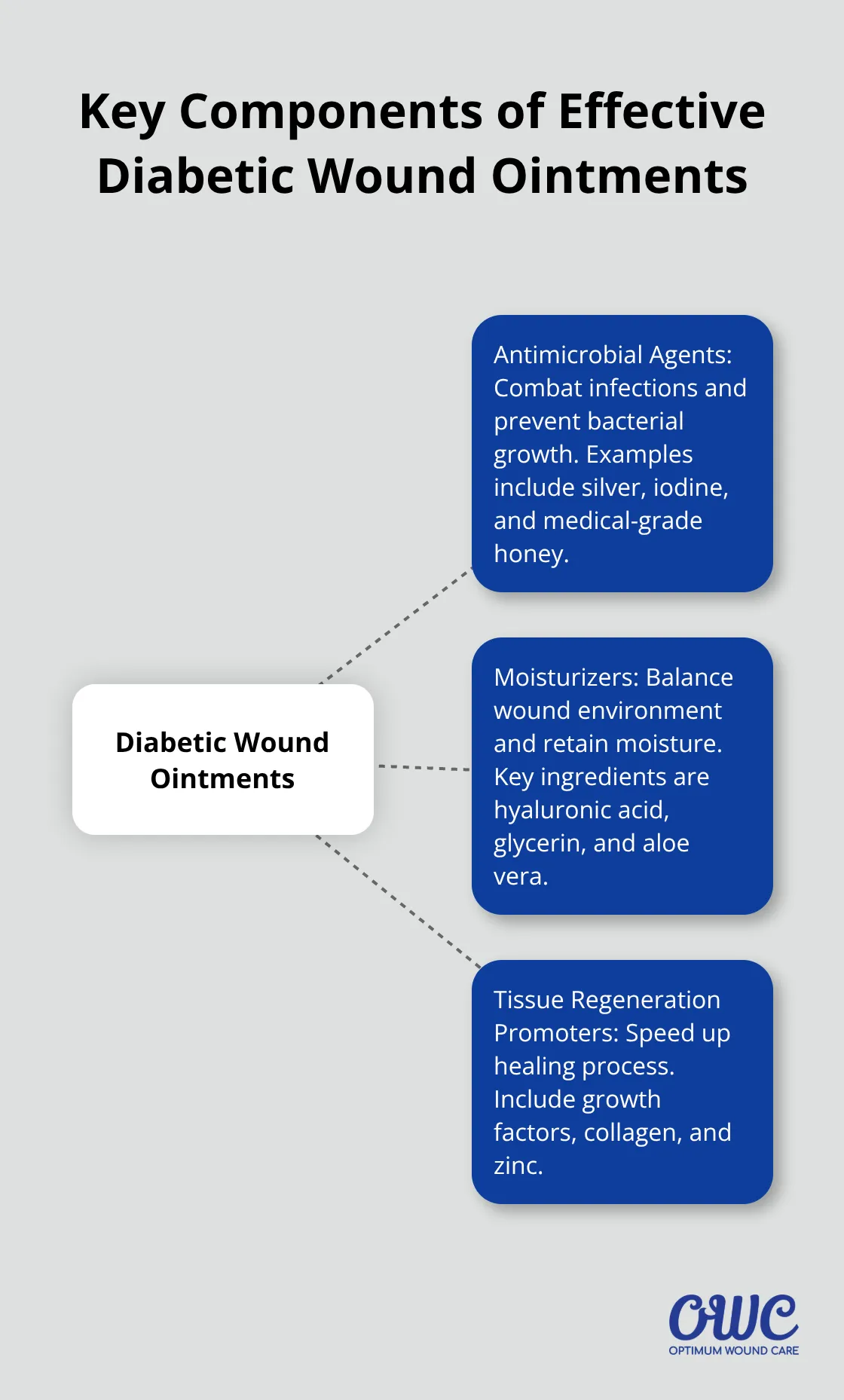
At Optimum Wound Care, we focus on three key components that make an ointment particularly effective for diabetic wounds: antimicrobial agents, moisturizers, and tissue regeneration promoters. The right combination of these ingredients can significantly improve healing outcomes for patients with diabetic wounds.
Antimicrobial Agents: Combating Infections
Antimicrobial agents play a vital role in diabetic wound ointments. They prevent and fight infections, which is especially important for diabetics who face a higher risk of bacterial growth. Common effective antimicrobials include:
- Silver: This element boasts broad-spectrum antimicrobial properties. Silver-containing dressings have shown to reduce bacterial load in diabetic foot ulcers significantly.
- Iodine: Effective against a wide range of pathogens, iodine-based ointments help manage wound infections. However, patients should use them with caution due to potential skin irritation.
- Honey: Medical-grade honey (particularly Manuka honey) offers both antimicrobial and anti-inflammatory benefits. Studies indicate that honey-based dressings can accelerate healing in diabetic foot ulcers.
Moisturizing Components: Balancing Wound Environment
The right moisture balance proves crucial for wound healing. Effective moisturizing ingredients include:
- Hyaluronic Acid: This naturally occurring substance helps retain moisture and promotes cell migration, essential for wound healing.
- Glycerin: As a humectant, glycerin draws moisture to the skin, maintaining a moist wound environment without over-hydrating.
- Aloe Vera: Known for its soothing properties, aloe vera keeps the wound area hydrated while providing anti-inflammatory benefits.
Tissue Regeneration Promoters: Speeding Up Healing
Ingredients that stimulate tissue growth and regeneration benefit diabetic wounds, which often heal slowly. Key components include:
- Growth Factors: These proteins stimulate cell growth and proliferation. Platelet-derived growth factor (PDGF) has been shown to significantly reduce ulcer area in diabetic foot ulcers.
- Collagen: As a major skin component, collagen in wound ointments provides a scaffold for new tissue growth. Collagen-based dressings have shown improved healing outcomes in diabetic foot ulcers.
- Zinc: This mineral plays a crucial role in protein and collagen synthesis. Zinc oxide ointments support the wound healing process, especially in zinc-deficient individuals.
At Optimum Wound Care, our wound care specialist, Mosayeb “Moe” Karimi, emphasizes the importance of personalized treatment plans. We evaluate each patient’s needs to recommend ointments with the most appropriate combination of these ingredients.
The selection of the right ointment forms just one part of comprehensive diabetic wound care. In the next section, we will explore the top considerations when choosing a diabetic wound ointment, helping you make an informed decision for optimal care.
Choosing the Right Ointment for Your Diabetic Wound
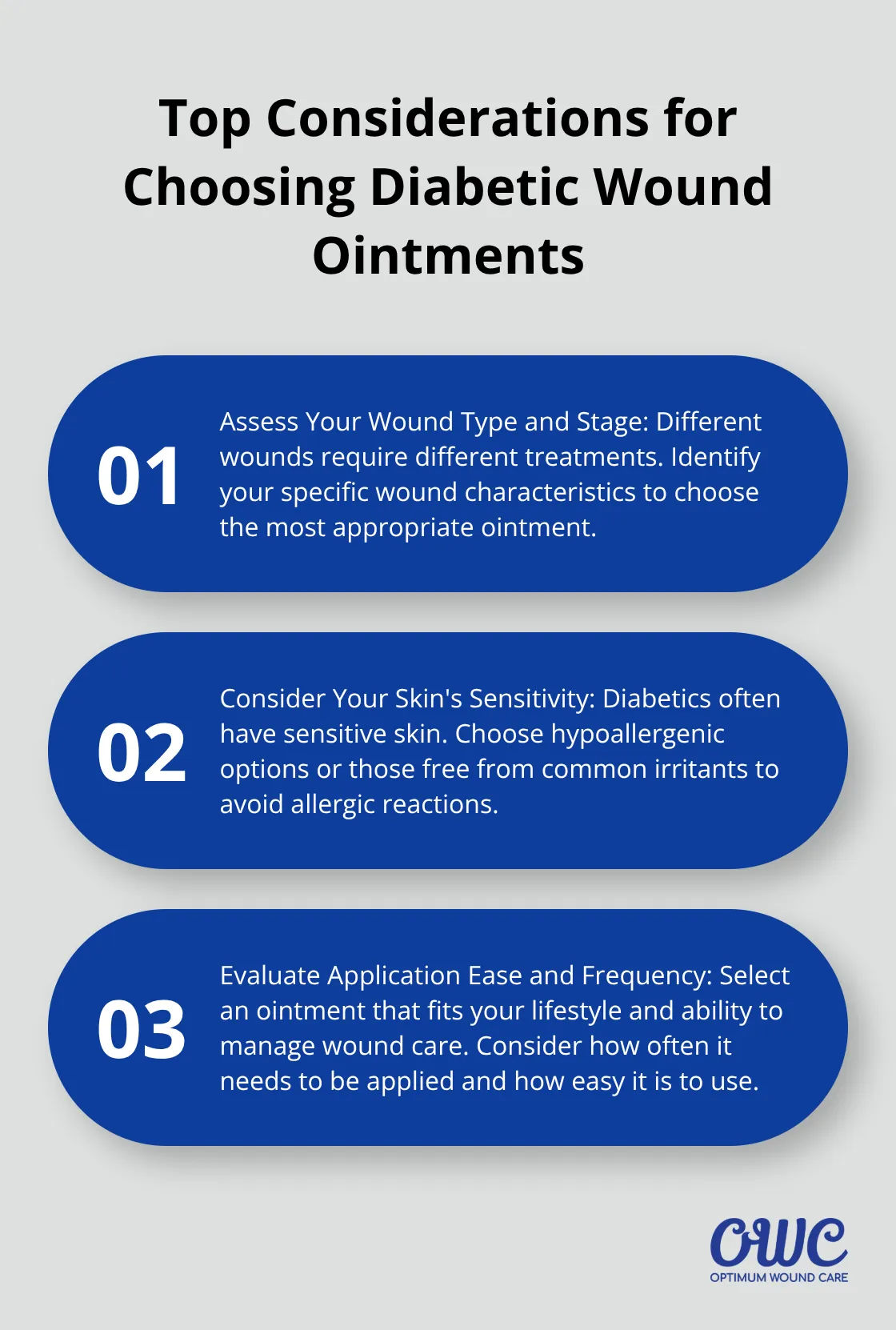
At Optimum Wound Care, we understand the importance of selecting the most effective ointment for diabetic wounds. The right choice can significantly impact healing time and prevent complications. Here’s what you need to consider:
Assess Your Wound Type and Stage
The first step is to accurately identify your wound type and its current stage. Different wounds require different treatments. For example, a hydrogel-based ointment can help mitigate infections and excessive ROS as well as promote healing in diabetic wounds, while a heavily exuding wound may need an alginate dressing to absorb excess fluid.
Consider Your Skin’s Sensitivity
Diabetics often have sensitive skin, which makes them prone to allergic reactions. It’s important to choose an ointment that won’t cause irritation. If you have a history of skin allergies, look for hypoallergenic options or those free from common irritants (like fragrances or preservatives).
Evaluate Application Ease and Frequency
Your lifestyle and ability to manage wound care should influence your choice. Some ointments require application multiple times a day, while others can remain on for several days. For example, silver dressings can significantly enhance healing in diabetic foot ulcers. Choose a product that fits your schedule and capabilities to ensure consistent use.
Consult with a Healthcare Professional
While these considerations are important, they should always be balanced with professional medical advice. Your healthcare provider can offer personalized recommendations based on your specific wound characteristics and overall health status. They may also suggest combination therapies or advanced treatments that go beyond over-the-counter options.
Monitor Progress and Adjust as Needed
Once you’ve selected an ointment, it’s important to monitor your wound progress closely. Nurses play an important role in monitoring recovery from surgery and watching for signs of infection and wound complications. If you don’t see improvement within a reasonable timeframe, consult your healthcare provider. They may recommend adjusting your treatment plan or exploring alternative options.
At Optimum Wound Care, our specialist Mosayeb “Moe” Karimi, MSN, FNP, WOC, always considers these factors when recommending ointments to our patients. We’ve found that tailoring the treatment to the individual leads to better compliance and faster healing outcomes.
Final Thoughts
The best ointment for diabetic wounds depends on various factors, including wound type, skin sensitivity, and application ease. Effective ointments contain antimicrobial agents, moisturizers, and tissue regeneration promoters to combat infections, maintain moisture, and accelerate healing. Healthcare professionals provide personalized recommendations based on individual conditions and overall health status.
Proactive wound care management improves healing outcomes for diabetics. Regular monitoring and consistent application of recommended ointments (as advised by medical professionals) can prevent complications and promote faster healing. Patients should seek medical advice promptly if they notice any changes in their wound or experience discomfort.
We at OWC Center offer expert guidance in selecting appropriate wound care treatments. Our specialist, Mosayeb “Moe” Karimi, MSN, FNP, WOC, works closely with patients to develop tailored treatment plans. With the right approach and proper care, even challenging diabetic wounds can be effectively managed, helping patients maintain their quality of life.
