
Types of Wound Debridement: Which Method Is Best?
Wound care is a critical aspect of medical treatment, and at Swell Country, we understand the importance of effective healing processes. Proper debridement plays a vital role in wound management, removing dead or infected tissue to promote recovery.
In this post, we’ll explore the various types of debridement for wounds, helping you understand which method might be most suitable for different situations. Our goal is to provide clear, practical information to support better wound care decisions.
What Is Wound Debridement?
Definition and Importance
Wound debridement is a critical process in wound management that involves the removal of dead, damaged, or infected tissue from a wound. At Optimum Wound Care, we consider debridement as a fundamental component of effective healing, particularly for complex wounds like diabetic foot ulcers and pressure sores.
Debridement creates an environment where healing can thrive. The removal of non-viable tissue reduces the risk of infection and allows healthy tissue to regenerate. A recent systematic review evaluated the comparative efficacy of autolytic and enzymatic debridement methods in chronic wound healing.
Factors Influencing Debridement Choice
Our lead practitioner, Mosayeb “Moe” Karimi, Family Nurse Practitioner (FNP) at Optimum Wound Care, assesses each wound individually to select the appropriate debridement technique. Key factors include:
- Wound type and severity
- Patient’s overall health and pain tolerance
- Risk of infection
- Available resources and expertise
For example, surgical debridement might be ideal for large, necrotic wounds, while autolytic methods could better suit patients with fragile skin or those who cannot tolerate more aggressive techniques.
The Power of Proper Assessment
Accurate wound assessment significantly influences debridement decisions. At Optimum Wound Care, we’ve witnessed how thorough evaluations can lead to better outcomes. In a recent case, a patient with a diabetic foot ulcer (initially recommended for surgical debridement elsewhere) underwent our comprehensive evaluation. This assessment revealed that enzymatic debridement would be less risky and equally effective, resulting in successful healing without surgery.
Debridement Methods Overview
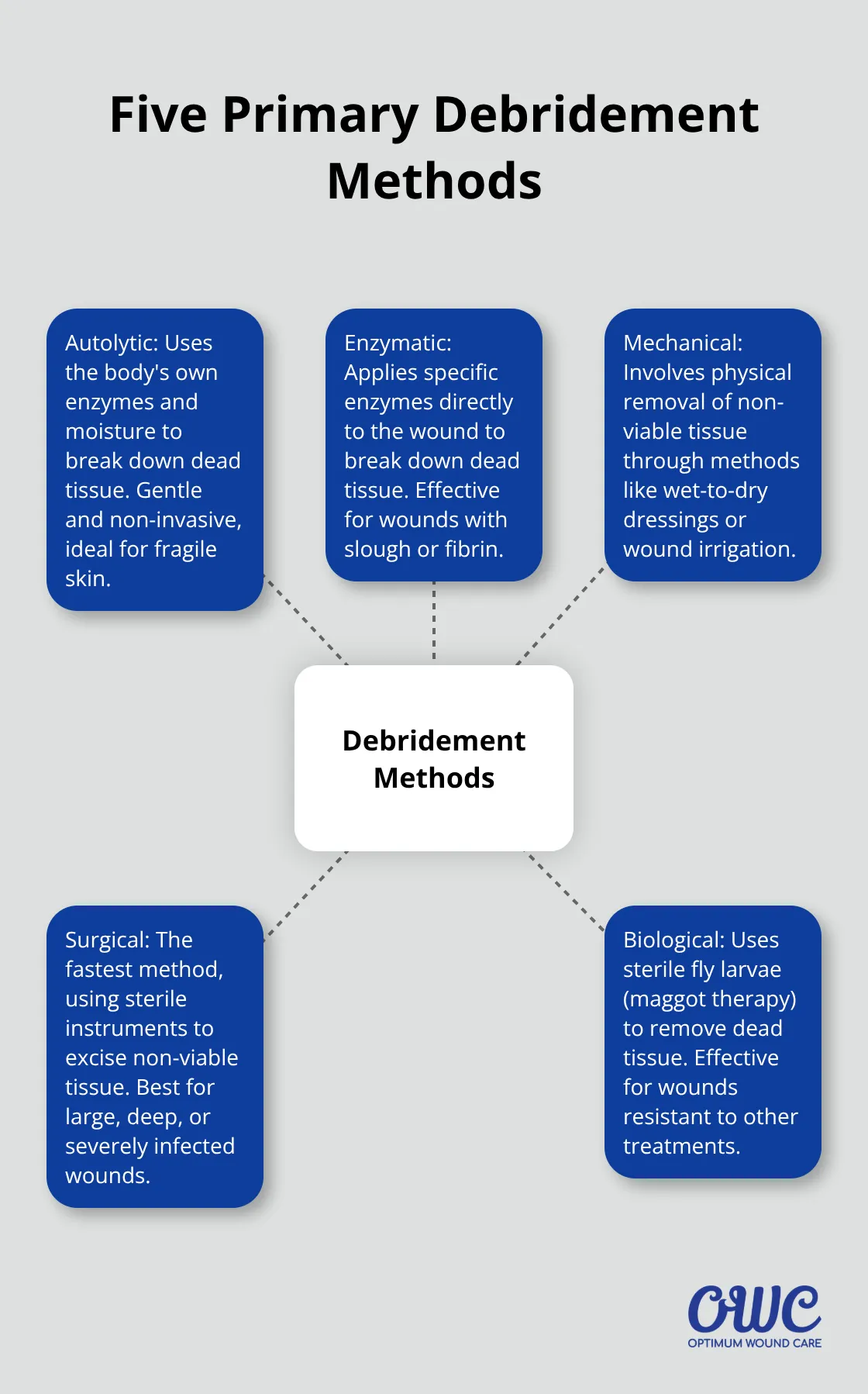
Various debridement methods exist, each with its own strengths and applications:
- Autolytic debridement: Uses the body’s own enzymes and moisture
- Enzymatic debridement: Applies specific enzymes to break down dead tissue
- Mechanical debridement: Involves physical removal of non-viable tissue
- Surgical debridement: Requires direct cutting away of dead tissue
- Biological debridement: Utilizes maggots to consume necrotic tissue
The selection of the most appropriate method depends on the specific wound characteristics and patient factors. In the next section, we’ll explore these debridement types in more detail, discussing their pros, cons, and ideal applications.
To better visualize the various debridement methods, let’s take a look at this comprehensive overview:
Five Key Debridement Methods
At Optimum Wound Care, we use various debridement techniques to address different wound types and patient needs. Let’s explore the five primary methods we use to promote healing and prevent complications.
Autolytic Debridement: The Body’s Natural Process
Autolytic debridement involves the use of moisture-donating or moisture-retentive dressings such as hydrogels, hydrocolloids or transparent films. This gentle, non-invasive method uses the body’s own enzymes to break down dead tissue. We often recommend this approach for patients with fragile skin or those who can’t tolerate more aggressive techniques.
To facilitate autolytic debridement, we apply specialized dressings that maintain a moist wound environment. This encourages the body’s natural enzymes to soften and liquefy necrotic tissue. While it’s slower than other methods (taking up to several days to show results), it’s particularly effective for smaller, less severe wounds.
Enzymatic Debridement: Precision Tissue Removal
Enzymatic debridement involves the application of specific enzymes directly to the wound to break down dead tissue. At our clinic, we’ve seen great success with collagenase-based products, which selectively target collagen in non-viable tissue while sparing healthy cells.
This method works well for patients who can’t undergo surgical debridement due to health concerns. It’s also effective for wounds with a lot of slough or fibrin. Enzymatic debridement has shown promising results in pressure ulcers, diabetic foot ulcers, and in conjunction with topical antibiotics for burns.
Mechanical Debridement: Physical Removal of Dead Tissue
Mechanical debridement involves the physical removal of non-viable tissue from the wound. This can happen through various means, including wet-to-dry dressings, wound irrigation, or whirlpool therapy.
While effective, mechanical debridement can cause pain and may damage healthy tissue if not performed carefully. At Optimum Wound Care, we prefer more selective methods when possible, but mechanical debridement remains a valuable option for certain wound types (particularly those with thick eschar).
Surgical Debridement: Rapid and Thorough Cleaning
Surgical debridement is the fastest and most thorough method of removing dead tissue. Using sterile instruments, our skilled practitioners can quickly and precisely excise non-viable tissue, promoting rapid healing.
This method works best for large, deep, or severely infected wounds. However, it requires specialized training and can cause pain, often necessitating local or general anesthesia. We carefully assess each patient’s condition to determine if surgical debridement is the best course of action.
Biological Debridement: Nature’s Wound Cleaners
Biological debridement, also known as maggot therapy, uses sterile fly larvae to remove dead tissue from wounds. While it may sound unconventional, this method has proven highly effective for certain types of wounds, particularly those that haven’t responded well to other treatments.
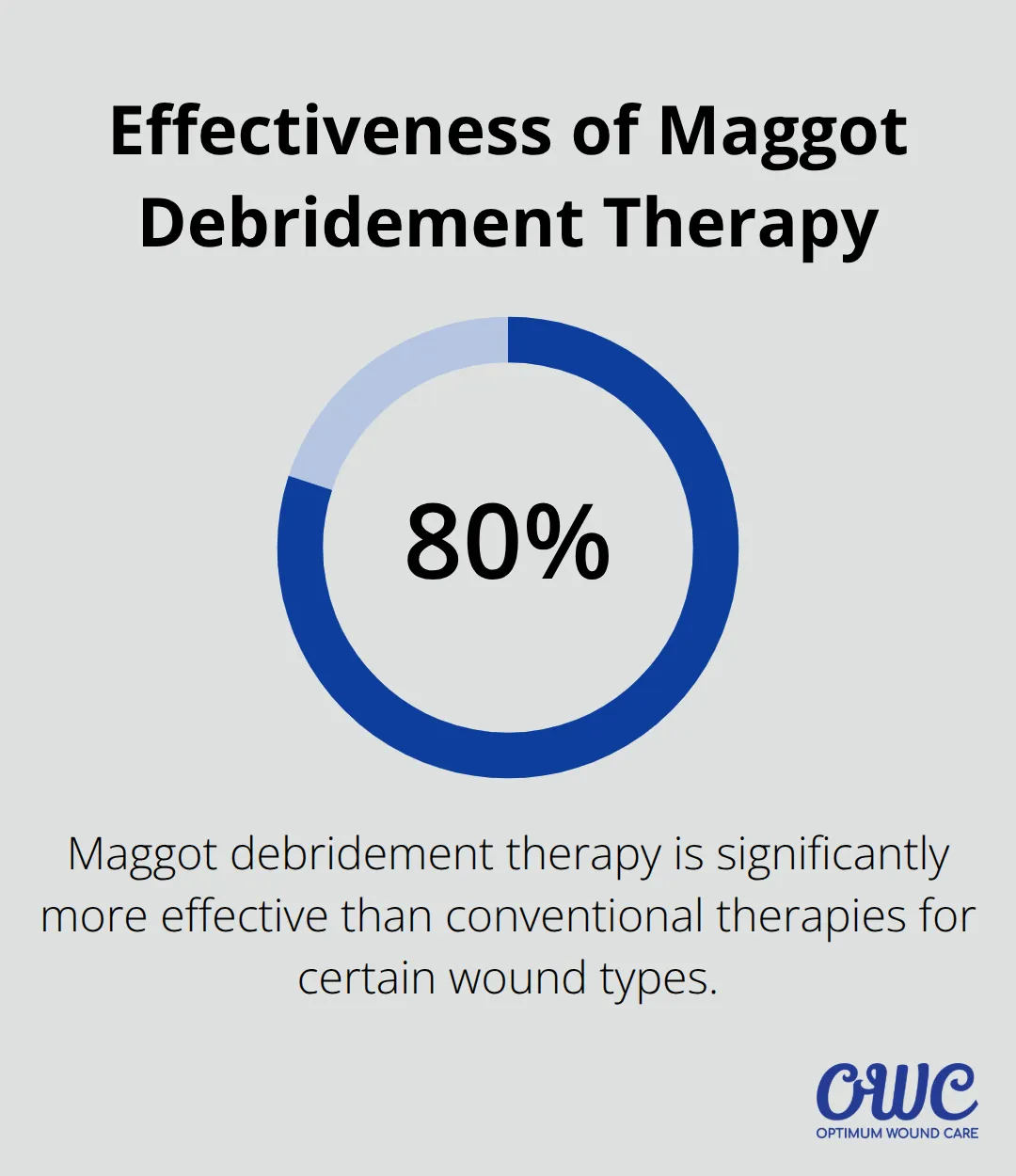
The larvae secrete enzymes that liquefy dead tissue, which they then consume, leaving healthy tissue untouched. This method can be particularly useful for diabetic foot ulcers and pressure sores. Studies have reported maggot debridement therapy as being significantly more effective than hydrogel or a mixture of conventional therapy modalities.
The following chart illustrates the remarkable effectiveness of maggot debridement therapy compared to conventional treatments:
At Optimum Wound Care, we’ve successfully used maggot therapy in cases where other debridement methods failed. For instance, we recently treated a patient with a chronic venous leg ulcer that had resisted traditional treatments for months. After just one week of maggot therapy, we observed significant improvement in wound bed quality and size reduction.
The choice of debridement method depends on various factors, including the wound type, patient’s overall health, and available resources. In the next section, we’ll compare these methods to help you understand which might be most suitable for different situations.
Which Debridement Method Works Best?
At Optimum Wound Care, we have observed how various debridement methods affect wound healing. This chapter compares these techniques to help you understand their suitability for different situations.
Effectiveness and Speed
Enzymatic debridement was more effective, showing faster wound size reduction in four out of five studies, according to recent research. However, its effectiveness can vary depending on the specific wound type.
Let’s examine the key advantages of enzymatic debridement in comparison to other methods:
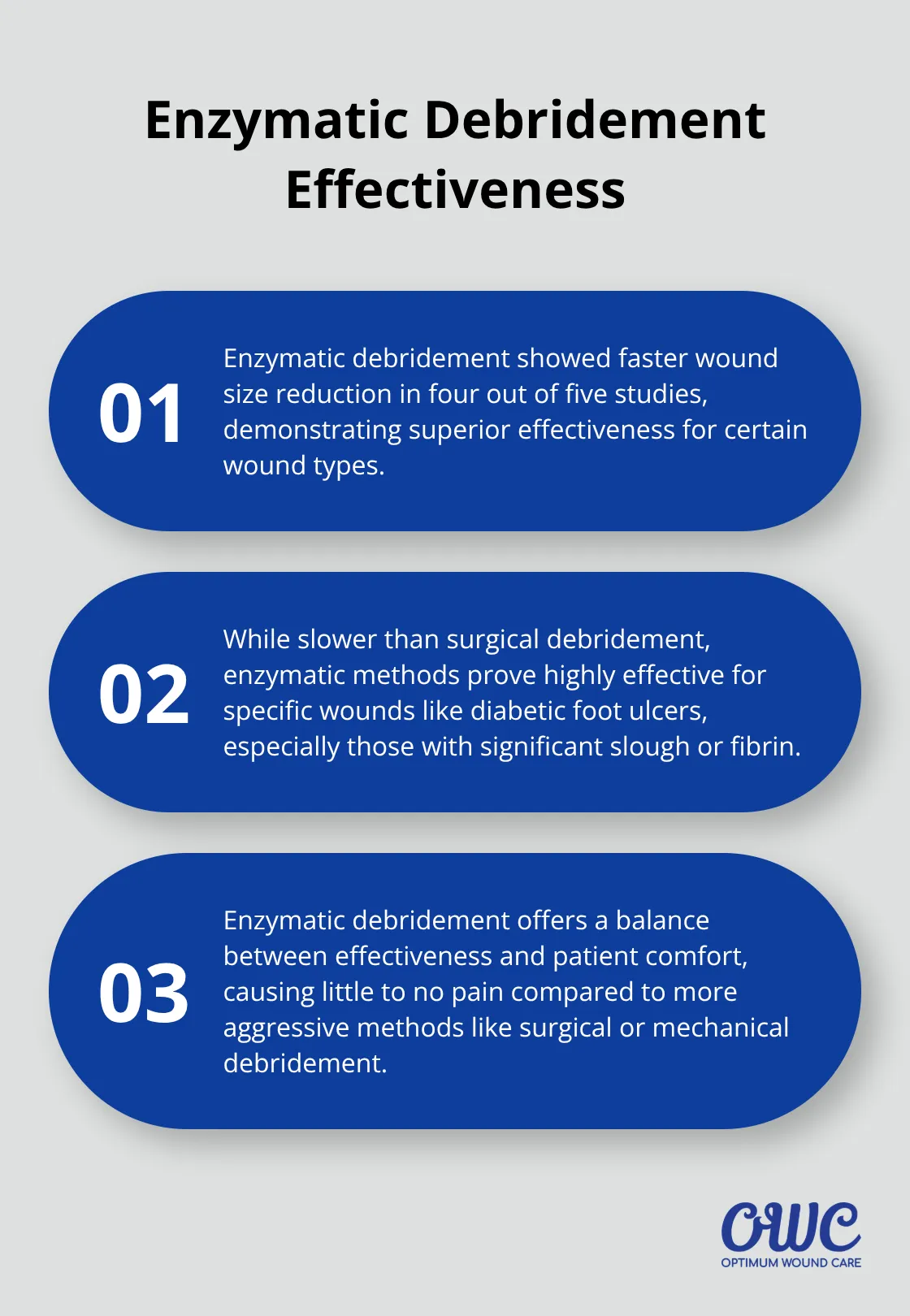
Enzymatic debridement, while slower, proves highly effective for certain wound types. Our team has successfully used collagenase-based products to treat diabetic foot ulcers.
Autolytic debridement, the slowest method, works particularly well for smaller wounds. We have observed complete debridement of superficial pressure ulcers using hydrogel dressings.
Pain Levels and Patient Comfort
Pain management plays a key role in wound care. Surgical debridement typically causes the most discomfort, often requiring anesthesia. In contrast, autolytic and enzymatic methods cause little to no pain, making them ideal for patients with low pain tolerance.
Mechanical debridement can cause moderate pain, especially during dressing changes. Newer techniques like low-frequency ultrasound can reduce pain while maintaining effectiveness.
Cost Considerations
Cost significantly influences the choice of debridement method. Surgical debridement, despite its speed, often costs the most due to specialized equipment and skilled personnel requirements.
Enzymatic debridement products can be expensive. However, they often require fewer clinic visits, potentially reducing overall costs.
Autolytic debridement offers the most cost-effective option. Advanced dressings used in this method make it accessible for long-term use.
Suitability for Different Wound Types
We tailor our approach to each patient’s unique needs at Optimum Wound Care. For large, severely infected wounds, we often recommend surgical debridement due to its speed and thoroughness.
Enzymatic debridement excels in treating diabetic foot ulcers (DFU). We have had great success using this method for wounds with significant slough or fibrin.
Autolytic debridement serves as our go-to for patients with fragile skin or those who cannot tolerate more aggressive techniques. It works particularly well for partial-thickness wounds and burns.
Biological debridement, using maggot debridement therapy (MDT), has shown promising results in the treatment of chronically infected wounds and ulcers.
Final Thoughts
Wound debridement plays a key role in effective wound management. The choice of method significantly impacts healing outcomes. At Optimum Wound Care, we have observed how different types of debridement for wounds yield varying results based on specific wound characteristics and patient needs.
Each debridement method (autolytic, enzymatic, mechanical, surgical, and biological) has unique strengths and applications. The effectiveness of these methods varies greatly depending on factors such as wound type, size, and the patient’s overall health. Pain levels and cost considerations also influence the selection of the most appropriate technique.
Professional wound care becomes invaluable when dealing with complex cases. Our experienced team at Optimum Wound Care assesses each wound individually to determine the most suitable debridement method. We develop tailored, effective treatment plans to promote faster healing and improve our patients’ quality of life.
