
How to Treat Vascular Wounds Effectively
Vascular wounds can be challenging to treat, often requiring specialized care and advanced techniques. At Swell Country, we understand the complexities of these wounds and the impact they have on patients’ lives.
Our comprehensive guide to vascular wounds treatment offers insights into effective strategies, from proper wound cleaning to innovative therapies like hyperbaric oxygen treatment. We’ll explore the latest advancements in wound care technology and provide practical tips for optimal healing.
Understanding Vascular Wounds
Types of Vascular Wounds
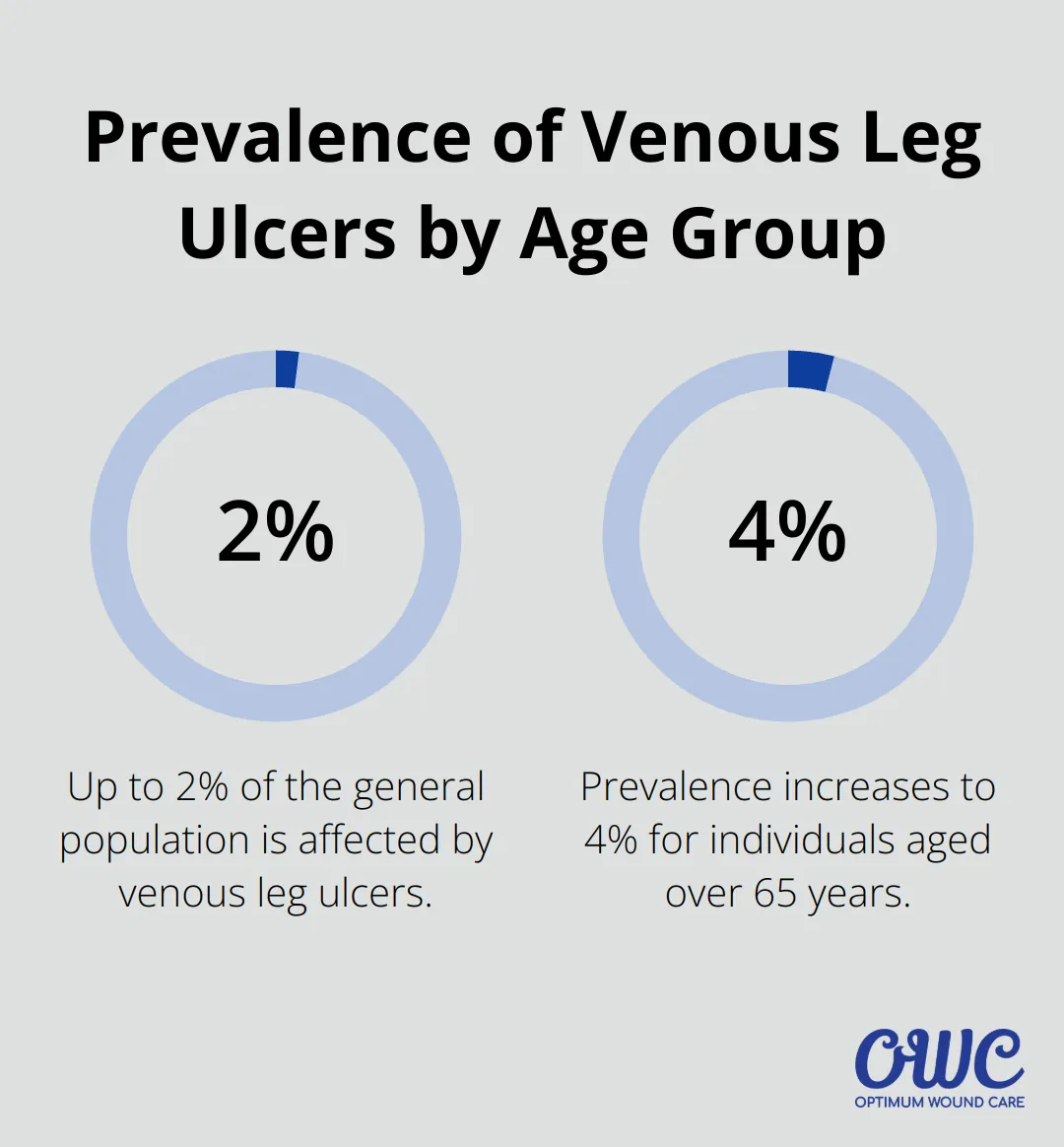
Vascular wounds primarily fall into two categories: venous and arterial. Venous leg ulcers affect 1% to 2% of the population, with the prevalence increasing ≤4% for those aged >65 years. Arterial ulcers result from insufficient blood flow to the extremities.
Root Causes of Vascular Wounds
The primary cause of venous ulcers is chronic venous insufficiency, where damaged valves in the veins fail to push blood back to the heart effectively. For arterial ulcers, peripheral artery disease (PAD) often underlies the problem. Overall prevalence estimates indicate that there are 7 to 12 million affected individuals in the United States and 200 million people worldwide.
Identifying Risk Factors
Several factors increase the likelihood of developing vascular wounds:
- Age: The risk increases dramatically after 65.
- Obesity: A study in the International Journal of Obesity found that individuals with a BMI over 40 had a 4.5 times higher risk of developing venous ulcers compared to those with a normal BMI.
- Smoking: The chemicals in cigarette smoke damage blood vessels and reduce oxygen in the blood, severely impacting wound healing. (Quitting smoking is a critical step in any treatment plan.)
- Diabetes: The lifetime risk of foot ulcer is 19% to 34%, and this number is rising with increased longevity and medical complexity of people with diabetes.
Impact on Patient’s Lives
Vascular wounds significantly affect patients’ quality of life. They can cause pain, limit mobility, and lead to social isolation. The slow healing nature of these wounds often results in prolonged treatment periods, which can be frustrating and demoralizing for patients.
The Role of Specialized Care
At Optimum Wound Care (OWC Center), we conduct thorough assessments to identify individual risk factors and develop targeted treatment plans. Our goal extends beyond treating existing wounds; we focus on preventing future occurrences and improving overall vascular health.
As we move forward, it’s important to understand the effective treatment strategies for these complex wounds. Let’s explore the various approaches that can accelerate healing and improve patient outcomes.
Effective Vascular Wound Treatment Techniques
At Optimum Wound Care (OWC Center), we employ multiple approaches to treat vascular wounds. Our methods stem from the latest research and adapt to each patient’s specific needs.
Precision Cleaning and Debridement
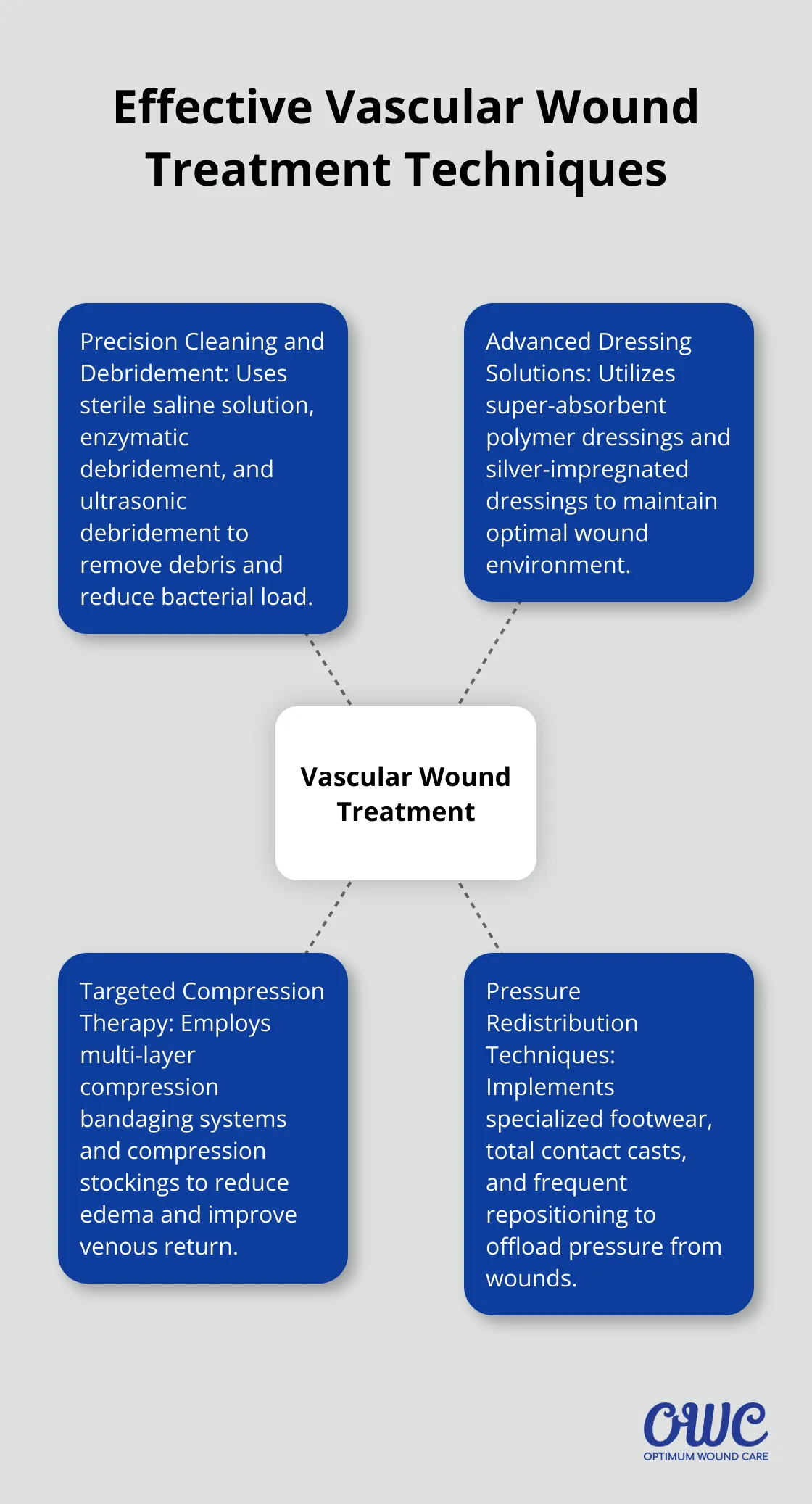
The first step in effective vascular wound treatment involves thorough cleaning and debridement. We use sterile saline solution to clean the wound gently, which removes debris and reduces bacterial load. For more stubborn cases, we use advanced debridement techniques.
Enzymatic debridement, with products like collagenase, is supported for use in pressure ulcers, diabetic foot ulcers, and in conjunction with topical antibiotics for burns. This method selectively removes necrotic tissue while it preserves healthy cells.
For larger or more complex wounds, we may apply ultrasonic debridement. This method uses low-frequency ultrasound waves to break down devitalized tissue and biofilms.
Advanced Dressing Solutions
The right dressing choice proves crucial for optimal healing. We use various advanced dressings, each selected based on the wound’s characteristics and healing stage.
For highly exudative wounds, we often recommend super-absorbent polymer dressings. These can absorb large amounts of fluid, which maintains a moist wound environment while it prevents maceration of surrounding skin.
In cases of slow-healing wounds, we may use silver-impregnated dressings.
Targeted Compression Therapy
Compression therapy forms a cornerstone of venous ulcer treatment. We use multi-layer compression bandaging systems, which reduce edema and improve venous return. Some studies have compared these systems to single layer compression stockings, though no significant difference was detected in certain trials.
For patients who struggle with bandages, we may recommend compression stockings. These come in various compression levels. We ensure proper fitting and educate patients on correct usage to maximize effectiveness.
Pressure Redistribution Techniques
Offloading plays a critical role, especially for diabetic foot ulcers. We use a range of devices, from specialized footwear to total contact casts. The use of TCCs in patients with diabetic foot ulcers has shown improved rates of ulcer healing and shorter healing time compared to removable walking casts and footwear.
For bedridden patients with vascular wounds, we recommend frequent repositioning, ideally every two hours. We also use specialized mattresses and cushions to redistribute pressure and prevent new ulcers from forming.
At OWC Center, we combine these strategies into a comprehensive treatment plan, which we continuously monitor and adjust based on wound progression. Our approach not only accelerates healing but also aims to prevent recurrence. As we move forward, let’s explore some of the innovative therapies and technologies that are revolutionizing vascular wound care.
Cutting-Edge Therapies for Vascular Wounds
At Optimum Wound Care (OWC Center), we explore innovative therapies to enhance vascular wound healing. Our approach combines established techniques with groundbreaking technologies to provide effective treatment for our patients.
Negative Pressure Wound Therapy
Negative Pressure Wound Therapy (NPWT) has been a topic of interest in the treatment of vascular wounds. This technique applies controlled suction to the wound bed through a specialized dressing. However, a recent study found that NPWT was not superior to standard moist wound care in diabetic foot wounds in German clinical practice. The overall wound closure rate was low.
OWC Center uses advanced NPWT systems that allow for customized pressure settings and intermittent therapy modes. This tailored approach aims to stimulate granulation tissue formation, reduce edema, and promote wound contraction. We continue to evaluate the effectiveness of NPWT in various types of vascular wounds.
Hyperbaric Oxygen Therapy
Hyperbaric Oxygen Therapy (HBOT) is another tool used in vascular wound treatment. During HBOT sessions, patients breathe 100% oxygen in a pressurized chamber, which dramatically increases the oxygen concentration in their bloodstream.
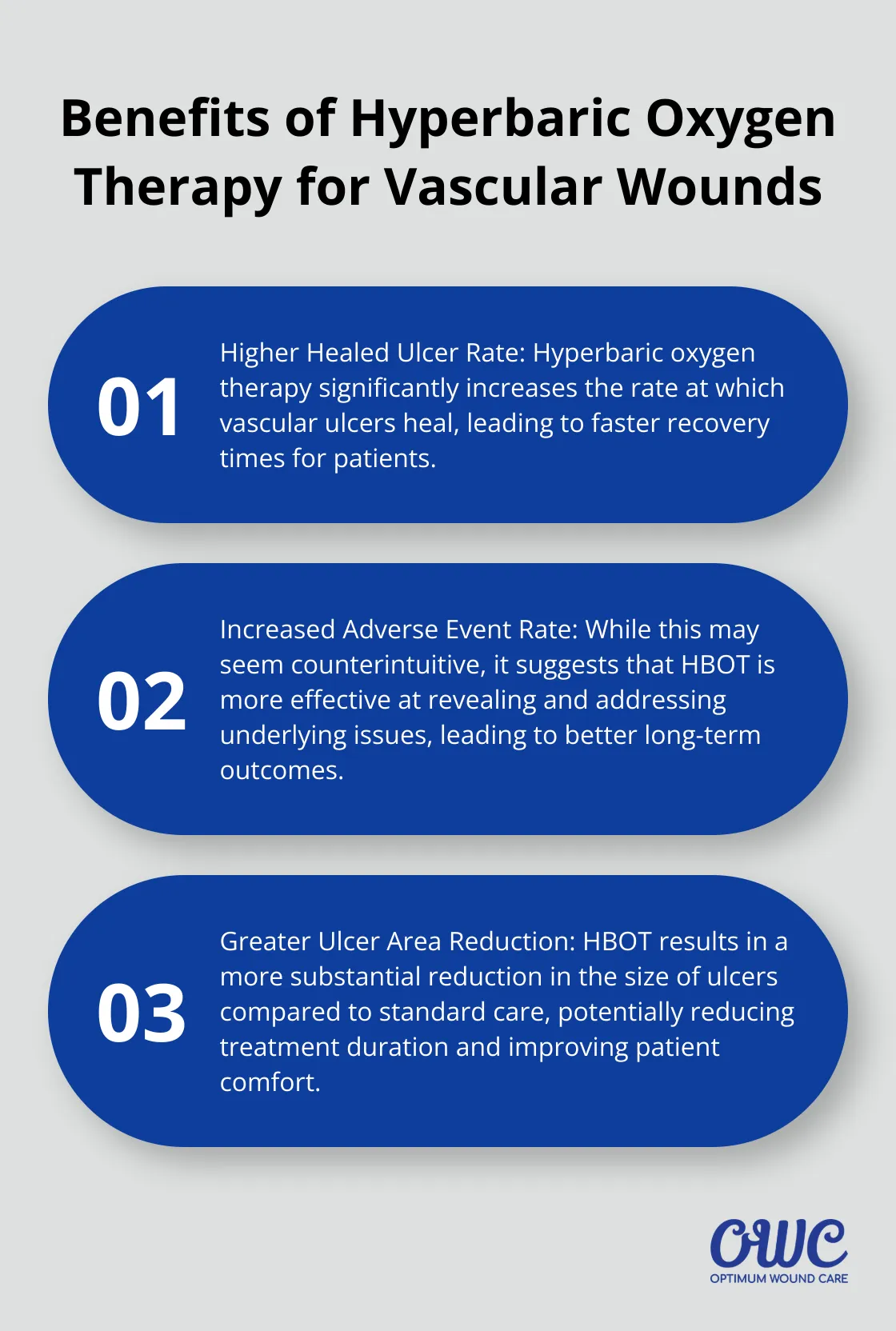
Recent data revealed that hyperbaric oxygen treatment had a significantly higher healed ulcer rate, adverse event rate, and ulcer area reduction compared to standard care. OWC Center has integrated HBOT into treatment protocols for select patients, particularly those with diabetic foot ulcers and arterial insufficiency ulcers that have failed to respond to conventional therapies.
Bioengineered Skin Substitutes
The field of bioengineered skin substitutes has made significant strides in recent years. These products provide a scaffold for new tissue growth and deliver growth factors to accelerate healing. OWC Center uses several types of skin substitutes, including:
- Dermal substitutes: These replace the dermis and provide a foundation for epithelial cell migration.
- Epidermal substitutes: These contain cultured keratinocytes to jumpstart re-epithelialization.
- Full-thickness substitutes: These replace both dermis and epidermis, offering a complete skin replacement option.
Graftjacket, a specific bioengineered skin substitute, has been shown to have a higher rate of complete wound healing (100% reepithelialization) at 12 weeks after application compared with conventional treatments. We’ve observed particularly promising results with full-thickness substitutes in treating large venous leg ulcers that have resisted other treatment modalities.
Emerging Treatments and Clinical Trials
OWC Center commits to staying at the forefront of wound care advancements. We currently participate in clinical trials for several emerging therapies:
- Gene therapy: We investigate the use of vascular endothelial growth factor (VEGF) gene therapy to stimulate angiogenesis in patients with critical limb ischemia.
- Stem cell therapy: Our center is part of a multi-center trial exploring the efficacy of autologous bone marrow-derived stem cells in treating diabetic foot ulcers.
- Smart dressings: We test new dressings embedded with sensors that can detect early signs of infection and alert healthcare providers.
These cutting-edge therapies represent the future of vascular wound care. While they’re still in the research phase, early results are promising. We look forward to offering these innovative treatments to our patients in the near future, further enhancing our ability to tackle even the most challenging vascular wounds.
Final Thoughts
Vascular wounds treatment requires a personalized approach. Every patient’s wound is unique, influenced by factors such as underlying health conditions, lifestyle, and wound characteristics. Patient education empowers individuals to actively participate in their treatment and make informed decisions about their care.
Specialized wound care centers bring together expertise, advanced technologies, and comprehensive care under one roof. At Optimum Wound Care (OWC Center), we offer a range of services tailored to each patient’s needs. Our experienced clinical team combines clinical expertise with state-of-the-art techniques to deliver effective, patient-focused care.
The field of vascular wound care continues to evolve, with ongoing research and clinical trials paving the way for more effective treatments. As we look to the future, the integration of emerging therapies (like gene therapy and smart dressings) holds promise for further improving healing rates and patient quality of life. Successful vascular wounds treatment restores function, prevents recurrence, and enhances overall well-being.
