Benefits of NPWT Wound Therapy for Faster Healing
At Optimum Wound Care (OWC Center), we’re committed to advancing wound care technologies that improve patient outcomes. NPWT wound therapy has revolutionized the treatment of complex wounds, offering a powerful solution for faster healing. This innovative approach uses controlled negative pressure to promote tissue regeneration and reduce complications.
Understanding NPWT Wound Therapy
What is NPWT and How Does it Work?
Negative Pressure Wound Therapy (NPWT) revolutionizes wound care. At Optimum Wound Care, we use this advanced technique to accelerate healing for patients with complex wounds.
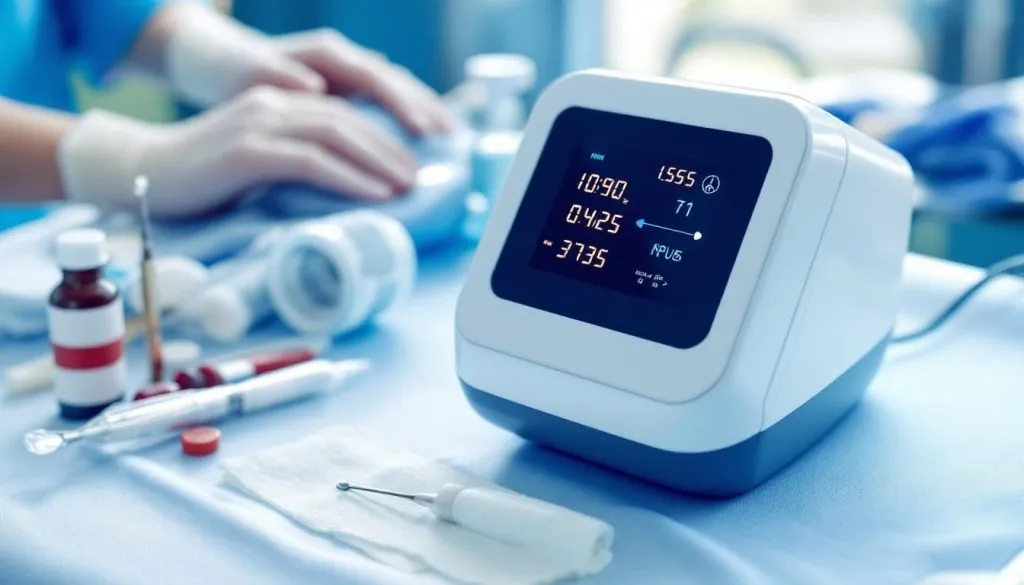
NPWT applies controlled suction to a wound. This negative pressure aims to optimize the physiology involved in wound healing by applying sub-atmospheric pressure to help reduce excess fluid and debris, reduce swelling, and promote new tissue growth. The therapy typically employs a foam dressing, an adhesive film, and a pump to create the necessary suction.
Types of Wounds Treated with NPWT
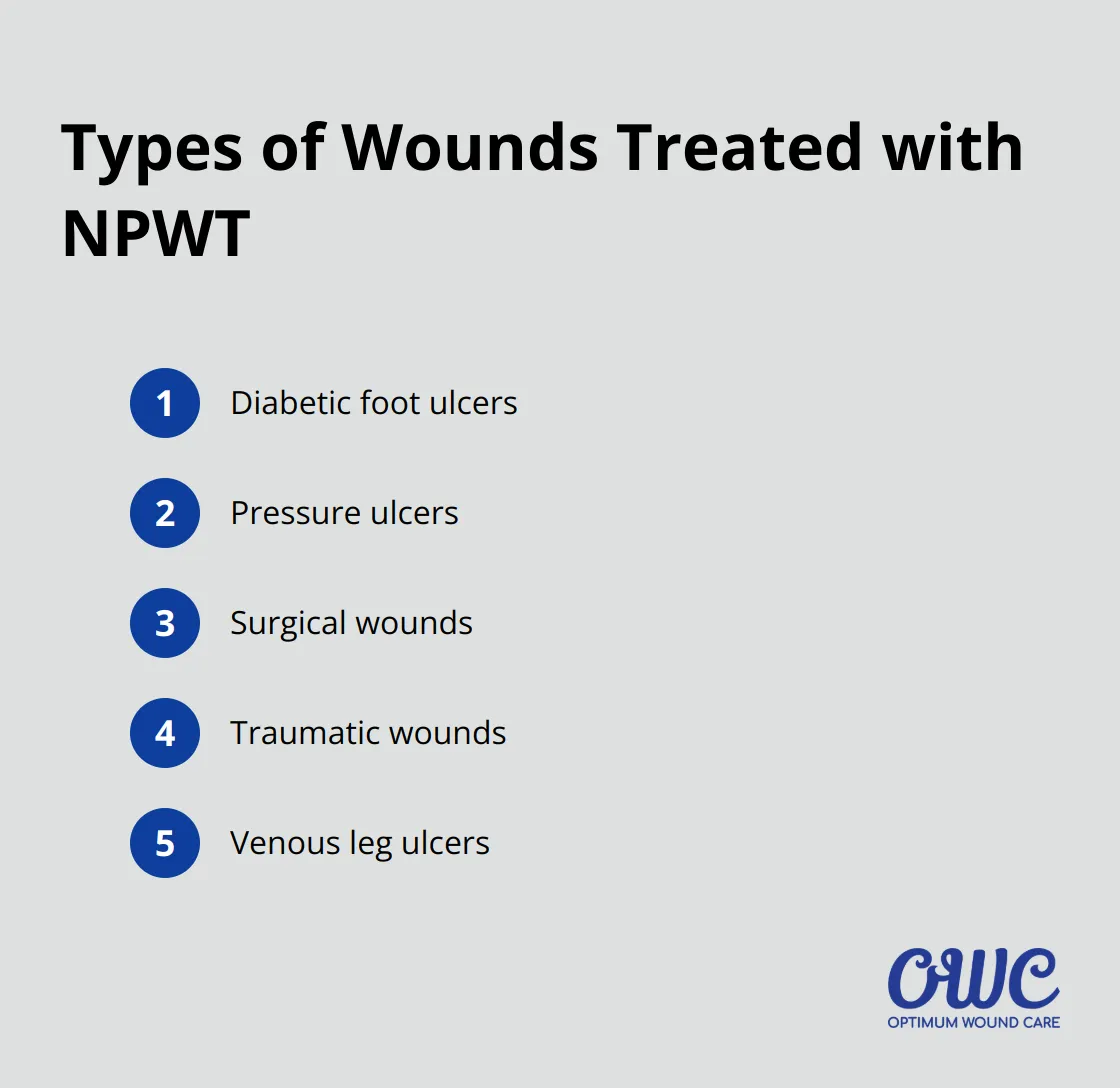
NPWT proves versatile and effective for various wound types. We observe excellent results when we use it on:
A study has shown that NPWT can influence the healing of diabetic foot ulcers (DFU).
The Evolution of NPWT Technology
NPWT has progressed significantly since its inception. The concept first saw use during the Russo-Afghan War in 1985, but the 1990s marked its modernization and introduction to wider clinical practice.
Today, portable NPWT devices allow patients to continue treatment at home, improving their quality of life. Some systems even incorporate instillation therapy (where saline or antibiotics are introduced to the wound before applying negative pressure).
A meta-analysis proved that NPWT with instillation and dwell time (NPWTi-d) is superior to NPWT or conventional dressings in orthoplastic wound care management. At Optimum Wound Care, we stay current with these advancements to offer our patients the most effective treatments available.
Practical Considerations for NPWT
Proper application is key to NPWT’s success. Our wound care specialist, Mosayeb “Moe” Karimi, MSN, FNP, WOC, ensures that each patient receives a tailored treatment plan.
Typically, dressing changes occur every 48 to 72 hours (less frequent than traditional dressings). This can increase patient comfort and reduce infection risk from frequent wound exposure.
It’s important to note that while NPWT is highly effective, it doesn’t suit all patients. Those with exposed organs, active bleeding, or certain types of cancer may not qualify for this therapy. We always conduct a thorough assessment before we recommend NPWT.
As we move forward, let’s explore the key benefits of NPWT for wound healing in more detail.
How NPWT Accelerates Wound Healing
At Optimum Wound Care, we witness the remarkable effects of Negative Pressure Wound Therapy (NPWT) on our patients’ healing processes. This innovative treatment offers several key benefits that create an optimal environment for wound closure.
Rapid Wound Closure
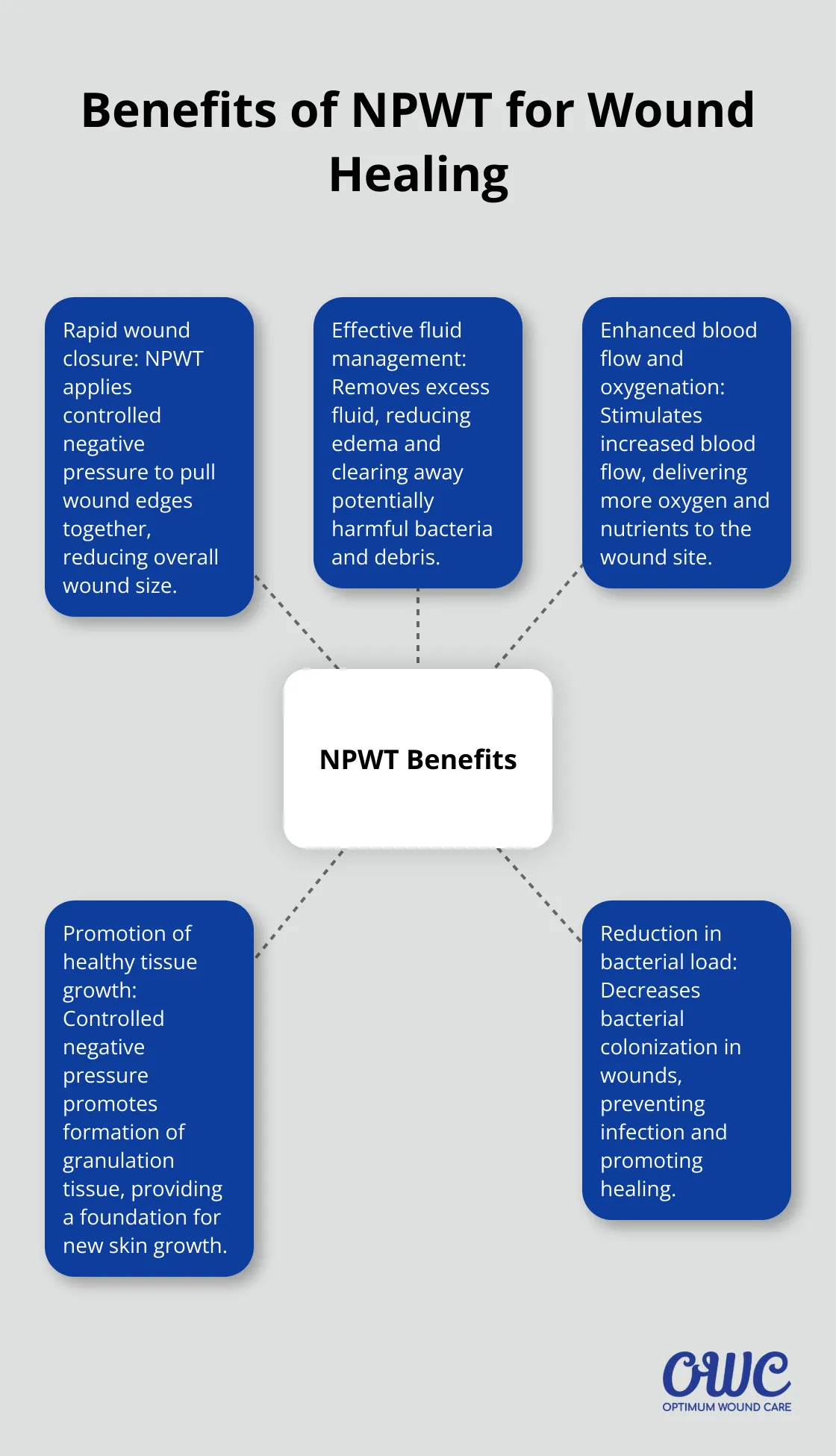
NPWT significantly speeds up wound closure by applying controlled negative pressure to the wound bed. This pressure pulls the wound edges together, reducing the overall wound size. A study compared NPWT and conventional wound dressings in patients with open fracture wounds.
Effective Fluid Management
NPWT excels at removing excess fluid from the wound area. This action not only reduces edema but also helps clear away potentially harmful bacteria and debris. Our wound care specialist, Mosayeb “Moe” Karimi, MSN, FNP, WOC, emphasizes that effective fluid management prevents complications and promotes faster healing.
Enhanced Blood Flow and Oxygenation
NPWT stimulates increased blood flow to the wound area, which is essential for healing. Improved circulation delivers more oxygen and nutrients to the wound site, supporting new tissue growth. Research shows that normothermic wound therapy promotes healing of chronic wounds.
Promotion of Healthy Tissue Growth
The controlled negative pressure created by NPWT promotes the formation of granulation tissue, which fills in the wound bed and provides a foundation for new skin growth. We observe that wounds treated with NPWT often develop healthy granulation tissue more quickly than those treated with conventional methods.
Reduction in Bacterial Load
NPWT decreases bacterial colonization in wounds, which significantly prevents infection and promotes healing. A pragmatic randomised controlled trial was designed to compare the clinical effectiveness and cost-effectiveness of standard dressings with incisional NPWT.
NPWT has become a cornerstone of advanced wound treatment protocols (due to its numerous benefits). For patients who qualify, it can transform their wound healing journey. However, proper implementation of NPWT requires expertise and careful patient selection. In the next section, we’ll explore how to effectively implement NPWT in clinical practice.
How to Implement NPWT Effectively
At Optimum Wound Care, we have refined our approach to implementing Negative Pressure Wound Therapy (NPWT) to ensure optimal outcomes for our patients. Our wound care specialist, Mosayeb “Moe” Karimi, MSN, FNP, WOC, emphasizes the importance of a systematic approach to NPWT implementation.
Patient Selection and Preparation
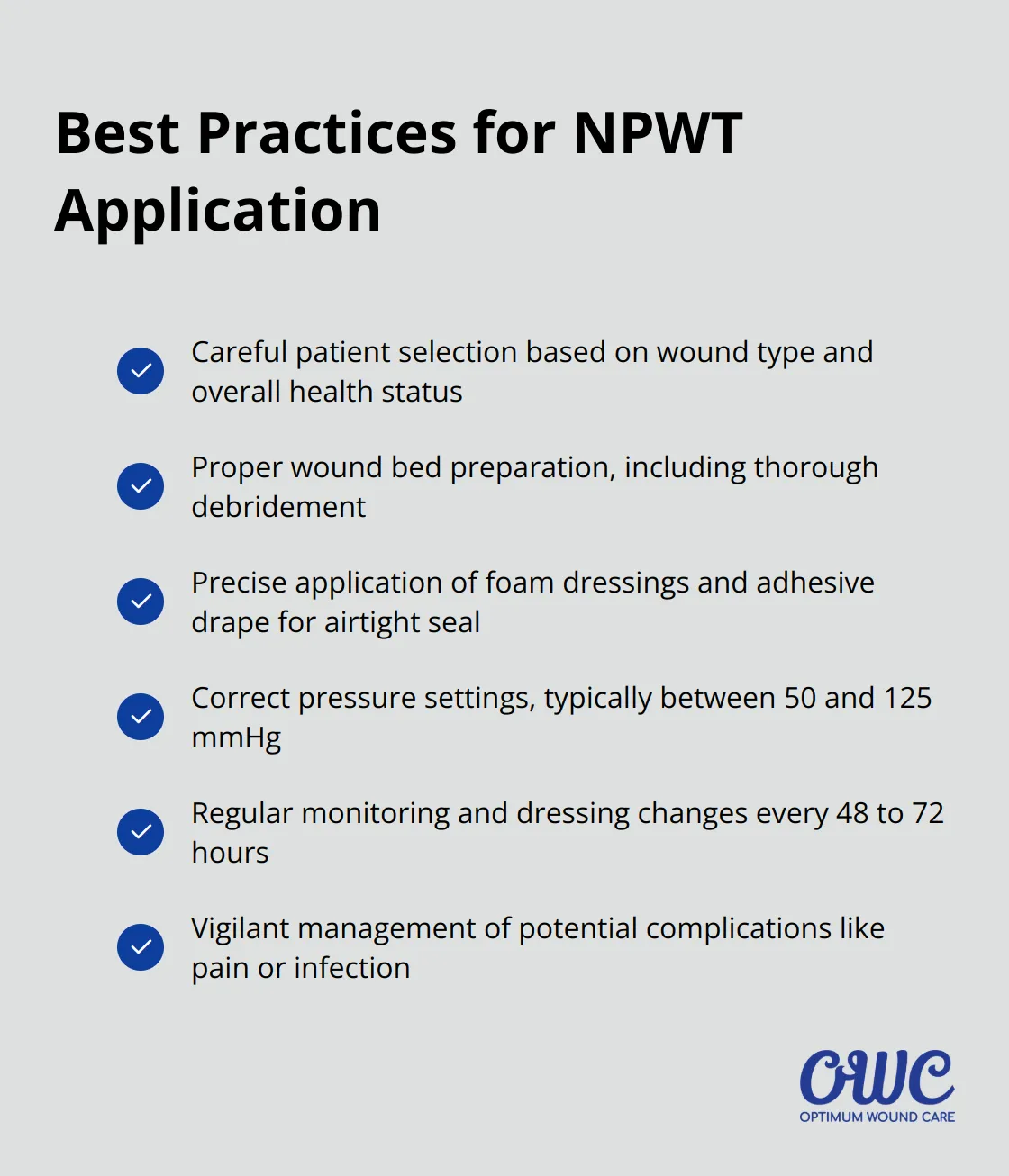
We select the right patients for NPWT carefully. Our team assesses each patient’s wound type, overall health status, and ability to comply with treatment protocols. Patients with large, complex wounds (such as diabetic foot ulcers or post-surgical wounds) often benefit most from NPWT.
Before we initiate NPWT, we prepare the wound bed properly. This typically involves thorough debridement to remove any necrotic tissue or foreign material. A clean wound bed is essential for NPWT to work effectively.
Application Process and Best Practices
The application of NPWT requires precision and expertise. We use specialized foam dressings cut to fit the wound exactly, avoiding contact with healthy skin. Our team covers the foam with an adhesive drape to create an airtight seal. This seal is critical – even small leaks can compromise the therapy’s effectiveness.
We connect the dressing to a vacuum pump, typically set to deliver continuous negative pressure between 50 and 125 mmHg. The exact pressure depends on the wound type and patient tolerance. For example, we might use lower pressures for patients with fragile skin or poor circulation.
Monitoring and Adjusting Therapy:
Regular monitoring is essential for successful NPWT. We change dressings every 48 to 72 hours, which allows us to assess wound progress and make necessary adjustments. During these changes, we look for signs of infection, evaluate the wound bed’s appearance, and measure the wound dimensions.
We adjust therapy based on these observations. For instance, if granulation tissue forms too rapidly and causes pain, we might reduce the negative pressure. Conversely, if fluid accumulation is excessive, we might increase the pressure or frequency of dressing changes.
Managing Complications
While NPWT is generally safe, complications can occur. Pain is the most common issue, which we often manage by adjusting pressure settings or using pain medication. Bleeding is a more serious complication, particularly in patients on anticoagulants. We mitigate this risk through careful patient selection and vigilant monitoring.
Infection is another potential complication. We combat this by maintaining strict aseptic technique during dressing changes and promptly addressing any signs of infection. In some cases, we might incorporate antimicrobial dressings or topical treatments into the NPWT regimen.
Final Thoughts
NPWT wound therapy has transformed wound care, offering significant benefits for patients with complex wounds. We at Optimum Wound Care have witnessed how this innovative treatment accelerates healing, reduces complications, and improves patient outcomes. The success of NPWT depends on proper implementation and patient care, which requires careful patient selection, meticulous application techniques, and vigilant monitoring.
We look forward to future developments in NPWT technology, including portable devices and advanced systems with instillation therapy. These innovations will likely expand NPWT applications and further improve its effectiveness. Our commitment to staying at the forefront of wound care advancements drives us to continually enhance our treatment methods.
At Optimum Wound Care, we combine clinical expertise with cutting-edge techniques to deliver comprehensive wound services. Our specialized outpatient clinic in Louisville (focused on patient-centered care) leverages the latest NPWT technology to help patients heal faster and regain their quality of life. We invite you to experience our advanced wound care solutions firsthand.
