
Enzymatic Wound Debridement: What You Need to Know
At Swell Country, we’re committed to advancing wound care knowledge.
Enzymatic wound debridement is a powerful technique in modern wound management. This method uses specific enzymes to selectively remove dead tissue, promoting healing and reducing complications.
In this post, we’ll explore the ins and outs of enzymatic debridement, its benefits, and how to apply it effectively.
What is Enzymatic Wound Debridement?
Definition and Mechanism
Enzymatic wound debridement is a targeted method for removing dead tissue from wounds. This technique uses specific enzymes to break down and remove non-viable tissue. The most common enzyme used is collagenase, derived from Clostridium histolyticum. This enzyme targets collagen, a major component of dead tissue.
Unlike mechanical or surgical debridement, enzymatic methods are selective. They only break down dead tissue, leaving healthy tissue intact. This selectivity makes enzymatic debridement particularly useful for wounds where other methods might be too painful or risky.
Types of Enzymes in Wound Care
While collagenase is the most widely used, other enzymes have roles in wound care:
- Papain: Derived from papaya, it’s effective against protein-based debris.
- Fibrinolysin: Helps break down fibrin clots in wounds.
- Streptokinase: Another fibrin-dissolving enzyme.
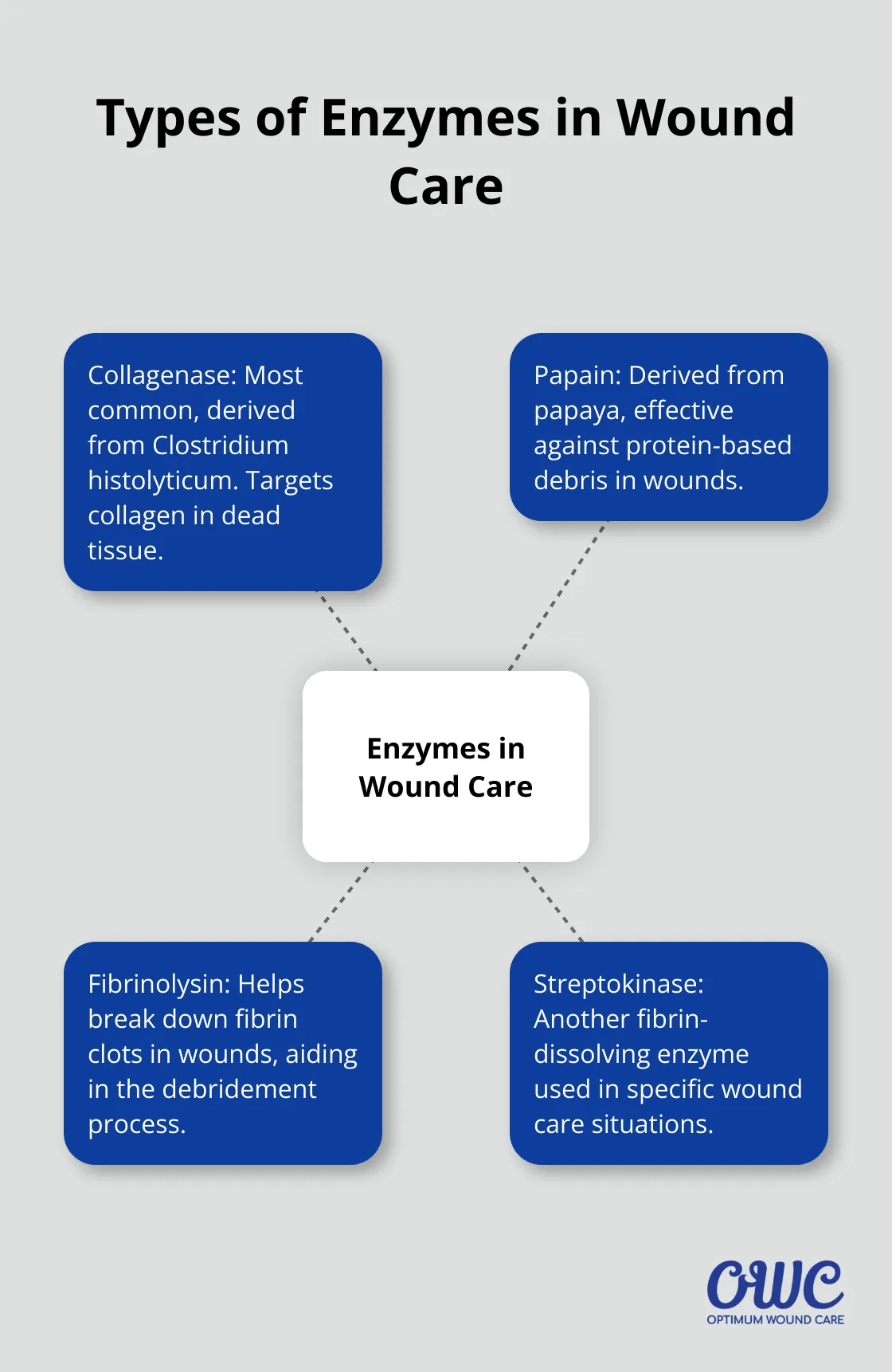
Each enzyme has specific indications and contraindications. Wound care specialists carefully select the most appropriate enzyme based on the wound type and patient condition.
Comparing Debridement Methods
Enzymatic debridement offers several advantages over other methods:
- Less pain: Unlike sharp debridement, enzymatic methods are generally painless.
- Lower risk: There’s minimal risk of damaging healthy tissue or causing bleeding.
- Ease of use: Can be applied by nurses or even patients at home (under proper guidance).
However, enzymatic debridement is slower than surgical methods. It may take several days to weeks for complete debridement. In some cases, healthcare providers combine enzymatic debridement with other methods for optimal results.
When to Use Enzymatic Debridement
Healthcare professionals often recommend enzymatic debridement for:
- Patients with bleeding disorders
- Wounds with adherent slough or eschar
- Cases where pain management is a concern
- Situations where frequent dressing changes are impractical
Current practice for treating pressure ulcers includes treating the underlying causes, debridement to remove necrotic tissues and contaminated tissues.
At Optimum Wound Care (OWC), our experienced team (led by Wound Specialist Mosayeb “Moe” Karimi) assesses each wound individually to determine the best debridement method. This personalized approach ensures that patients receive the most appropriate and effective treatment for their specific needs.
The success of enzymatic debridement depends on proper application and management. In the next section, we’ll explore the step-by-step process of applying enzymatic agents and monitoring wound progress.
Why Enzymatic Debridement Excels
Precision and Safety
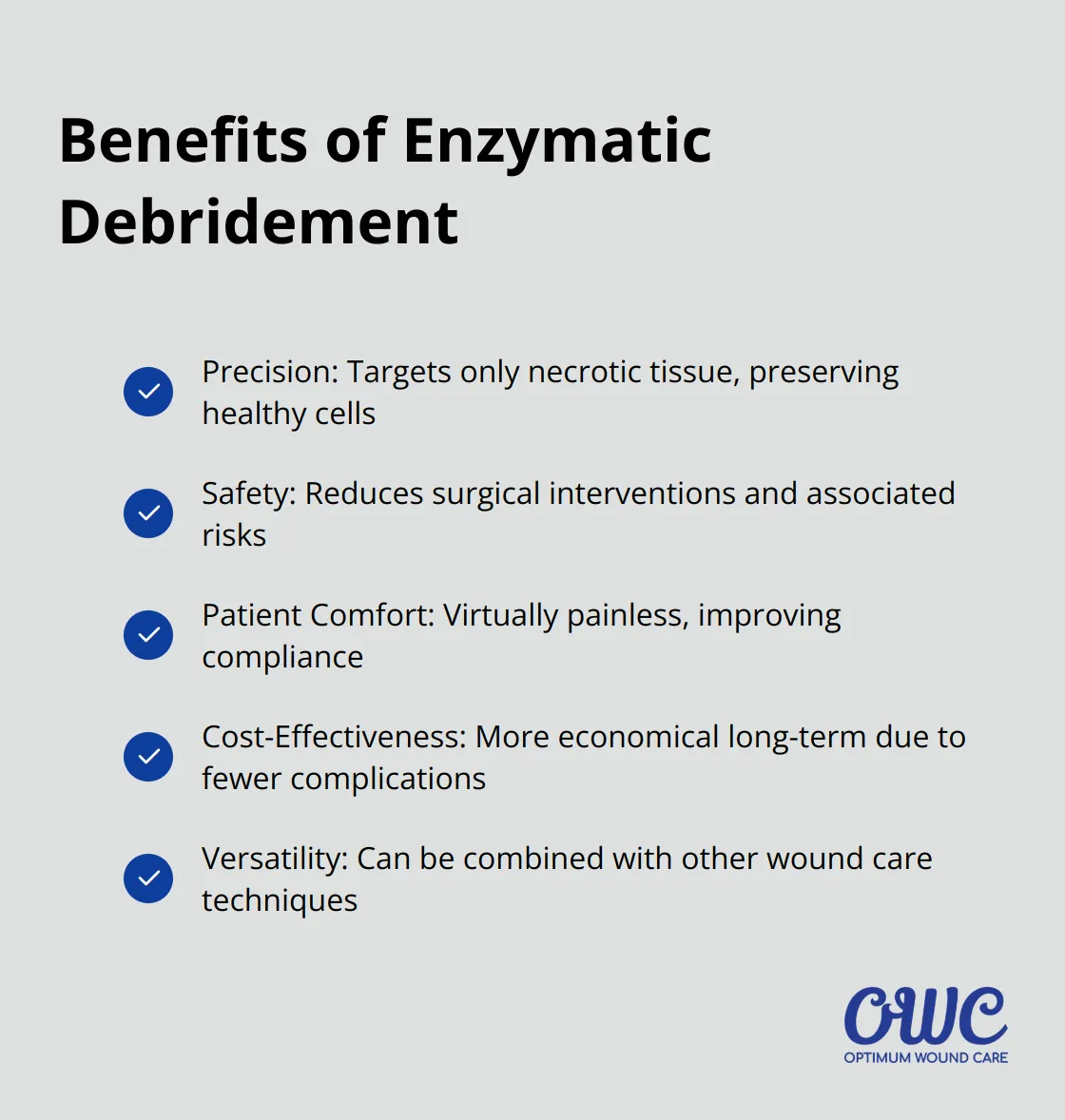
Enzymatic debridement revolutionizes wound care. This method offers unmatched precision. Enzymes target only necrotic material, unlike mechanical methods that can harm healthy tissue. This selectivity proves invaluable for delicate wounds or patients with compromised healing abilities.
A Journal of Wound Care study revealed that enzymatic debridement reduced surgical interventions in chronic wounds. This reduction translates to fewer risks and complications for patients.
Ideal for Specific Wound Types
Certain wounds respond exceptionally well to enzymatic treatment. Pressure ulcers often have adherent slough that resists manual removal. Enzymatic agents penetrate these layers effectively.
Diabetic foot ulcers also benefit greatly. Enzymatic debridement consistently demonstrated faster healing times compared to autolytic debridement in diabetic foot ulcers.
Patient Comfort and Compliance
Pain during debridement concerns many patients. Enzymatic methods offer virtually painless treatment, which improves patient comfort and compliance. This benefit particularly helps:
- Elderly patients with fragile skin
- Individuals with neuropathy (who may not feel pain as a warning sign)
- Patients on anticoagulants (at risk for bleeding with mechanical debridement)
Cost-Effective Long-Term Care
Enzymatic agents may seem costly upfront, but they often prove more economical long-term. Reduced cost of early enzymatic debridement adds up to its widely reported benefits when compared to surgical tangential excision. This reduction stemmed primarily from fewer complications and faster healing times.
Synergistic Approach
For optimal results, wound care specialists often combine enzymatic debridement with other advanced wound care techniques. This tailored approach addresses each patient’s unique needs and can lead to improved healing rates.
The versatility and effectiveness of enzymatic debridement make it a valuable tool in modern wound care. However, proper application and management remain essential for success. The next section will explore the step-by-step process of applying enzymatic agents and monitoring wound progress.
How to Apply and Manage Enzymatic Debridement
Preparing the Wound
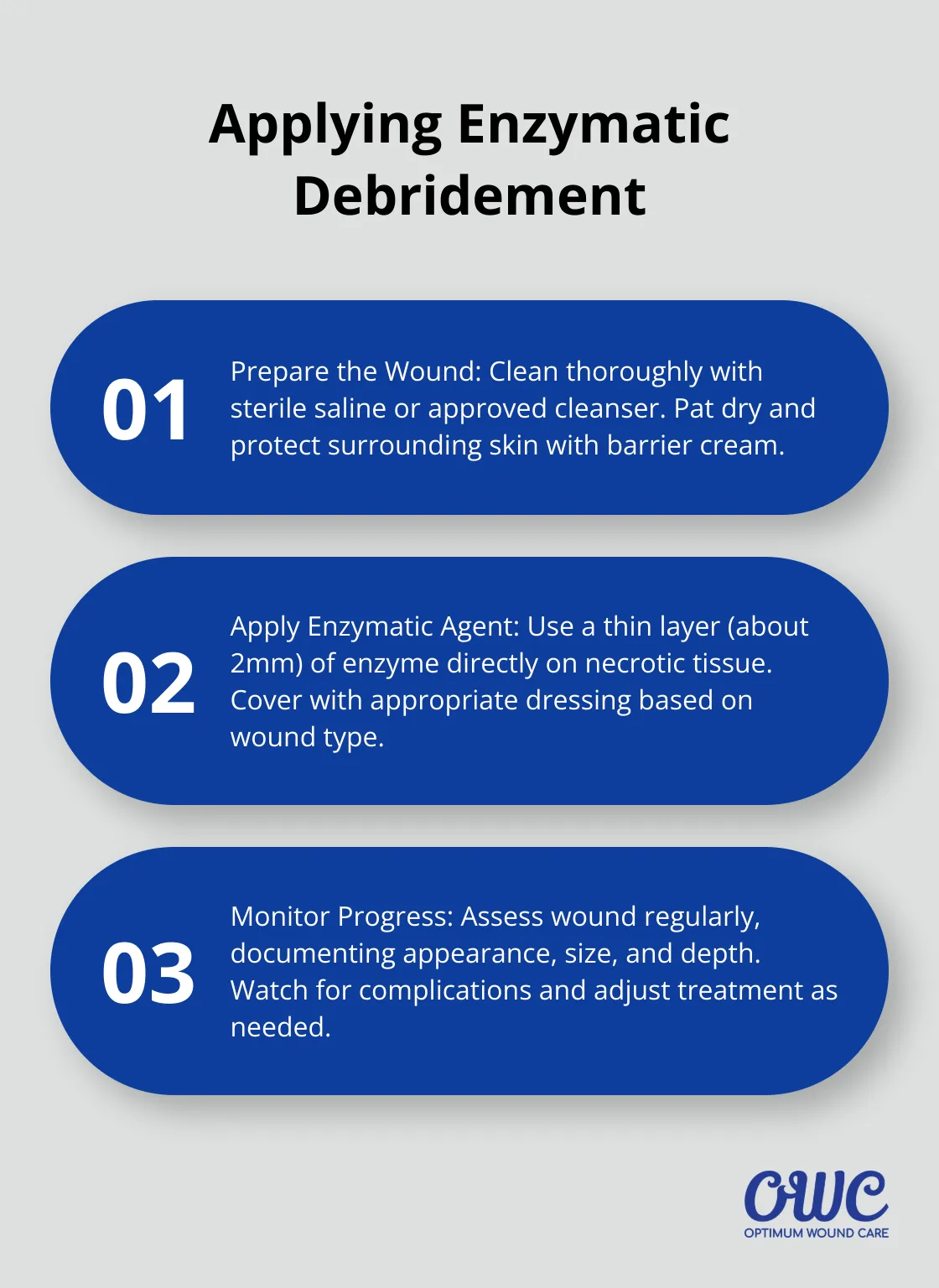
Proper wound preparation is essential for effective enzymatic debridement. Clean the wound thoroughly with sterile saline or an approved wound cleanser to remove debris and exudate. Gently pat the wound dry with sterile gauze. This ensures direct contact between the enzyme and the necrotic tissue.
Protect the surrounding skin by applying a barrier cream or film to the periwound area. This prevents maceration and irritation from the enzymatic agent. Zinc oxide-based products are effective for this purpose.
Applying the Enzymatic Agent
The application of the enzymatic agent (typically collagenase ointment) requires precision. Apply a thin layer (approximately 2mm thick) directly to the necrotic tissue. Use a sterile tongue depressor or gloved finger for application.
Cover the wound with an appropriate dressing. For dry wounds, select a moisture-retentive dressing to activate the enzyme. For highly exudative wounds, an absorbent dressing is more suitable. Avoid dressings containing silver or iodine, as these can inactivate the enzyme.
Treatment Frequency and Duration
Most enzymatic agents require daily application, although some newer formulations allow for less frequent changes. Always adhere to the manufacturer’s instructions and your healthcare provider’s recommendations.
The duration of enzymatic debridement varies widely. Some wounds may show significant improvement in a few days, while others might require weeks of treatment. On average, expect to see noticeable results within 1-2 weeks.
Enzymatic debridement is more effective for severe wounds, showing faster wound size reduction and higher healing rates compared to autolytic debridement.
Monitoring Progress and Complications
Regular assessment is key to successful enzymatic debridement. Document the wound’s appearance, size, and depth at each dressing change. Look for signs of healthy granulation tissue, which indicates progress.
Watch for potential complications, which can include:
- Periwound maceration: Adjust dressing type or frequency if the surrounding skin becomes soggy.
- Increased pain: While uncommon, some patients may experience discomfort. Address this with appropriate pain management.
- Allergic reactions: Though rare, discontinue use and consult a healthcare provider if redness, swelling, or itching occurs.
- Infection: Monitor for increased redness, warmth, or purulent drainage. Enzymatic debridement should be discontinued if infection is suspected.
At Optimum Wound Care (OWC), the team (led by Wound Specialist Mosayeb “Moe” Karimi) conducts thorough assessments at each visit. This vigilant approach allows for timely adjustments to the treatment plan, ensuring optimal outcomes.
Enzymatic debridement is just one part of comprehensive wound care. Nutrition, offloading, and managing underlying conditions all play important roles in healing. Always consult with a wound care specialist to develop a holistic treatment plan tailored to your specific needs.
Final Thoughts
Enzymatic wound debridement revolutionizes modern wound care with its precision and safety. This method removes necrotic tissue while preserving healthy cells, benefiting patients with fragile skin or bleeding risks. Healthcare providers must assess each wound carefully, select the appropriate enzymatic agent, and monitor progress to ensure optimal outcomes.
We at Optimum Wound Care combine clinical expertise with advanced techniques to deliver effective treatment. Our team understands that each wound requires a tailored approach for optimal healing. We integrate enzymatic debridement with other essential elements of wound management to help patients heal faster.
The field of wound care continues to evolve, with new technologies promising even better outcomes. However, careful assessment, personalized care planning, and attentive monitoring remain fundamental to effective wound management (alongside innovative treatments like enzymatic debridement). These core practices form the foundation of our approach to wound care at Optimum Wound Care.
