
How to Perform Sharp Debridement of Wounds
Sharp debridement of wounds is a critical technique in wound care management. At Optimum Wound Care (OWC), we understand the importance of this procedure in promoting healing and preventing complications.
This guide will walk you through the process of performing sharp debridement, from preparation to post-procedure care. Whether you’re a healthcare professional or a caregiver, mastering this skill can significantly improve patient outcomes.
What is Sharp Debridement?
Definition and Purpose
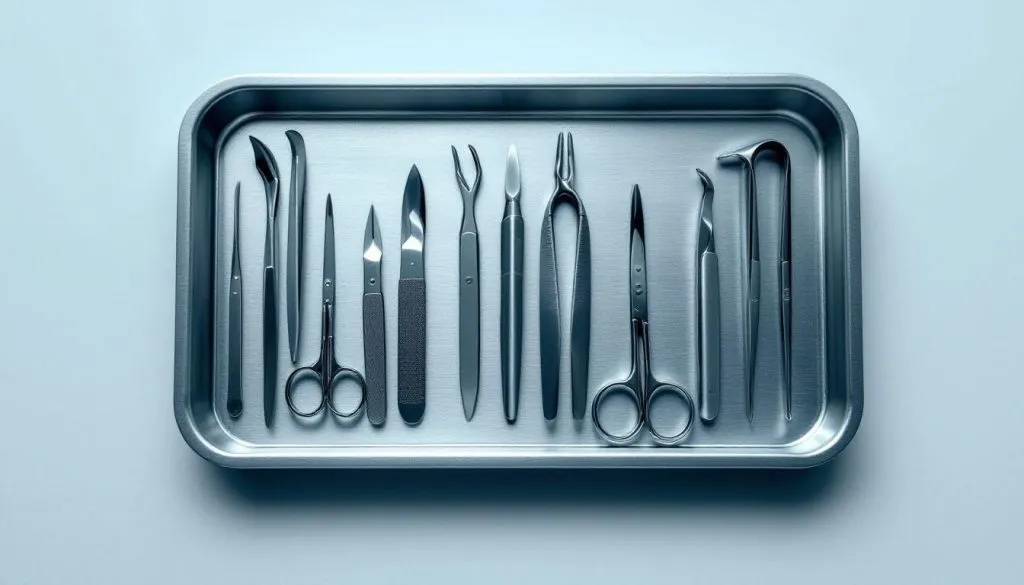
Sharp debridement is a precise surgical technique used to remove dead, damaged, or infected tissue from a wound. At Optimum Wound Care (OWC), we consider this method the gold standard for wound bed preparation. It involves the use of sterile instruments (such as scalpels, forceps, and scissors) to carefully cut away non-viable tissue, which promotes faster healing and reduces infection risk.
Indications for Sharp Debridement
Not all wounds require sharp debridement. This technique proves particularly effective for:
- Chronic ulcers
- Infected wounds
- Areas with extensive necrotic tissue
Diabetic foot ulcers, pressure ulcers, and venous leg ulcers often benefit from sharp debridement. At OWC, we’ve observed that wounds with thick, adherent eschar or large amounts of slough respond well to this method.
Key Advantages
Sharp debridement offers several significant benefits in wound healing:
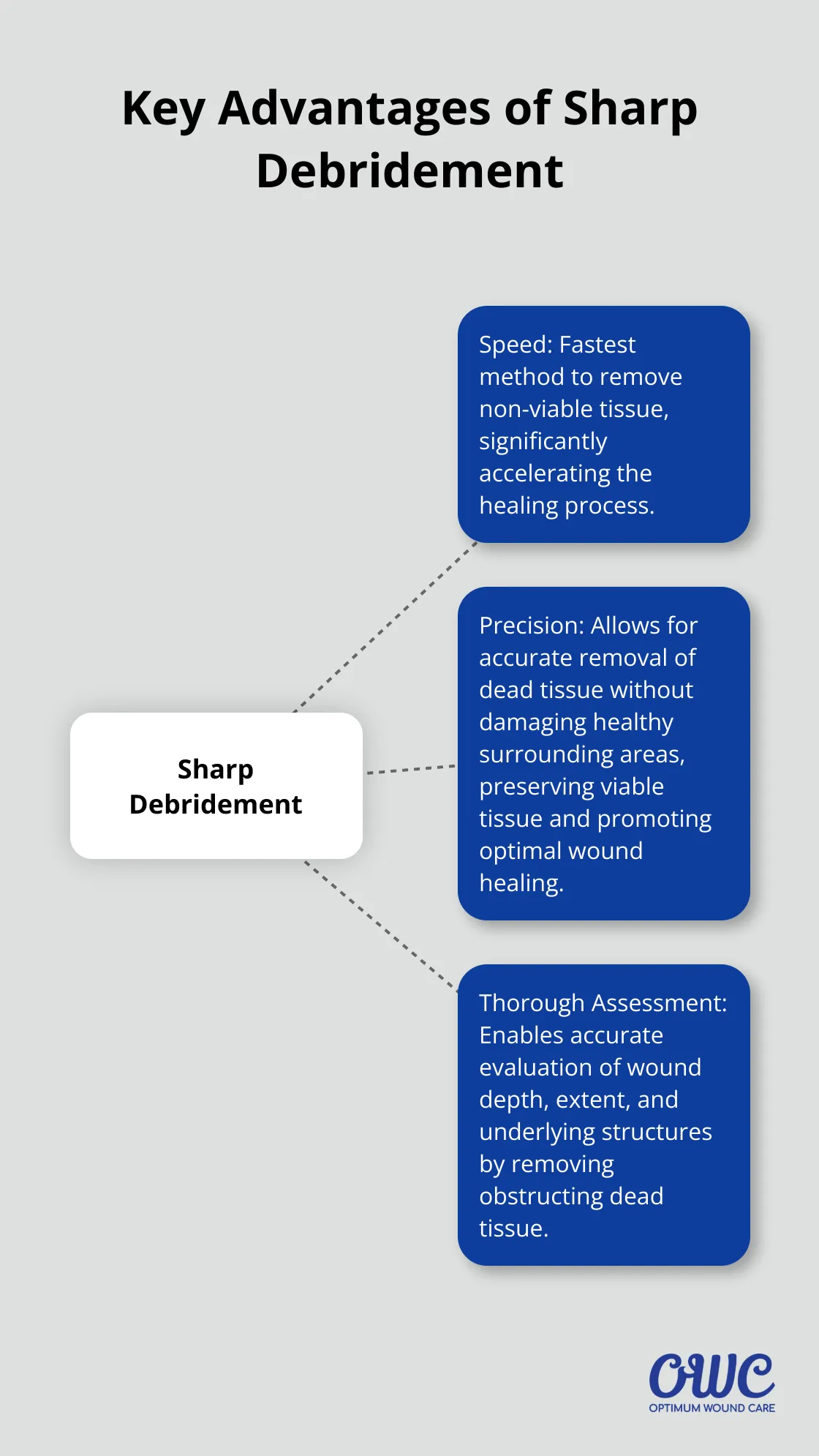
- Speed: It’s the fastest method to remove non-viable tissue, which can significantly accelerate the healing process.
- Precision: Sharp debridement allows for accurate removal of dead tissue without damaging healthy surrounding areas. This selectivity preserves viable tissue and promotes optimal wound healing. Our wound care specialist, Moe Karimi, emphasizes that this precision is especially important when dealing with complex wounds near vital structures.
- Thorough Assessment: The removal of obstructing dead tissue enables healthcare providers to accurately evaluate the wound’s depth, extent, and underlying structures. This detailed assessment proves vital for developing an effective treatment plan and monitoring progress over time.
Important Considerations
While sharp debridement is highly effective, it’s not suitable for all patients or wound types. Patients on anticoagulants or those with bleeding disorders may require special precautions. Additionally, wounds with poor blood supply or those near critical structures (like tendons or blood vessels) need careful evaluation before proceeding with sharp debridement.
At OWC, we always perform a comprehensive patient assessment before recommending sharp debridement. This includes an evaluation of the patient’s overall health, the wound’s characteristics, and potential risks. Our goal is to ensure that each patient receives the most appropriate and effective treatment for their specific wound condition.
As we move forward, it’s important to understand the preparation required for sharp debridement. The next section will cover the essential steps to take before performing this procedure, ensuring both patient safety and optimal outcomes.
How to Prepare for Sharp Debridement
Patient Assessment and Informed Consent
Proper preparation is essential for successful sharp debridement. At Optimum Wound Care (OWC), we follow a comprehensive approach to ensure patient safety and optimal outcomes.
A thorough patient assessment precedes any sharp debridement procedure. This assessment evaluates the patient’s overall health, wound characteristics, and potential contraindications. Our wound care specialist, Moe Karimi, stresses the importance of reviewing the patient’s medical history, particularly conditions that might affect healing or increase bleeding risk.
Obtaining informed consent is a critical step. We explain the procedure, its benefits, potential risks, and alternative options to the patient. This discussion typically covers:
- The purpose of sharp debridement
- Expected outcomes and healing timeframes
- Possible complications (such as pain or bleeding)
- Post-procedure care requirements
We encourage patients to ask questions and voice any concerns. This open communication helps build trust and ensures patients actively participate in their care.
Essential Tools and Equipment
For sharp debridement, we use a specific set of sterile instruments. Our standard kit includes:
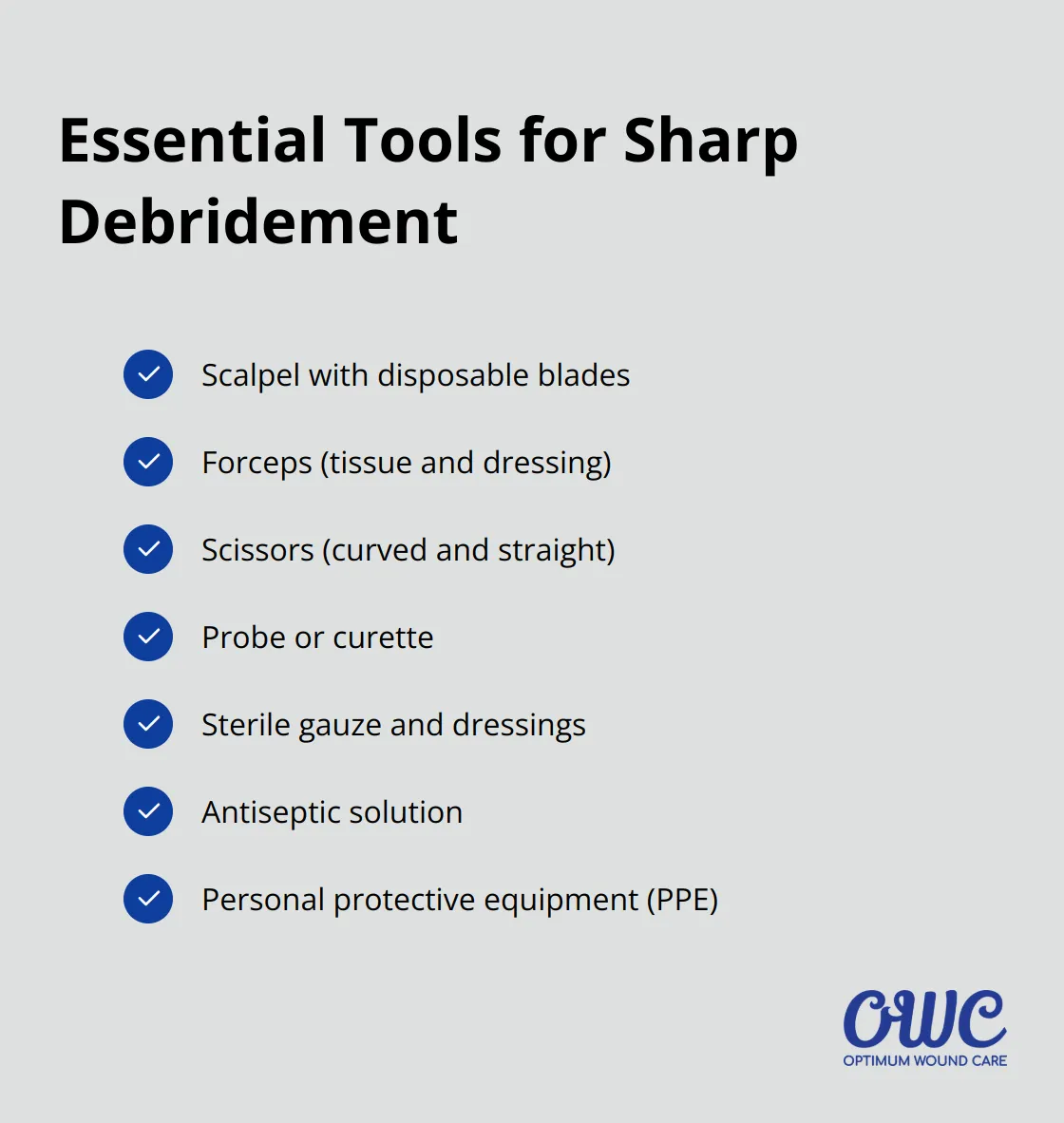
Having all necessary items readily available streamlines the procedure and minimizes interruptions.
Creating a Sterile Environment
Maintaining a sterile field is paramount to prevent infection. We follow strict protocols to create and maintain this environment:
- We thoroughly clean the treatment area
- We use sterile drapes to cover the surrounding area
- We organize instruments on a sterile field
- We perform hand hygiene and don appropriate PPE
- We maintain aseptic technique throughout the procedure
Our clinic rooms facilitate easy cleaning and sterilization between patients, further reducing infection risks.
Pain Management Strategies
Effective pain management is important for patient comfort and cooperation during sharp debridement. Our approach includes:
- Pre-procedure assessment of pain levels
- Application of topical anesthetics (e.g., lidocaine) 30-60 minutes before the procedure
- Use of local anesthesia for more extensive debridement
- Offering oral analgesics if needed
- Employing distraction techniques and creating a calming environment
We tailor our pain management strategy to each patient’s needs and preferences. For instance, patients with diabetic neuropathy might require different approaches compared to those with fully sensate wounds.
With thorough preparation complete, we can now move on to the actual procedure. The next section will detail the step-by-step process of performing sharp debridement, ensuring you have a comprehensive understanding of this vital wound care technique.
How to Perform Sharp Debridement
Patient Positioning and Wound Exposure
We begin sharp debridement by positioning the patient comfortably. For lower extremity wounds, we use a reclining chair or adjustable treatment table. Upper body wounds may require the patient to sit upright or lie on their side. We then expose the wound area, carefully removing dressings or bandages to minimize discomfort.
Wound Cleansing and Assessment
We clean the wound and surrounding skin thoroughly with sterile saline solution or antimicrobial cleanser (depending on wound type). This step reduces infection risk and allows clear visualization. We then assess the wound’s size, depth, and extent of necrotic tissue. This evaluation guides our debridement strategy and helps identify structures needing protection.
Necrotic Tissue Removal
Using sterile instruments, we remove non-viable tissue. We start at the wound edges and work inward, employing various techniques:
- We use forceps to pull away loose, easily removable necrotic tissue.
- For adherent tissue, we make shallow, parallel cuts with a scalpel, then remove the loosened material with forceps.
- We cut through thick eschar with scissors before removal when necessary.
We frequently reassess the wound to avoid damaging healthy tissue. Our specialist, Moe Karimi, emphasizes the importance of “listening” to the wound – feeling for changes in tissue resistance that indicate the transition from non-viable to viable tissue.
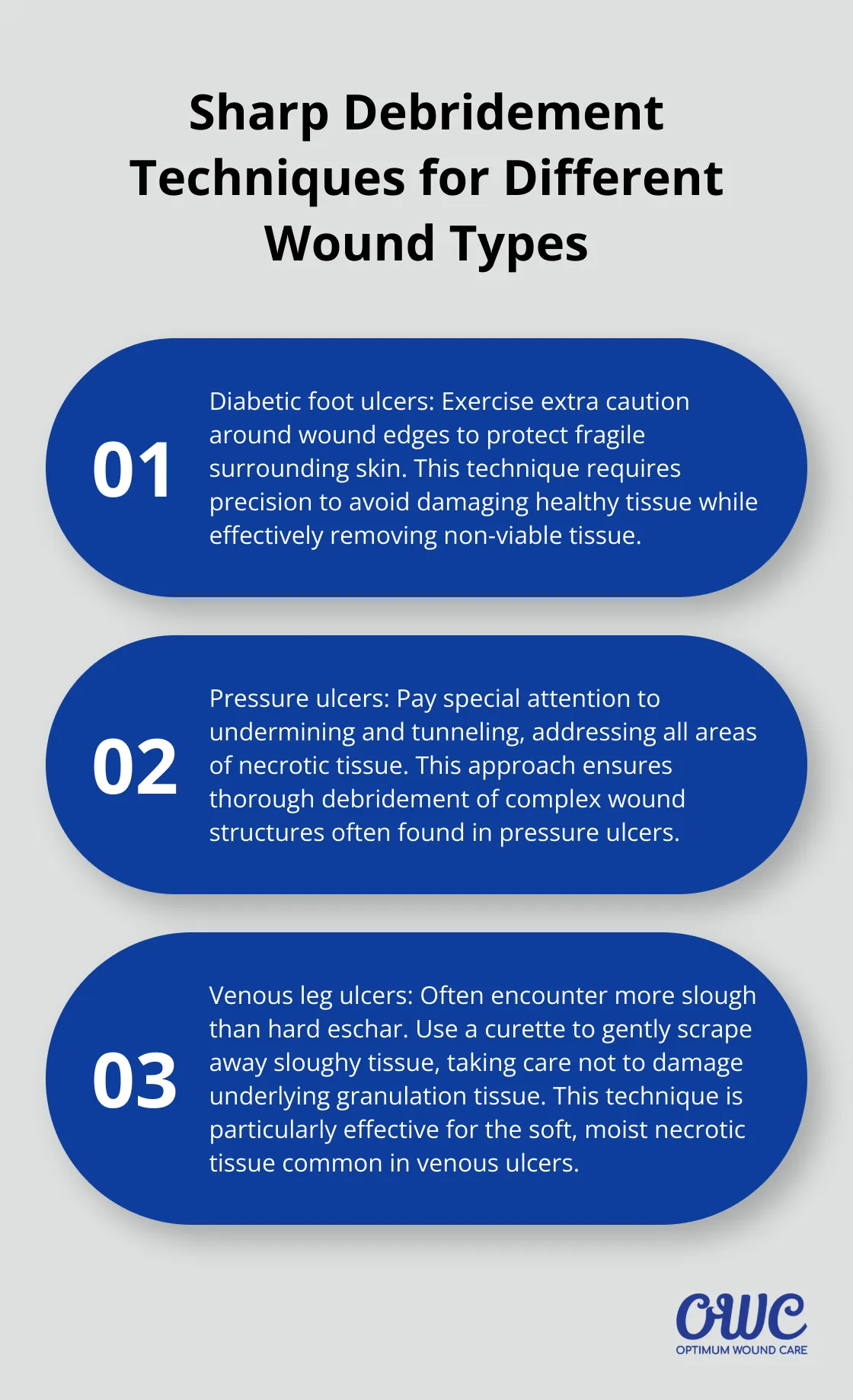
Techniques for Different Wound Types
Post-Procedure Care
After debridement, we clean the wound again with sterile saline. We then apply an appropriate dressing based on wound characteristics and exudate level (e.g., alginate for highly exudative wounds, hydrogel for drier wounds). We provide detailed instructions for wound care between visits, including dressing changes and signs of infection to watch for.
We typically schedule follow-up appointments within a week to assess wound progress and determine if further debridement is necessary. This close monitoring allows us to adjust our treatment plan as needed.
Final Thoughts
Sharp debridement of wounds requires proper training and experience to perform safely and effectively. At Optimum Wound Care (OWC), we prioritize continuous education and skill development for our wound care specialists. This expertise allows us to navigate potential risks and complications associated with sharp debridement, such as bleeding, pain, or damage to healthy tissue.
Sharp debridement can accelerate wound healing, but it is not a one-time solution. We schedule regular appointments to assess wound progress, adjust treatment plans, and perform additional debridement if necessary. This ongoing care ensures optimal healing outcomes and helps prevent complications.
Sharp debridement is just one part of comprehensive wound management. We integrate this technique with other advanced therapies to provide holistic care tailored to each patient’s needs. If you’re dealing with a complex or non-healing wound, consider seeking care from experienced professionals. Optimum Wound Care offers expert wound management services in a comfortable, outpatient setting.
