How Negative Pressure Therapy Accelerates Wound Healing
At OWC Center, we’re excited to explore the transformative power of negative pressure therapy in wound healing. This innovative treatment method has revolutionized the way we approach complex wounds.
Negative pressure therapy, also known as vacuum-assisted closure, uses controlled suction to promote faster healing and reduce complications. In this post, we’ll dive into how this technique works, its benefits, and best practices for application.
What is Negative Pressure Wound Therapy?
The Mechanics of NPWT
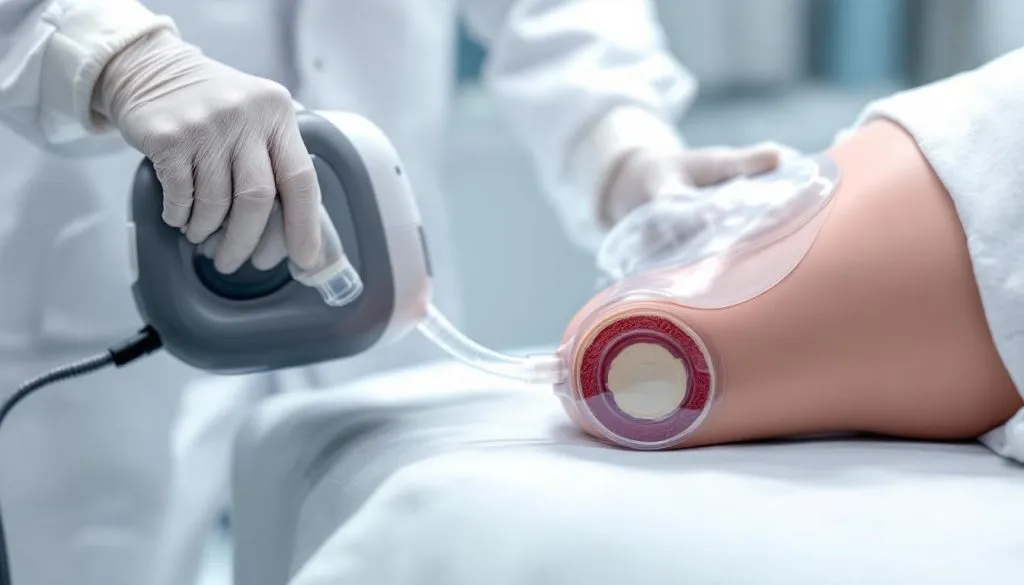
Negative Pressure Wound Therapy (NPWT) promotes healing by evenly applying negative pressure on the surface of the wound. This innovative treatment uses a vacuum-like device to create controlled negative pressure on a wound. The pressure typically ranges from -40mmHg to -200mmHg, depending on the wound type and patient needs. A special dressing seals the wound, and a pump applies suction through a tube connected to the dressing.
How NPWT Accelerates Healing
NPWT enhances wound healing through several mechanisms:
- Fluid Removal: It actively removes excess fluid from the wound, which reduces swelling and infection risk.
- Blood Flow Enhancement: NPWT can increase blood flow to the wound area, delivering more oxygen and nutrients essential for healing.
- Tissue Growth Promotion: The negative pressure stimulates the formation of granulation tissue.
- Wound Contraction: NPWT gently pulls the wound edges together, which helps to close the wound faster.
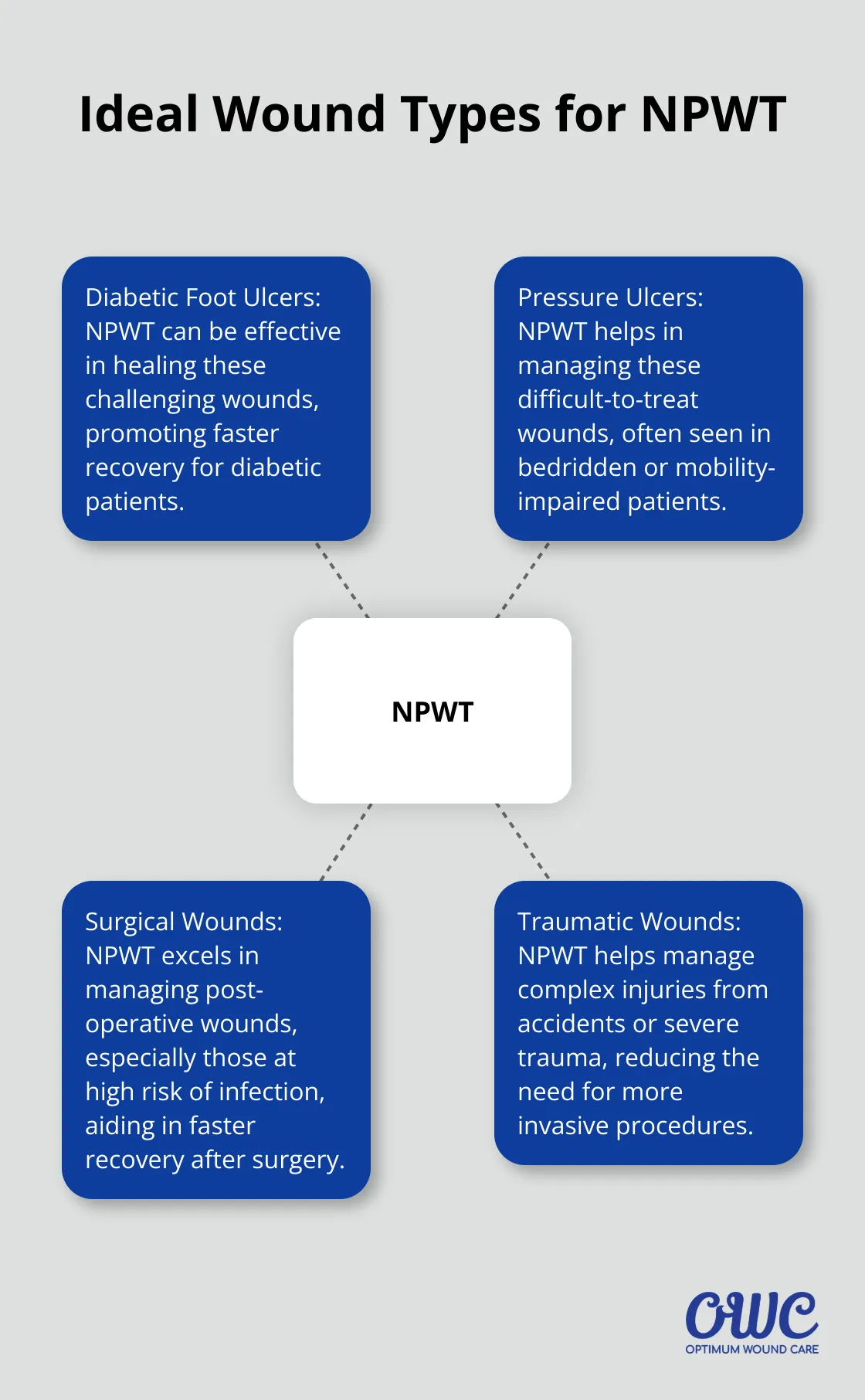
Ideal Wound Types for NPWT
NPWT proves particularly effective for:
- Diabetic Foot Ulcers: NPWT can be effective in healing diabetic foot ulcers.
- Pressure Ulcers: NPWT can help in managing these challenging wounds.
- Surgical Wounds: It excels in managing post-operative wounds, especially those at high risk of infection.
- Traumatic Wounds: NPWT helps manage complex injuries, reducing the need for more invasive procedures.
At Optimum Wound Care, we carefully assess each patient to determine if NPWT suits their needs. Our experienced team (led by Wound Specialist Moe Karimi) ensures this powerful therapy’s effective and safe application, tailoring the treatment to each unique wound and patient situation.
As we move forward, let’s explore the numerous benefits that NPWT offers in wound management and how it’s changing the landscape of wound care.
Why NPWT Outperforms Traditional Wound Care
Negative Pressure Wound Therapy (NPWT) has revolutionized wound management, offering substantial advantages over conventional methods. At Optimum Wound Care, we’ve observed firsthand how NPWT accelerates healing and improves patient outcomes.
Accelerated Wound Closure
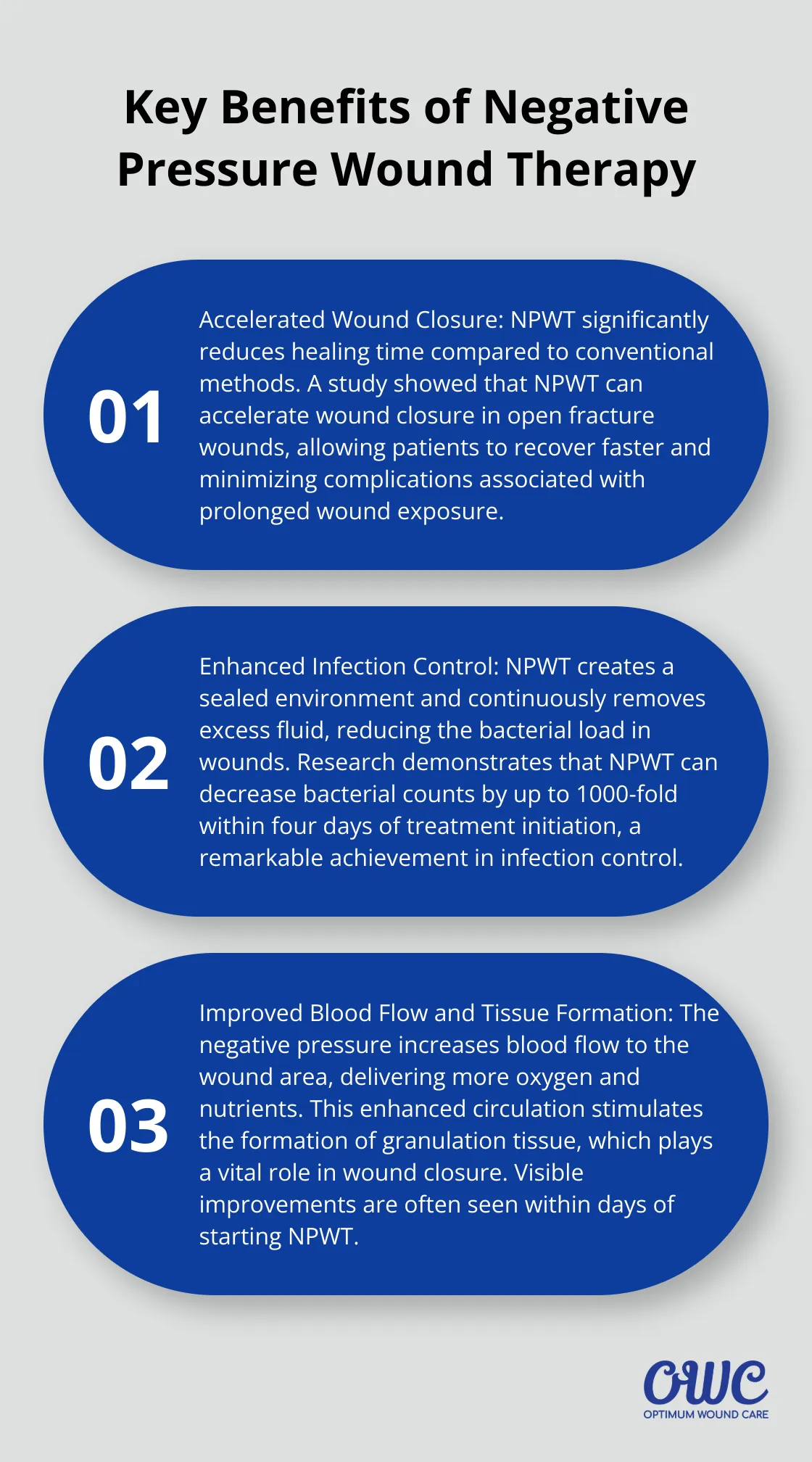
NPWT significantly reduces healing time. A study aimed to compare Negative Pressure Wound Therapy (NPWT) and conventional wound dressings in patients with open fracture wounds. This research demonstrates the potential of NPWT to accelerate wound closure, allowing patients to resume their normal lives faster and minimizing the risk of complications associated with prolonged wound exposure.
Enhanced Infection Control
Preventing infection stands as a critical aspect of wound care. NPWT excels in this area by creating a sealed environment and continuously removing excess fluid. This process reduces the bacterial load in wounds. Research in the International Wound Journal demonstrates that NPWT can decrease bacterial counts by up to 1000-fold within four days of treatment initiation (a remarkable achievement in infection control).
Improved Blood Flow and Tissue Formation
NPWT actively promotes healing beyond removing harmful elements. The negative pressure increases blood flow to the wound area, delivering more oxygen and nutrients. This enhanced circulation stimulates the formation of granulation tissue, which plays a vital role in wound closure. Patients often report visible improvements in wound appearance within days of starting NPWT.
Reduced Disruption to Healing Process
Traditional wound care often requires frequent dressing changes, which can cause pain and disrupt the healing process. NPWT dressings typically need changing only every 48 to 72 hours. This reduced frequency minimizes wound disturbance, decreases pain, and allows for uninterrupted healing. It also provides more convenience for patients, especially those managing wounds at home.
Tailored Treatment Approach
At Optimum Wound Care, we integrate NPWT into our comprehensive wound management strategies. Under the guidance of our wound specialist, Moe Karimi, we customize NPWT applications to each patient’s unique needs, ensuring optimal results. The combination of advanced technology and expert care has enabled us to achieve remarkable outcomes, even in cases where traditional methods have proven ineffective.
The benefits of NPWT extend beyond these advantages. In the next section, we’ll explore the proper application and management of NPWT to maximize its healing potential and ensure the best possible outcomes for patients.
Mastering NPWT Application and Management
Comprehensive Wound Assessment
At Optimum Wound Care, we start our NPWT process with a thorough wound evaluation. Our team assesses the wound’s size, depth, type, and surrounding tissue condition. This initial step determines the appropriate NPWT settings and dressing selection.
Optimal NPWT System Selection
Choosing the right NPWT device and dressing is essential for treatment success. We consider factors such as wound size, exudate levels, and patient mobility. Smaller, portable units suit ambulatory patients, while larger systems benefit patients with extensive wounds or limited mobility.
Dressing selection is equally important. Foam dressings promote granulation tissue formation, while gauze dressings suit painful or friable wounds. Our wound care specialist, Moe Karimi, emphasizes the importance of proper dressing selection to avoid complications and ensure optimal healing.
Precise Application Techniques
We apply NPWT with precision. Our process includes:
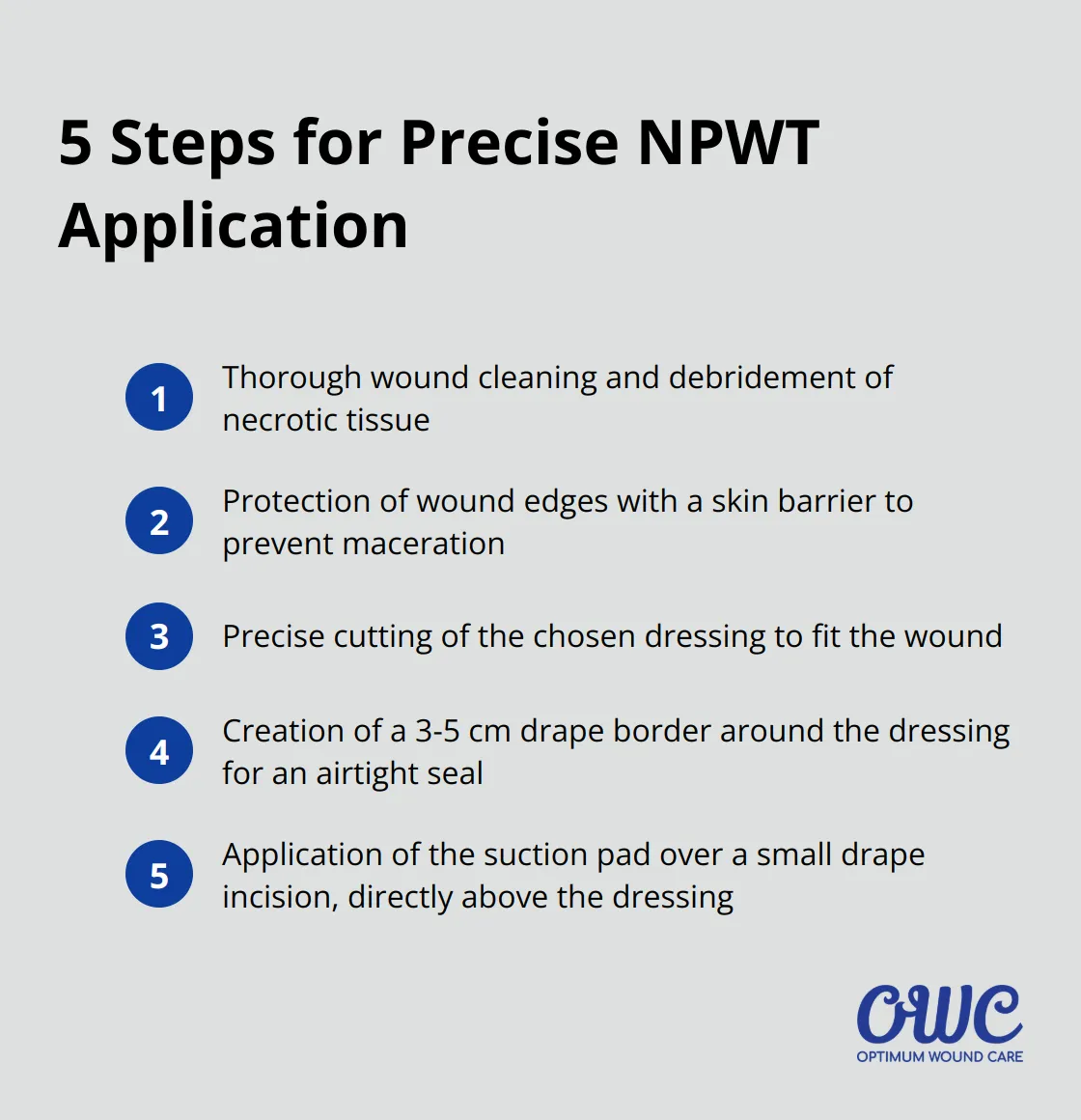
Our team always double-checks the seal to prevent air leaks, which can compromise therapy effectiveness.
Continuous Monitoring and Adjustment
NPWT requires ongoing attention. We monitor patients’ progress closely and adjust therapy as needed. Dressing changes typically occur every 48-72 hours, but this can vary based on wound characteristics and healing progress.
During each dressing change, we reassess the wound for signs of improvement or complications. We may adjust negative pressure settings or change the dressing type based on these observations. For example, we might increase pressure for highly exudating wounds or decrease it if the patient experiences discomfort.
Complication Prevention
While NPWT is generally safe, complications can occur without proper management. Common issues include pain during therapy and bleeding (especially in patients on anticoagulants). We address these risks by:
- Adjusting pressure settings
- Using different dressing types
- Recommending intermittent therapy instead of continuous (in some cases)
- Using lower pressure settings and non-adherent dressings (when necessary)
Our team educates patients on signs of complications to watch for, such as increased pain, fever, or excessive bleeding.
Negative Pressure Wound Therapy (NPWT) typically uses a standard low pressure of 80-125 mmHg, which has been shown to improve microcirculation and accelerate the healing process of chronic wounds.
Final Thoughts
Negative pressure therapy for wound healing has transformed our approach to complex wounds at Optimum Wound Care. This innovative treatment method offers faster wound closure, reduced infection risk, improved blood flow, and decreased dressing changes. These advantages lead to quicker recovery times and enhanced patient comfort.
The success of NPWT depends on proper application and management. Our team emphasizes thorough wound assessment, appropriate device selection, and precise application techniques. We continuously monitor and adjust therapy parameters to achieve optimal outcomes and minimize potential complications.
Optimum Wound Care remains committed to staying at the forefront of wound care advancements. Our specialized outpatient clinic in Louisville offers comprehensive wound services, leveraging the latest techniques to provide personalized, effective treatment (including negative pressure therapy). We help our patients heal faster and regain their quality of life through our combination of clinical expertise and cutting-edge therapies.
