When is Negative Pressure Wound Therapy Indicated?
At Optimum Wound Care (OWC), we’re committed to providing cutting-edge wound care solutions.
Negative pressure wound therapy (NPWT) has revolutionized the treatment of complex wounds.
Understanding the indications for NPWT is crucial for healthcare professionals to make informed decisions about patient care.
In this post, we’ll explore when NPWT is most effective and how it can significantly improve wound healing outcomes.
What is Negative Pressure Wound Therapy?
Negative Pressure Wound Therapy (NPWT) revolutionizes wound care. At Optimum Wound Care, we use NPWT to accelerate healing for complex wounds that resist standard treatments.
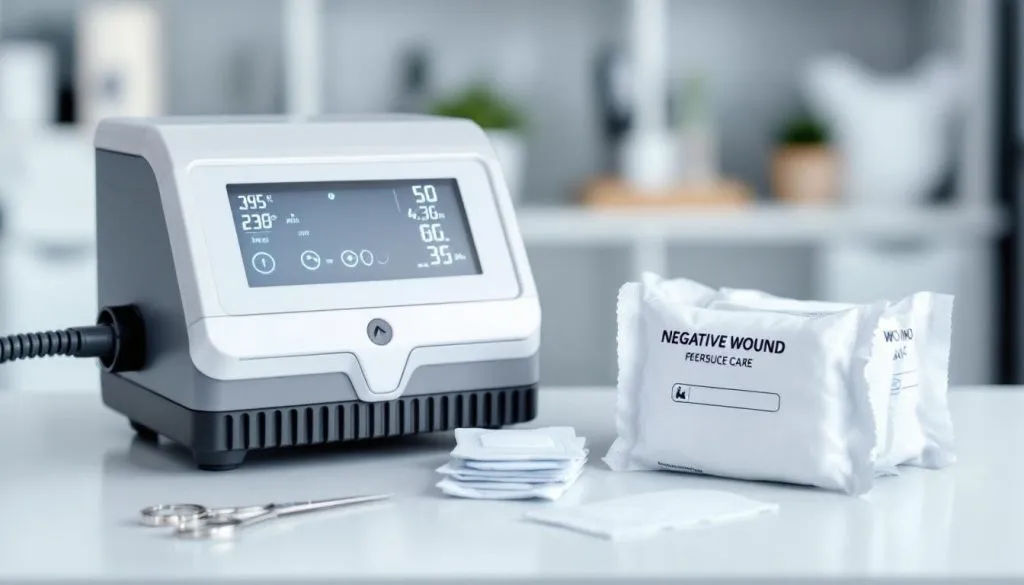
NPWT applies controlled suction to a wound through a specialized dressing. This negative pressure extracts excess fluid, decreases swelling, boosts blood flow, and promotes new tissue growth. The outcome? Faster healing and lower infection risk.
The Science Behind NPWT
NPWT’s effectiveness stems from its ability to create an optimal healing environment. The removal of excess fluid reduces the bacterial load in the wound (a key factor in preventing infections that can delay healing).
A recent study found no clear evidence that NPWT reduced the time to healing compared with standard dressings. However, more research is needed to fully understand its impact on wound healing time.
Types of NPWT Devices
Several NPWT devices exist, each suited for different wound types and patient needs:
- Traditional NPWT systems: These systems (typically used in hospitals) provide continuous or intermittent negative pressure.
- Portable NPWT devices: These smaller, battery-operated units allow patients to continue treatment at home, enhancing quality of life and reducing hospital stays.
- Single-use NPWT systems: These disposable devices work well for smaller wounds or situations where traditional systems aren’t practical.
At Optimum Wound Care, we evaluate each patient’s unique needs to select the most appropriate NPWT device. Our wound care specialist, Mosayeb “Moe” Karimi, MSN, FNP, WOC, has extensive experience with all types of NPWT systems, ensuring optimal treatment for every patient.
Practical Applications of NPWT
NPWT proves effective for more than just large, complex wounds. We’ve successfully applied it to:
- Post-surgical incisions (to reduce infection risk and improve scar appearance)
- Diabetic foot ulcers
- Pressure ulcers (particularly in bed-bound patients)
- Traumatic wounds (as a bridge until definitive surgical closure)
The versatility of NPWT makes it a valuable tool in our wound care arsenal at Optimum Wound Care. We tailor the therapy to each patient’s specific needs, which leads to better outcomes and faster healing times.
Advancements in NPWT Technology
Recent advancements in NPWT technology have expanded its applications and improved its effectiveness:
- Instillation therapy: This combines NPWT with the delivery of topical wound solutions, enhancing wound cleansing and promoting healing.
- Closed incision NPWT: This specialized application helps prevent surgical site infections and improves scar aesthetics.
- Biofilm-disrupting NPWT: New dressings incorporate antimicrobial agents to combat biofilms, a major obstacle in wound healing.
These innovations continue to broaden the scope of NPWT, making it an increasingly valuable tool in modern wound care. As we move to our next section, we’ll explore the specific indications for NPWT and when it’s most beneficial for patients.
When Should NPWT Be Used?
Complex Surgical Wounds
NPWT proves highly effective in managing complex surgical wounds, especially those at high risk of complications. In abdominal surgeries, for example, NPWT significantly reduces the incidence of surgical site infections. Negative pressure wound therapy is an effective treatment option for SAWHI after surgery; however, it causes more wound-related AEs.
NPWT excels on post-operative wounds that show signs of delayed healing or increased exudate production. The therapy’s ability to remove excess fluid and promote granulation tissue formation makes it invaluable in these cases.
Chronic Wounds
Chronic wounds, such as diabetic foot ulcers and pressure ulcers, often respond well to NPWT. These wounds typically struggle with poor circulation and high bacterial loads, issues that NPWT directly addresses.
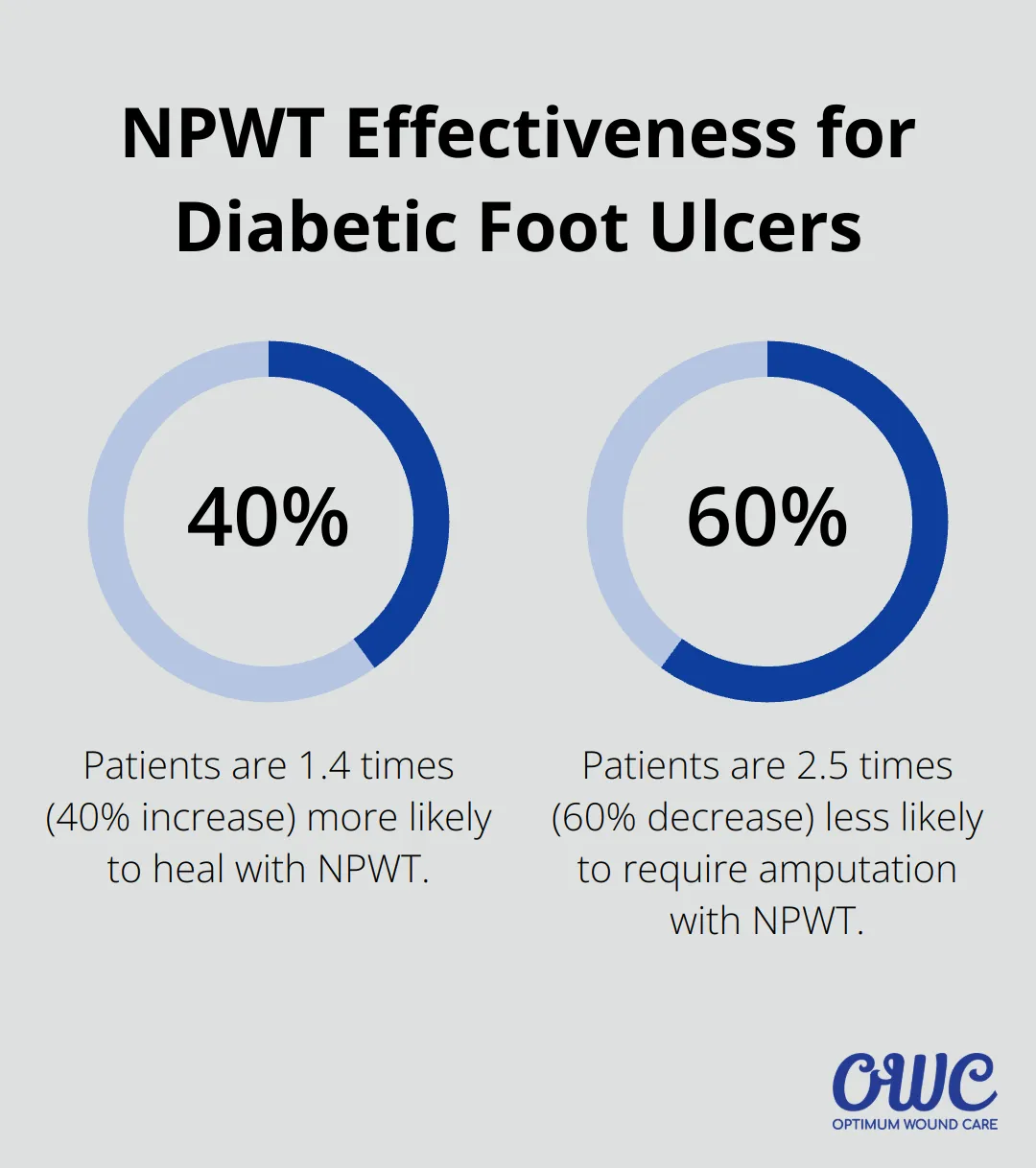
For diabetic foot ulcers, NPWT has shown promising results. Patients treated with NPWT are 1.4 times more likely to heal and 2.5 times less likely to require amputation compared to standard wound care.
The combination of NPWT with proper offloading techniques and regular debridement often leads to faster healing times for diabetic patients with chronic foot ulcers.
Skin Grafts and Flaps
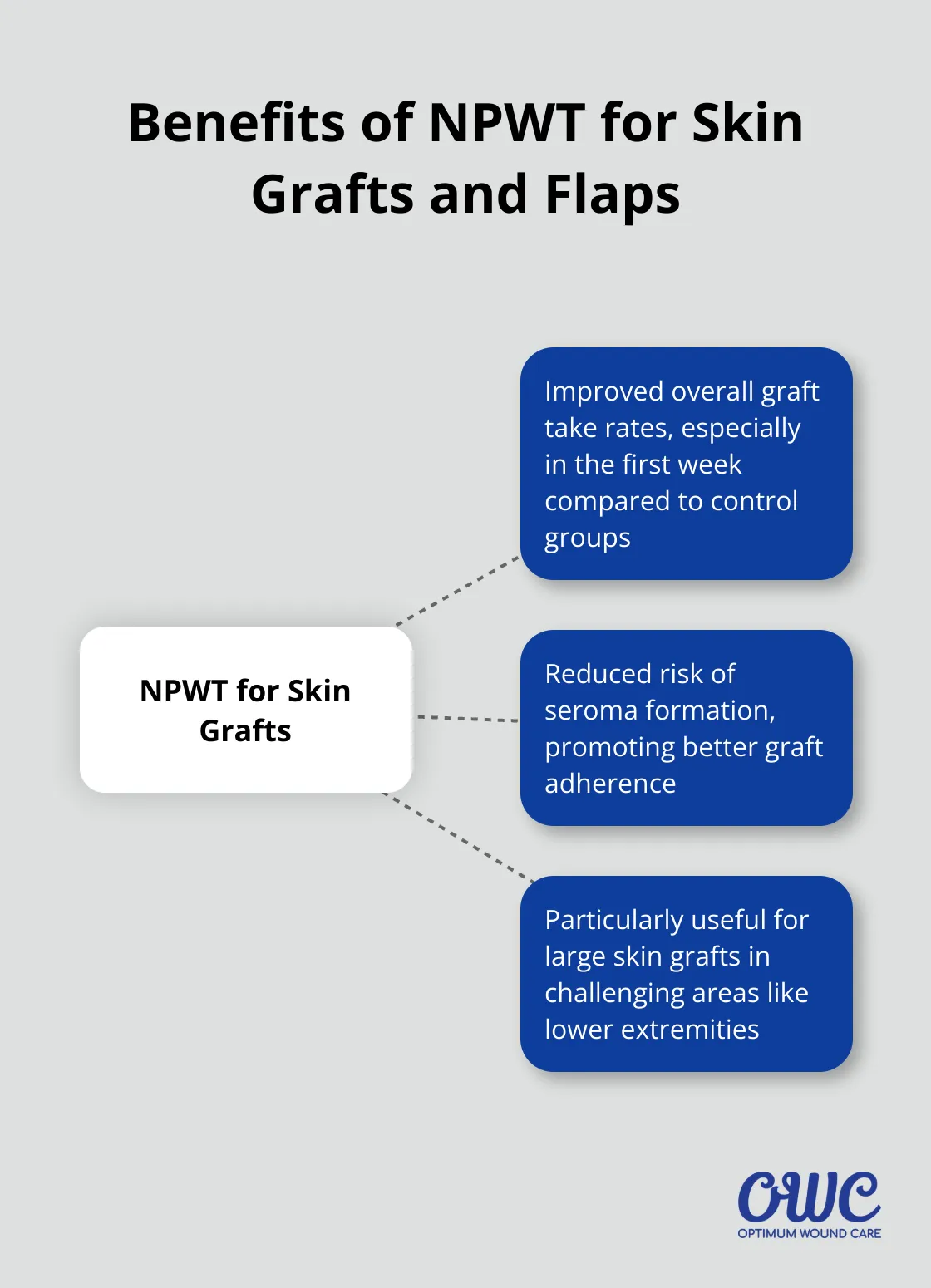
NPWT plays a vital role in supporting skin grafts and flaps. The application of negative pressure to newly placed grafts or flaps can improve graft take rates and reduce the risk of seroma formation.
NPWT has better overall graft take rates, significantly improved in the first week compared to control groups. NPWT proves particularly useful post-operatively for large skin grafts, especially in challenging areas like the lower extremities.
Smaller, Slow-Healing Wounds
NPWT isn’t limited to large, complex wounds. It can also benefit smaller wounds that are slow to heal, such as venous leg ulcers and post-traumatic wounds. The key lies in proper patient selection and ongoing assessment of the wound’s response to therapy.
While NPWT offers significant benefits in many cases, it’s not suitable for every wound or every patient. Proper assessment, including evaluation of the patient’s overall health status and the wound’s characteristics, remains essential before initiating NPWT.
The next section will explore important contraindications and precautions to consider when using NPWT, ensuring its safe and effective application in advanced wound care.
When Is NPWT Not Recommended?
Absolute Contraindications
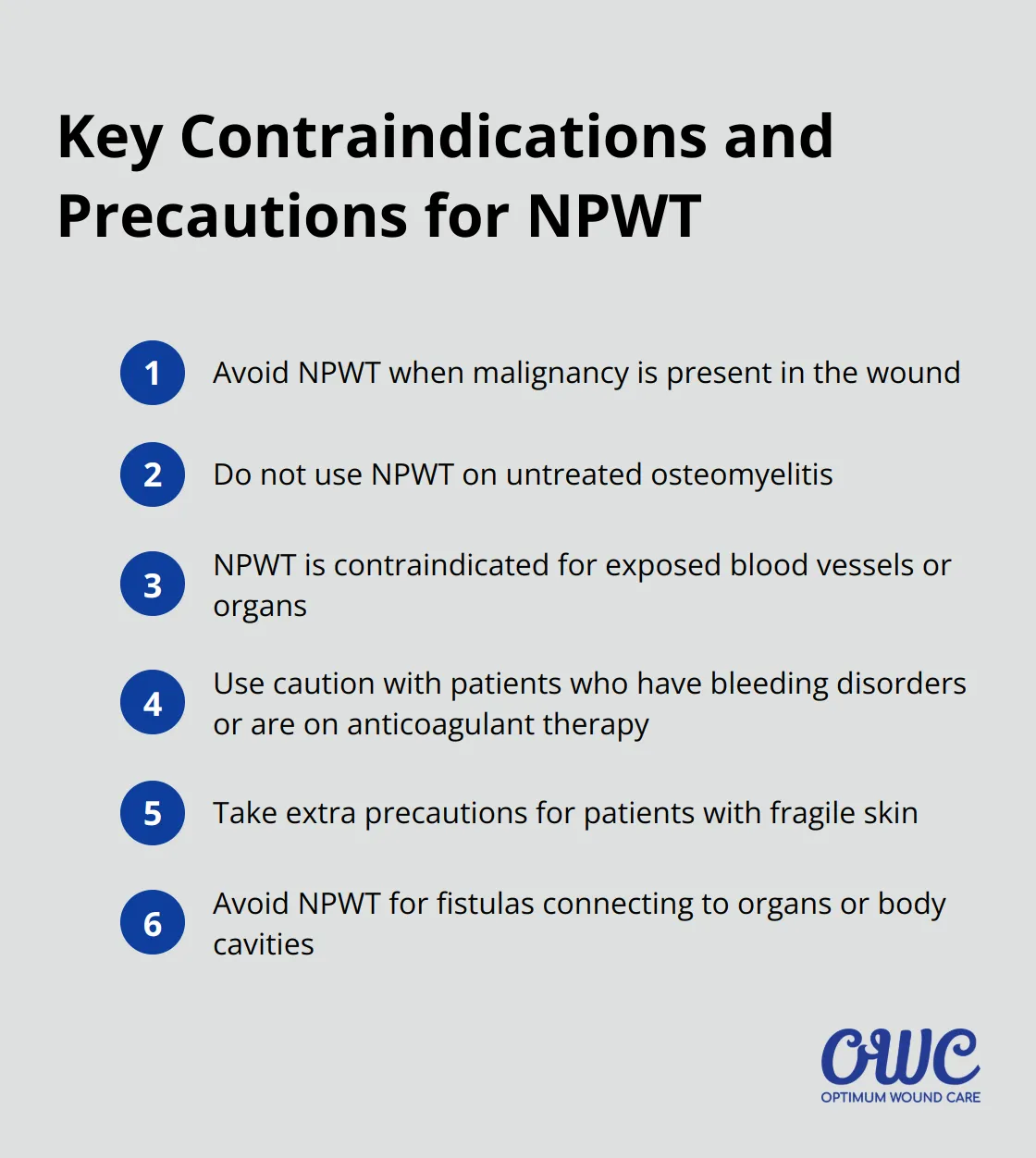
At Optimum Wound Care, we use the right treatment for each patient’s unique situation. Negative Pressure Wound Therapy (NPWT) is not suitable for every wound or patient. We never use NPWT when malignancy is present in the wound. The negative pressure could spread cancerous cells, worsening the patient’s condition. Untreated osteomyelitis is another hard stop for NPWT. The bone infection needs treatment before considering NPWT.
Exposed blood vessels or organs are also absolute contraindications. The suction from NPWT could damage these delicate structures, leading to severe complications.
Relative Contraindications
Some conditions require extra care when considering NPWT. Patients with bleeding disorders or those on anticoagulant therapy need thorough evaluation before starting NPWT. We must weigh the risk of excessive bleeding against the potential benefits of the therapy.
For patients with fragile skin (such as those on long-term steroid therapy), we take extra precautions. The adhesive used in NPWT dressings can cause skin tears in these patients. In such cases, we might use special barrier films or consider alternative wound care methods.
Special Wound Considerations
Certain wound types require specific approaches. With fistulas, especially those connecting to organs or body cavities, NPWT isn’t our first choice. These complex wounds often need surgical intervention before we can consider NPWT.
In cases of large venous ulcers, we’re cautious with NPWT. While it can be effective, there’s a risk of exacerbating venous congestion. We always ensure proper compression therapy is in place before initiating NPWT for these wounds.
Thorough Assessment Is Key
We never start NPWT without a comprehensive patient and wound assessment. This includes evaluating the patient’s overall health, nutritional status, and ability to manage the therapy at home if needed.
We also consider the wound’s characteristics – its size, depth, location, and exudate levels.
Our wound care specialist, Mosayeb “Moe” Karimi, MSN, FNP, WOC, always performs a thorough vascular assessment before initiating NPWT, especially for lower extremity wounds. Adequate blood flow is essential for the therapy’s success and to prevent complications.
Final Thoughts
Negative Pressure Wound Therapy (NPWT) has revolutionized modern wound care, offering significant benefits for complex wounds. NPWT indications include surgical wounds, chronic ulcers, and support for skin grafts and flaps. This therapy excels in managing high-exudate wounds, promoting tissue growth, and reducing infection risks.
We at Optimum Wound Care (OWC) recognize the importance of individualized treatment plans in wound management. Our team assesses each patient’s unique circumstances, including overall health and wound characteristics, to determine if NPWT is the most appropriate option. We stay updated on the latest advancements in NPWT technology to provide our patients with effective, evidence-based treatments.
Healthcare professionals must understand NPWT indications and contraindications to maximize its potential. This knowledge, combined with comprehensive patient assessment, allows us to improve wound healing outcomes and enhance patient quality of life (while avoiding potential complications). Contact us today to learn how we can help you or your patients benefit from advanced wound care solutions.
