Why Won’t My Wound Heal? Causes & Solutions in Louisville
At OWC Center, we understand the frustration of dealing with wounds that won’t heal. This issue affects many Louisville residents, impacting their quality of life and overall health.
In this post, we’ll explore the common causes of non-healing wounds and discuss advanced treatment options available for wound healing in Louisville. We’ll also provide guidance on identifying problematic wounds and explain why seeking professional care is crucial for effective recovery.
Why Won’t Your Wound Heal? Common Causes and Solutions in Louisville
The Impact of Diabetes on Wound Healing
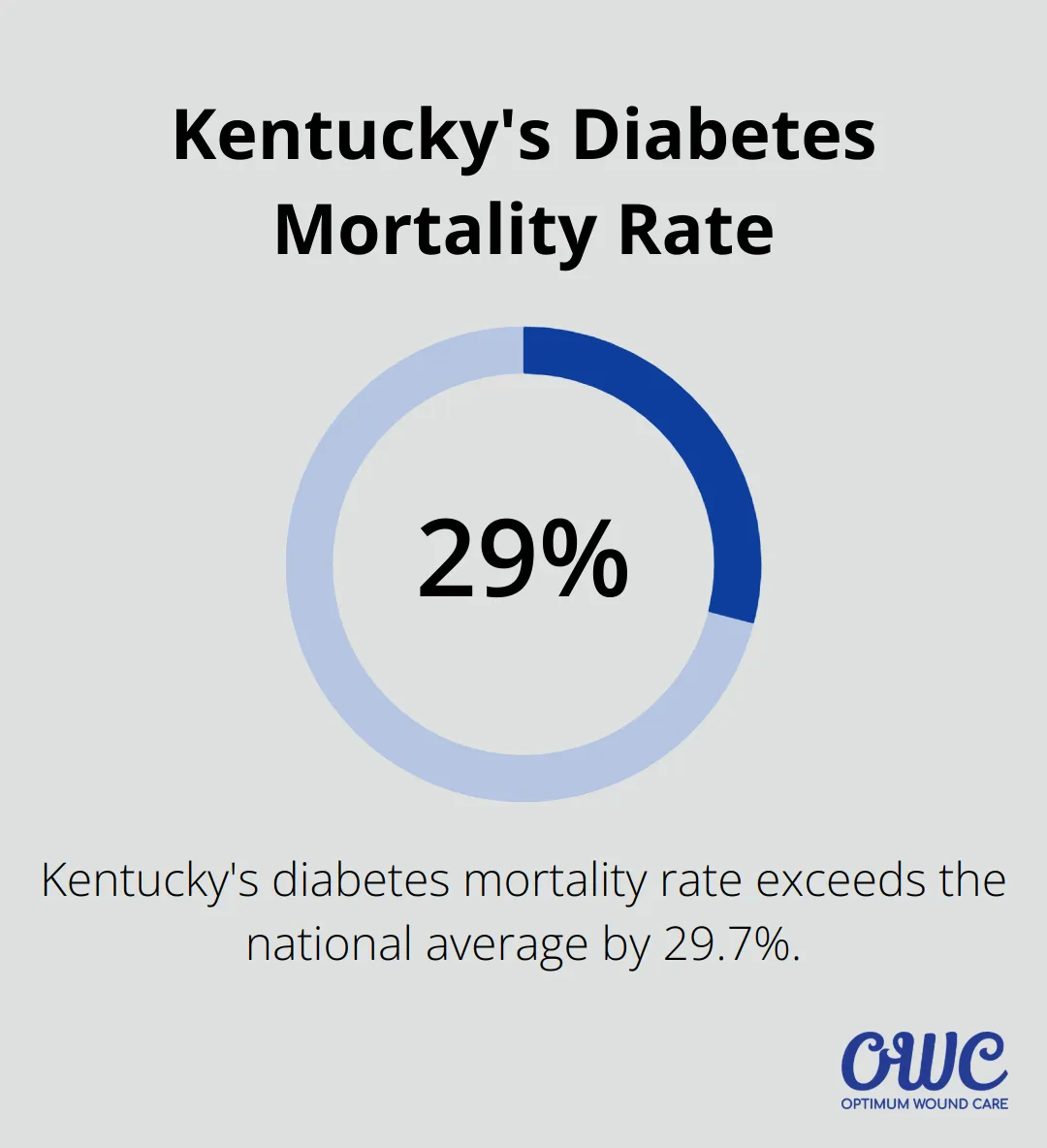
Diabetes plays a significant role in non-healing wounds. Kentucky’s diabetes mortality rate was 29.7% greater than the national average in 2023. This condition often leads to poor blood circulation and nerve damage, especially in the feet. As a result, minor cuts or blisters can quickly become serious wounds that heal slowly.
If you have diabetes, you should check your feet daily for any signs of injury. Even small wounds can become problematic if left untreated. Regular visits to a podiatrist and good blood sugar control are essential steps in preventing and managing diabetic foot ulcers.
The Hidden Threat of Infection
Wound infections are another major cause of delayed healing. Impaired healing in wounds, including delayed acute wounds and chronic wounds, generally indicates a failure to progress through the normal stages of healing. These infections can significantly slow down the healing process and lead to more serious complications if not addressed promptly.
Signs of infection include increased pain, redness, swelling, warmth around the wound, and foul-smelling discharge. If you notice any of these symptoms, you should seek medical attention immediately. At Optimum Wound Care, we use advanced techniques to identify and treat wound infections effectively.
The Role of Nutrition in Wound Healing
Poor nutrition can significantly impair your body’s ability to heal wounds. Up to 50% of patients with chronic wounds have some form of malnutrition (Journal of Wound Care). Protein, vitamins A and C, and zinc are particularly important for wound healing.
If you struggle with a non-healing wound, you should consider consulting a nutritionist or dietitian. They can help you create a meal plan that supports your body’s healing processes. Proper nutrition is as important as topical treatments when it comes to wound care.
Advanced Treatment Options
At Optimum Wound Care, we take a holistic approach to wound healing. We address not just the wound itself but also underlying factors like nutrition and overall health. Our team of experts (led by Mosayeb “Moe” Karimi, MSN, FNP, WOC) is ready to help Louisville residents overcome the challenges of non-healing wounds.
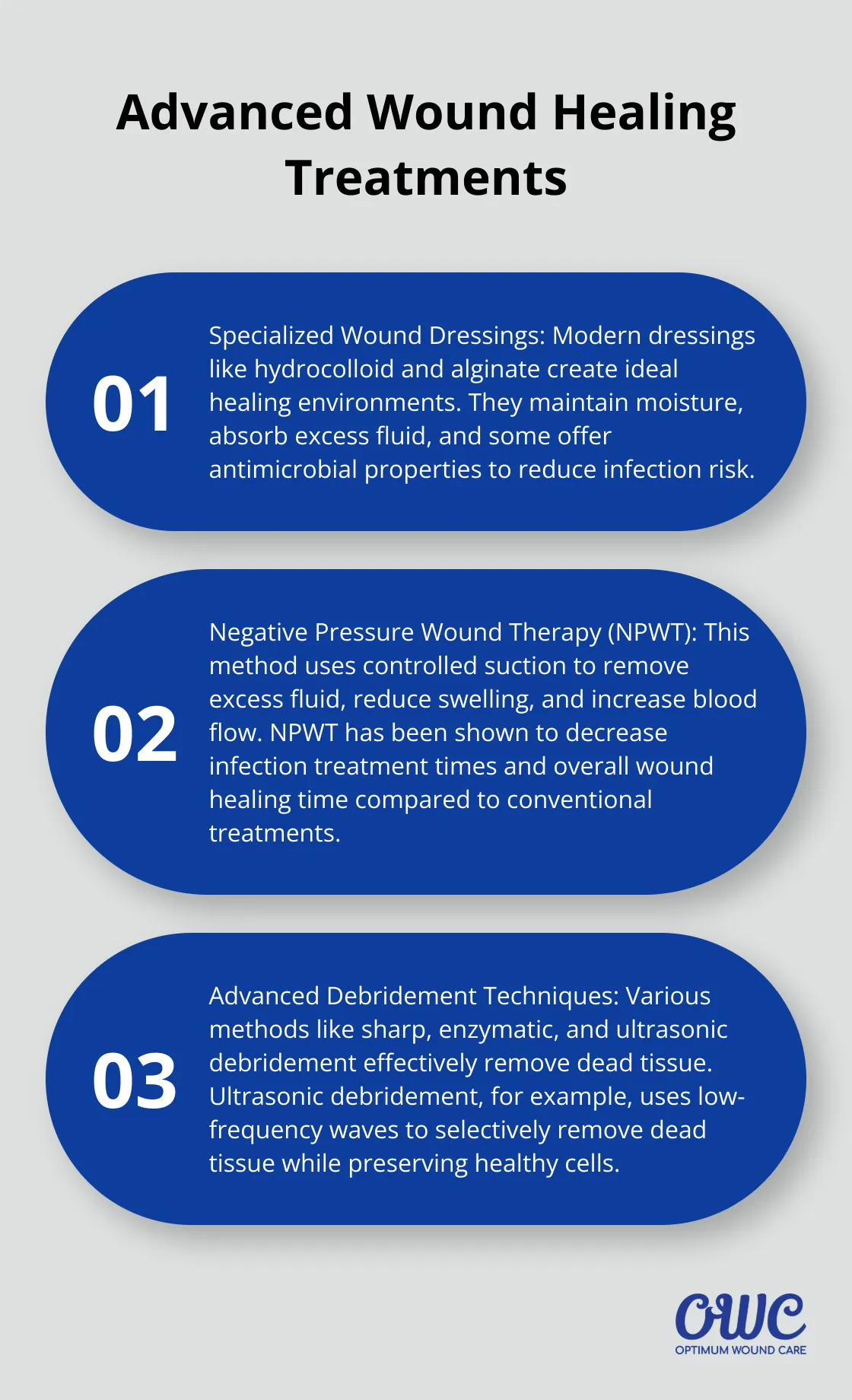
We offer a range of advanced treatments, including specialized dressings, negative pressure wound therapy, and debridement techniques. These treatments can significantly speed up the healing process and improve outcomes for patients with stubborn wounds.
As we move forward, it’s important to understand how to identify a non-healing wound. Early recognition can make a significant difference in treatment outcomes and overall recovery time.
How to Spot a Non-Healing Wound
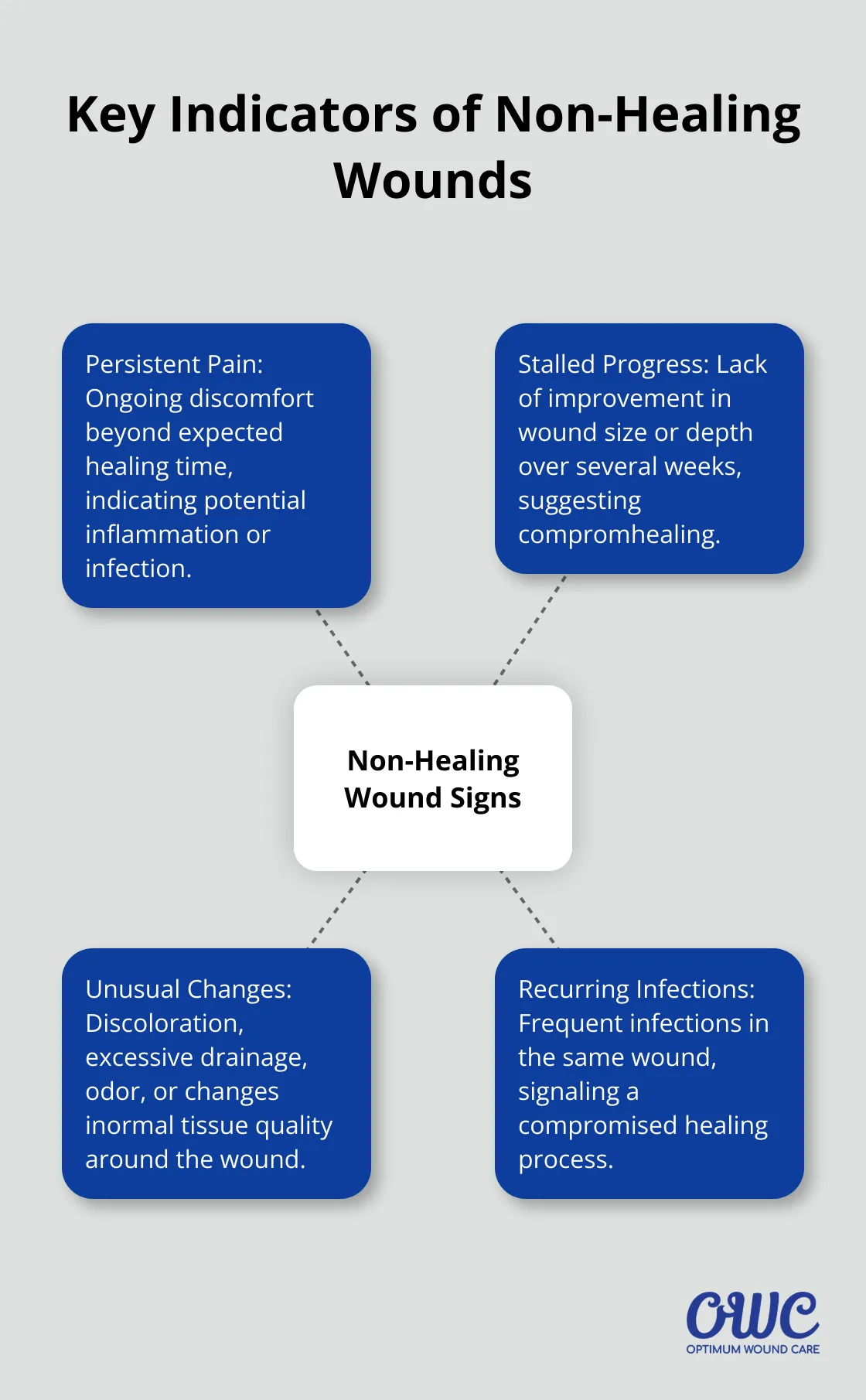
Persistent Pain and Discomfort
Non-healing wounds often cause ongoing pain or discomfort beyond the expected healing time. While normal wounds typically show a gradual decrease in pain, problematic wounds maintain or even increase in discomfort. This persistent discomfort can indicate ongoing inflammation or potential infection.
Stalled Progress in Wound Closure
A key indicator of a non-healing wound is the lack of progress in size reduction. Healthy wounds should show consistent improvement week by week. If your wound hasn’t changed in size or depth for several weeks, it’s time to seek professional help. Wound care specialists use advanced measurement techniques to track wound progress accurately.
Unusual Changes in Wound Appearance
Non-healing wounds often exhibit unusual characteristics such as:
- Discoloration (dark red, blue, or black tissue around the wound edges)
- Excessive drainage (increased amount or change in color of wound fluid)
- Odor (any strong or unpleasant smell from the wound)
- Tissue quality (presence of dead tissue or excessive granulation tissue)
These changes can indicate underlying issues that require immediate attention. Trained wound care professionals can interpret these visual cues and adjust treatment plans accordingly.
Recurring Infections
Frequent infections are a hallmark of non-healing wounds. If you find yourself repeatedly treating infections in the same wound, it’s a clear sign that the healing process is compromised.
Wound care specialists use advanced diagnostic tools to identify the specific pathogens causing infections. This allows them to target treatments more effectively, breaking the cycle of recurring infections and promoting healing.
Early intervention plays a vital role in wound care. If you notice any of these signs, don’t wait to contact a wound care specialist. The team at Optimum Wound Care (OWC Center) provides expert assessment and tailored treatment plans to get your healing back on track. Their experienced clinical team (led by Mosayeb “Moe” Karimi, MSN, FNP, WOC) combines expertise with cutting-edge techniques to deliver personalized, effective treatment.
As we move forward, let’s explore the advanced treatment options available for non-healing wounds, which can significantly improve outcomes for patients facing these challenging conditions.
How Advanced Treatments Speed Up Wound Healing
Specialized Wound Dressings: Beyond Simple Bandages
Modern wound dressings create an ideal healing environment. At Optimum Wound Care (OWC), we use hydrocolloid dressings to maintain moisture, which is essential for cell migration and tissue repair. For wounds with heavy discharge, alginate dressings absorb up to 20 times their weight in fluid.
Our specialists select dressings based on wound type, location, and healing stage. Foam dressings excel at managing moderate to heavy exudate and protect fragile skin around the wound. Silver-impregnated dressings offer antimicrobial properties, reducing infection risk by up to 50% (according to a Journal of Wound Care study).
Negative Pressure Wound Therapy: Suction for Faster Recovery
Negative Pressure Wound Therapy (NPWT) transforms treatment for large or complex wounds. This method uses controlled suction to remove excess fluid, reduce swelling, and increase blood flow to the wound area. A study published in the Journal of Wound Care revealed Medicine found that NPWT is able to decrease infection treatment times and wound healing time compared to conventional wound treatment.
OWC uses portable NPWT devices that allow patients to continue treatment at home. Our team provides thorough training on device use and maintenance, ensuring patients manage their therapy confidently between clinic visits.
Advanced Debridement: Clearing Dead Tissue
Effective debridement removes dead tissue that can harbor bacteria and impede new tissue growth. OWC offers various debridement methods, including sharp, enzymatic, and ultrasonic techniques.
Ultrasonic debridement uses low-frequency ultrasound waves to selectively remove dead tissue while preserving healthy cells. Devices that require direct contact with the wound promote wound healing through reduction of biofilm or bacterial load.
For diabetic foot ulcers, we often combine debridement with offloading techniques. This approach can increase healing rates significantly.
Bio-Engineered Skin Substitutes: Jumpstarting Healing
For particularly large or slow-healing wounds, bio-engineered skin substitutes provide a scaffold for new tissue growth and deliver growth factors to stimulate healing. These advanced treatments, including biologics, skin substitutes, biomembranes and scaffolds, represent the latest advancements in wound healing technology.
OWC carefully selects the most appropriate skin substitute based on the wound’s characteristics and the patient’s overall health. Our team applies the latest techniques to ensure optimal integration and healing outcomes.
Final Thoughts
Non-healing wounds can impact your quality of life, but professional care is essential for effective management and faster recovery. Specialized wound care centers offer advanced treatments and expertise that make a real difference in your healing journey. At Optimum Wound Care (OWC Center), we provide Louisville residents with top-notch wound care services, combining clinical expertise with cutting-edge techniques for personalized treatment plans.
Our comprehensive services cover a wide range of complex wounds, including diabetic foot ulcers, vascular and pressure wounds, and surgical wounds. We offer advanced therapies such as specialized dressings, negative pressure wound therapy, and debridement techniques to promote faster healing and improve your quality of life. Located conveniently in the Louisville metro area, OWC Center provides easy access to expert wound management in a comfortable, patient-centric environment.
Don’t let a non-healing wound hold you back. Take the first step towards recovery by reaching out to a specialized wound care center. For more information about our services and how we can help you with wound healing in Louisville, visit our website.
