

What Are the First Signs of a Diabetic Foot Ulcer?
At OWC Center, we understand the critical importance of early detection when it comes to diabetic foot ulcers.
These potentially dangerous wounds can develop quickly and lead to severe complications if left untreated.
Recognizing the first signs of a diabetic foot ulcer can make a significant difference in preventing long-term damage and maintaining overall foot health.
In this post, we’ll explore the key warning signs to watch for and provide practical tips for proactive foot care.
What Are Diabetic Foot Ulcers?
Definition and Prevalence
Diabetic foot ulcers are open sores or wounds that typically appear on the bottom of the foot in individuals with diabetes. These ulcers pose a serious health risk and can lead to life-threatening complications if left untreated. The lifetime risk of foot ulcer is 19% to 34% for people with diabetes, and this number is rising with increased longevity and medical complexity.

Root Causes
The development of diabetic foot ulcers stems from a combination of factors related to diabetes:
- High blood sugar levels: Prolonged elevated glucose damages nerves and blood vessels over time.
- Neuropathy: Reduced sensation in the feet makes it difficult to notice small injuries.
- Poor circulation: Impaired blood flow hinders the healing process.
These factors create an environment where minor injuries or pressure points can escalate into significant wounds without the individual’s awareness.
Importance of Early Detection
Identifying diabetic foot ulcers in their initial stages can dramatically improve treatment outcomes. Early intervention prevents ulcers from deepening or becoming infected, which could otherwise lead to severe complications (including amputation).
Risk Factors
Several factors increase the likelihood of developing a diabetic foot ulcer:
- Poor blood sugar control
- Duration of diabetes
- Foot deformities (e.g., bunions, hammertoes)
- Previous foot ulcers
- Peripheral neuropathy
- Peripheral vascular disease
Prevention and Management
Proper diabetes management and regular foot care play vital roles in preventing diabetic foot ulcers. Patients should:
- Control blood sugar levels
- Perform daily foot inspections
- Wear well-fitting shoes
- Avoid walking barefoot
- Keep feet clean and moisturized
- Trim toenails carefully
Healthcare providers emphasize the importance of these preventive measures to their patients. Regular check-ups with a podiatrist or wound care specialist (such as those at Optimum Wound Care) can help identify potential issues before they escalate into serious complications.
As we move forward, it’s essential to recognize the early warning signs of diabetic foot ulcers. These subtle indicators can make the difference between swift treatment and potential long-term damage.
Spotting Early Signs of Diabetic Foot Ulcers
Visual Changes
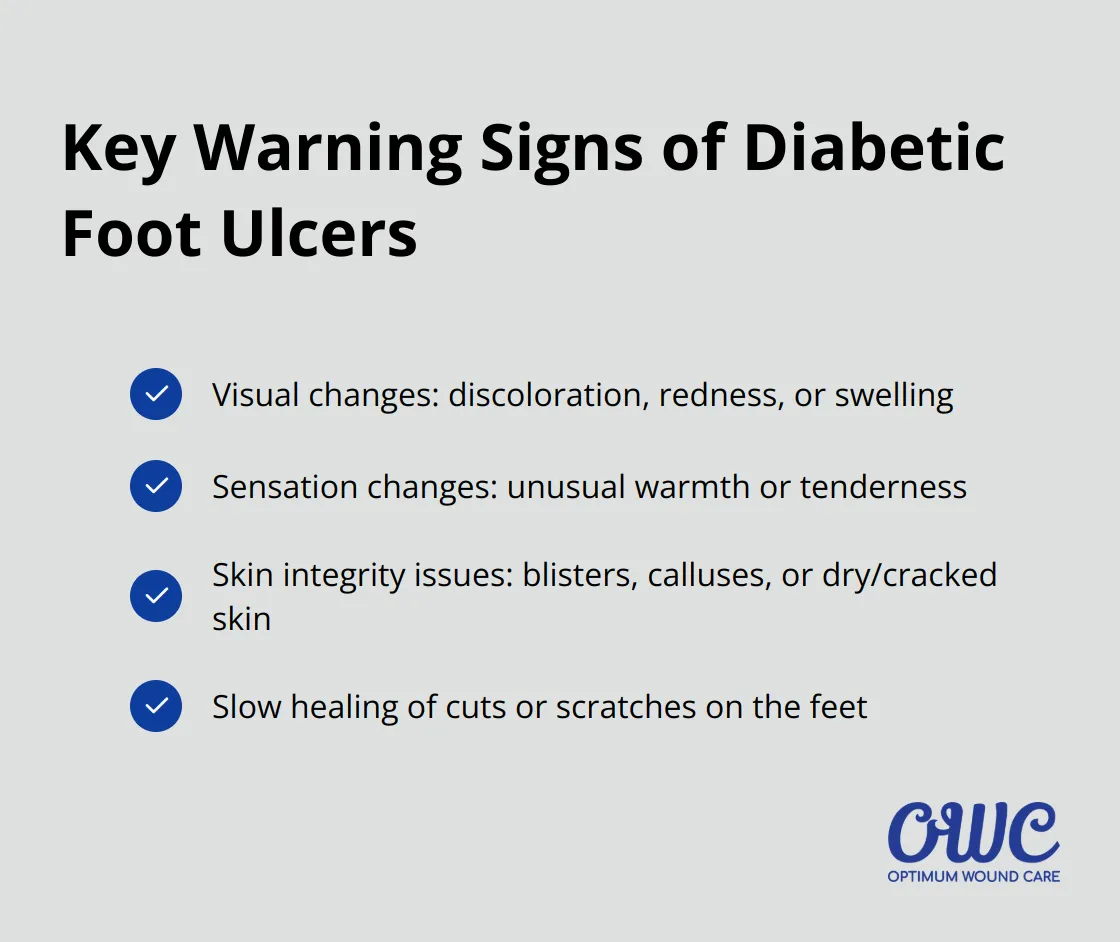
The first indicators of a developing foot ulcer often appear as visual changes. Patients should look for foot pain, discoloration or redness, swelling, and a feeling of heat or warmth (especially one foot feeling noticeably warmer than the other). Changes in skin color or texture are also important to note.
Sensation Changes
Patients must pay attention to how their feet feel. An unusual warmth in a specific area of the foot can indicate inflammation or infection. This warmth might accompany tenderness or pain. However, due to neuropathy, some diabetics may not feel pain even when an ulcer is present (a fact that underscores the importance of visual inspections).
Skin Integrity Issues
Diabetic feet are prone to skin problems that can lead to ulcers. Patients should watch for blisters or calluses that form easily, as these can quickly turn into open wounds if not properly managed. Dry or cracked skin on the feet is another red flag.
Slow Healing
Cuts or scratches on the feet that heal slowly could signal poor circulation and increased ulcer risk. A wound that doesn’t show improvement within a few days requires evaluation by a healthcare professional.
Daily Foot Checks
We emphasize the importance of daily foot checks to our patients. Patients with diabetes should remove both shoes and socks before the exam. Clean and dry feet thoroughly prior to foot exam or dressing change. Professional help is necessary if any of these signs appear – early intervention prevents serious complications.
The absence of symptoms doesn’t guarantee foot health. Regular check-ups with a wound care specialist (such as those at Optimum Wound Care) are essential for all diabetics, regardless of current foot condition. In the next section, we’ll explore risk factors and prevention strategies to help patients maintain optimal foot health.
How to Prevent Diabetic Foot Ulcers
Control Blood Sugar Levels
Maintaining stable blood glucose levels forms the foundation of diabetic foot ulcer prevention. High HbA1c levels increase the risk of lower limb ulcers in diabetic patients. Work closely with your healthcare provider to develop a personalized diabetes management plan that includes diet, exercise, and medication if necessary.
Manage Neuropathy
Peripheral neuropathy in diabetics is a known risk factor for foot ulceration. This can cause loss of sensation in the feet, making it hard to detect minor injuries that could develop into ulcers. Schedule regular neurological exams. If you experience numbness or tingling in your feet, consult a specialist immediately. Some patients find relief from neuropathy symptoms through vitamin B supplements or medications like gabapentin (always consult your doctor before starting any new treatment).
Improve Circulation
Poor foot circulation can slow healing and increase ulcer risk. A study in the Journal of Vascular Surgery showed that patients who engaged in regular low-impact exercises like swimming or cycling improved their peripheral circulation by up to 20%. Additionally, quitting smoking can dramatically impact foot health. Smoking significantly increases the risk of diabetic foot amputation compared with non-smoking.
Implement Daily Foot Care
A rigorous daily foot care routine is essential for diabetics. This includes:
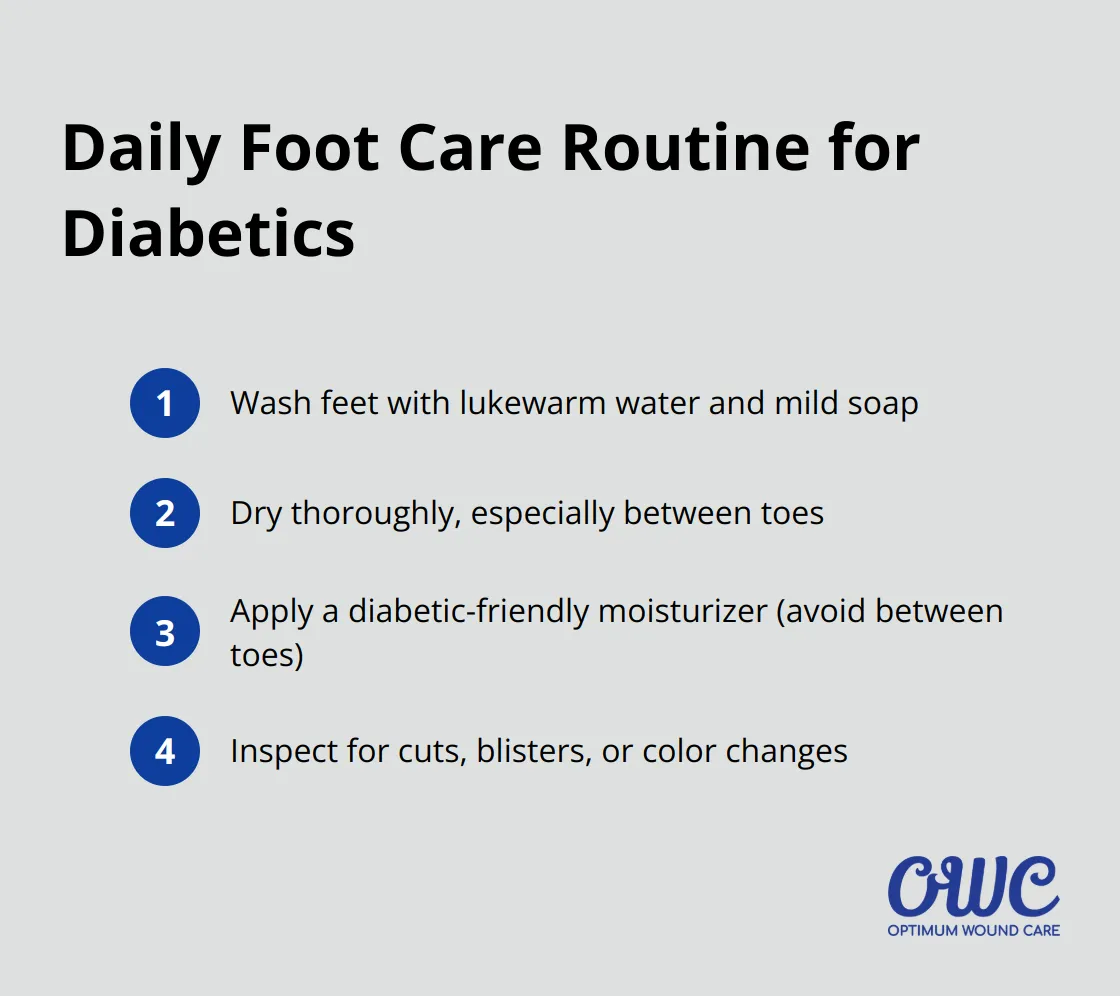
Use a mirror or ask a family member to help check hard-to-see areas. If you notice any concerning changes, contact a wound care specialist for prompt evaluation.
Schedule Professional Check-ups
Regular check-ups with a podiatrist or wound care specialist are vital. The American Diabetes Association recommends at least annual comprehensive foot exams for all diabetics. However, those with additional risk factors may need more frequent evaluations. Specialized diabetic foot assessments can catch potential issues before they become serious problems.
Final Thoughts
Diabetic foot ulcers present with early signs such as redness, swelling, unusual warmth, and slow-healing wounds. Patients must prioritize proactive foot care through daily inspections, proper hygiene, and appropriate footwear to reduce ulcer risks. These practices significantly decrease the chances of developing foot-related complications.
Self-care alone cannot guarantee foot health for diabetics. Regular check-ups with healthcare professionals provide comprehensive foot health management. Patients should seek expert help immediately upon noticing concerning changes in their feet.
We at OWC Center specialize in treating complex wounds, including diabetic foot ulcers. Our team, led by wound care specialist Mosayeb “Moe” Karimi, offers personalized treatment plans to promote faster healing (and improve quality of life). Early detection and prompt treatment of diabetic foot ulcers can significantly impact overall health and well-being.
