

How Vascular Ulcers Are Diagnosed and Treated
Vascular ulcers are a challenging medical condition that can significantly impact a person’s quality of life. These persistent wounds often require specialized care and treatment to promote healing and prevent complications.
At OWC Center, we understand the importance of proper diagnosis and effective vascular ulcer treatment. This blog post will guide you through the process of identifying vascular ulcers and explore the various treatment options available to patients.
What Are Vascular Ulcers?
Definition and Types
Vascular ulcers are chronic wounds that result from prolonged venous insufficiency, primarily affecting older adults. These wounds can cause pain, heal slowly, and potentially lead to serious complications if left untreated.
Two main types of vascular ulcers exist: venous and arterial. Venous ulcers (also known as stasis ulcers) are a common type of leg ulcer. They occur when veins fail to pump blood back to the heart efficiently. Arterial ulcers result from insufficient blood flow to the extremities due to narrowed or blocked arteries.
Risk Factors and Causes
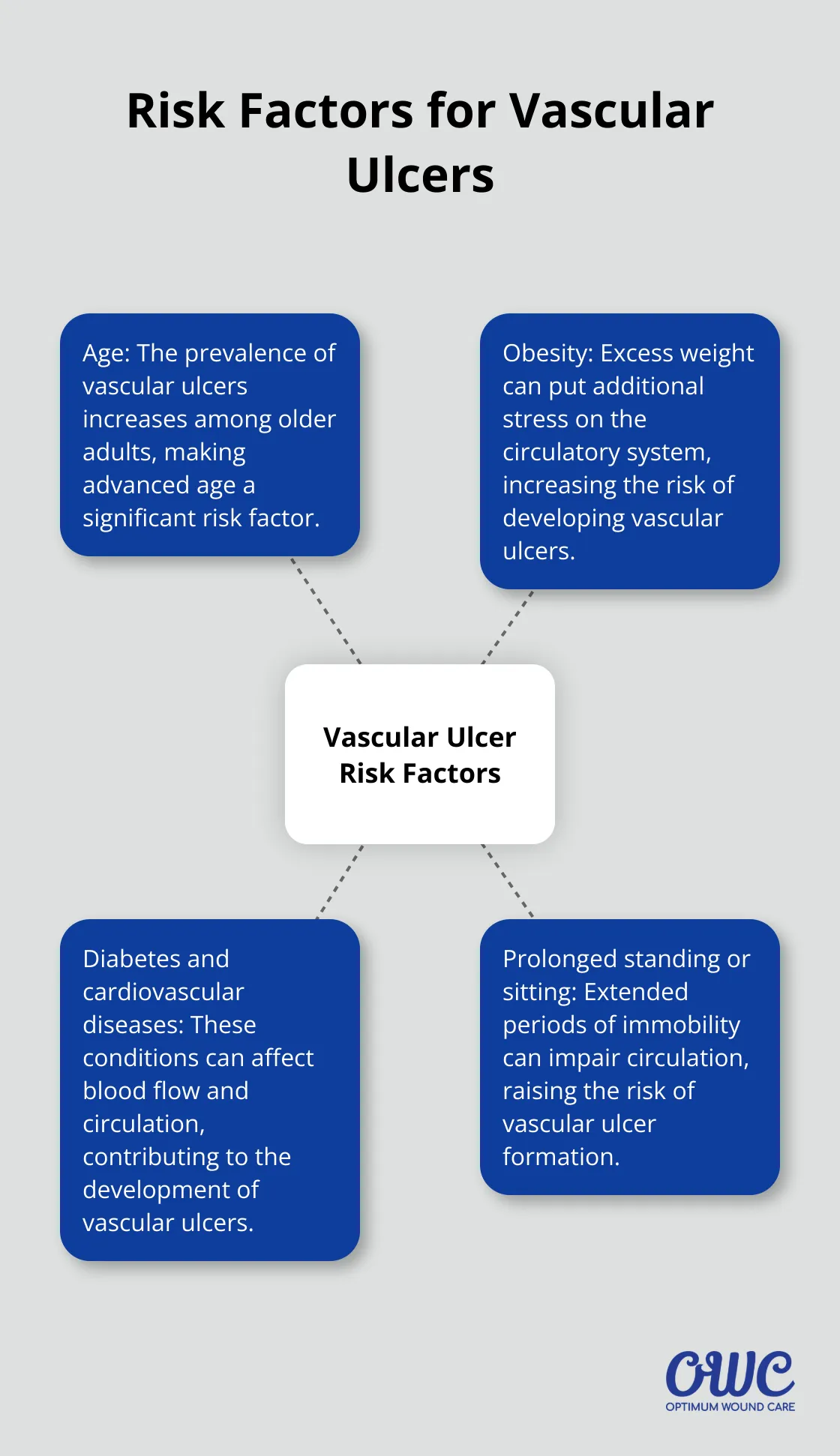
Several factors increase the risk of vascular ulcers:
- Age: The prevalence rises among older adults.
- Obesity
- Diabetes and cardiovascular diseases
- Prolonged standing or sitting
Recognizing Vascular Ulcers
Early identification of vascular ulcers is key for effective treatment. Here’s how to spot them:
Venous Ulcers:
- Location: Inner part of the leg, just above the ankle
- Appearance: Shallow with irregular edges
- Symptoms: Swelling, aching, and skin discoloration
- Pain: Often feels better when the leg is elevated
Arterial Ulcers:
- Location: Feet or toes
- Appearance: Punched-out look with well-defined edges
- Pain: Tends to worsen when the leg is raised
Many patients initially mistake these symptoms for normal signs of aging, which delays treatment. (It’s important to seek medical attention if you notice any persistent sores or wounds on your legs or feet.)
The Impact of Vascular Ulcers
Vascular ulcers can significantly affect a person’s quality of life. They often cause pain, limit mobility, and may lead to social isolation. In severe cases, they can result in amputation if left untreated.
The economic burden is also substantial.
Understanding vascular ulcers is the first step in addressing this challenging condition. The next crucial phase is proper diagnosis, which involves a combination of physical examination, medical history review, and specialized tests. Let’s explore how healthcare professionals accurately diagnose vascular ulcers to ensure appropriate treatment.
How Doctors Diagnose Vascular Ulcers
Physical Examination and Medical History
The diagnosis of vascular ulcers starts with a thorough physical examination. Wound care specialists inspect the affected area, noting the ulcer’s size, shape, color, and location. They examine the surrounding skin for signs of swelling, discoloration, or temperature changes.
Doctors assess overall circulation by checking pulses in the feet and legs and looking for signs of poor blood flow (such as hair loss on the legs or shiny, taut skin).
A detailed medical history provides valuable information. Doctors ask about risk factors such as diabetes, high blood pressure, and smoking. They also inquire about previous leg injuries or surgeries, as well as family history of vascular problems.
Advanced Diagnostic Tests
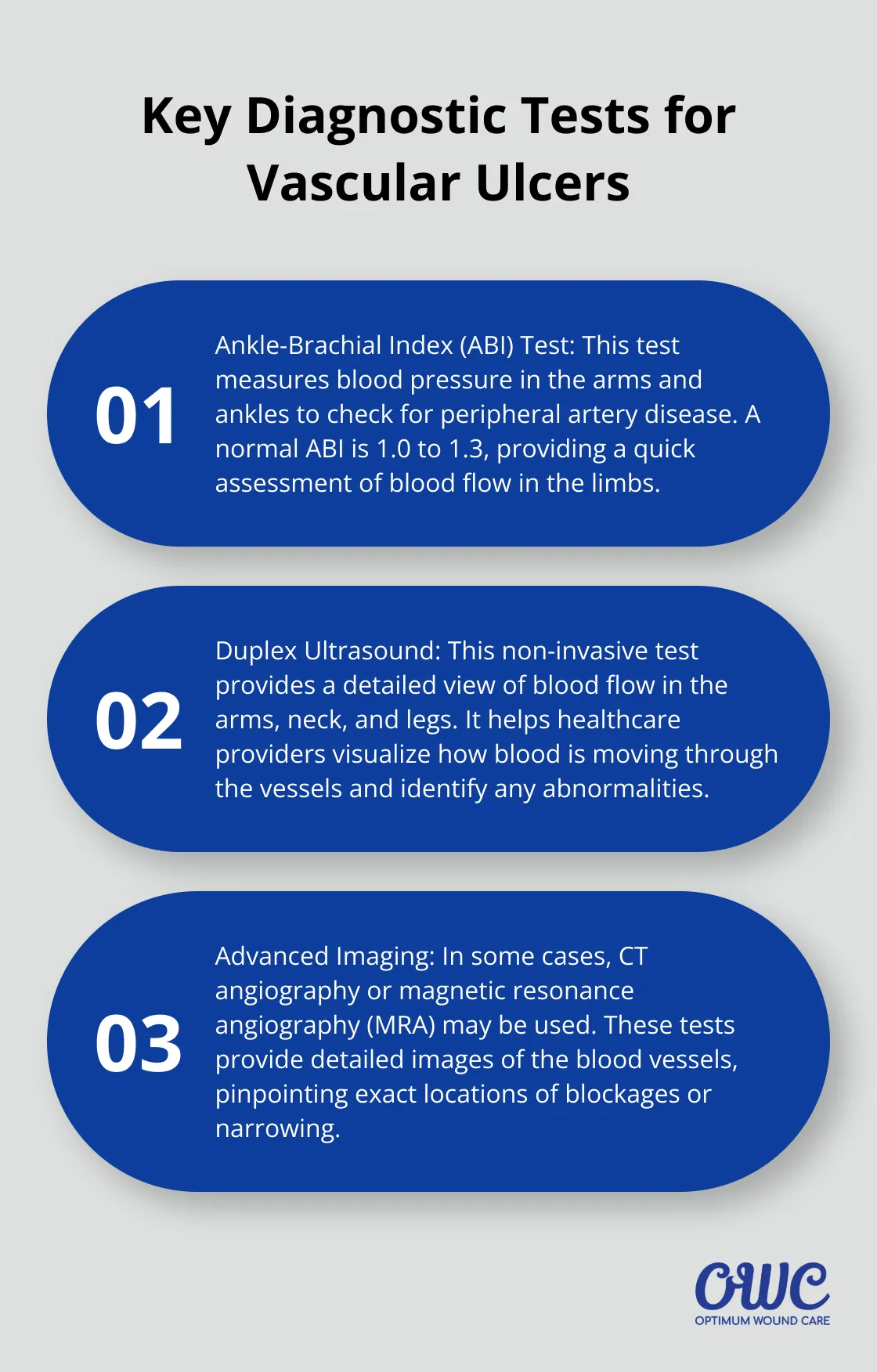
While physical examination offers important insights, additional tests often confirm the diagnosis. The ankle-brachial index (ABI) test measures blood pressure in your arms and ankles to check for peripheral artery disease. A normal ABI is 1.0 to 1.3.
For a more detailed view of blood flow, doctors may recommend a duplex ultrasound. This noninvasive test shows healthcare providers how blood flows in your arms, neck and legs.
In some cases, more advanced imaging such as CT angiography or magnetic resonance angiography (MRA) provides detailed images of the blood vessels. These tests pinpoint exact locations of blockages or narrowing.
Differentiating from Other Wound Types
Vascular ulcers can sometimes resemble other types of wounds. For instance, diabetic foot ulcers may appear similar but often have different underlying causes. Experienced wound care specialists know how to distinguish between various wound types.
Doctors consider factors such as wound location, appearance, and associated symptoms. Venous ulcers typically occur on the inner part of the lower leg, while arterial ulcers are more common on the feet and toes.
In some cases, a biopsy rules out other conditions such as skin cancer or vasculitis. This procedure involves taking a small sample of tissue from the wound for laboratory analysis.
The Role of Specialized Clinics
Specialized wound care clinics offer comprehensive diagnostic services for vascular ulcers. These clinics combine clinical expertise with advanced diagnostic tools to ensure each patient receives the most appropriate care for their specific condition.
With a clear diagnosis in hand, doctors can develop an effective treatment plan tailored to the patient’s specific needs. The next step involves exploring the various treatment options available for vascular ulcers, which we’ll discuss in the following section.
How to Treat Vascular Ulcers Effectively
Compression Therapy: A Primary Treatment Approach
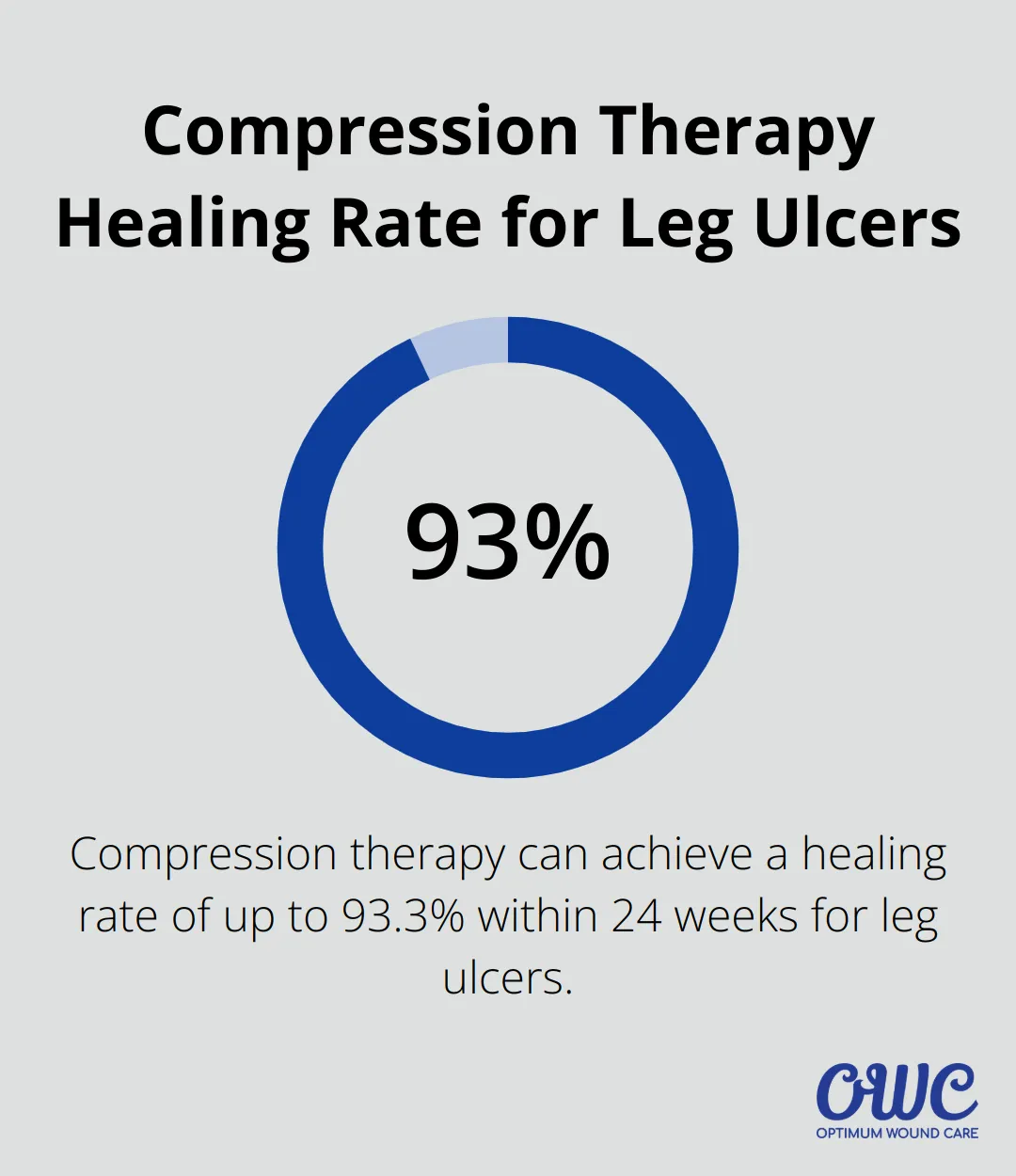
Compression therapy stands as the gold standard for managing venous ulcers. This method applies pressure to the legs, which improves blood flow and reduces swelling. Studies indicate that compression therapy can achieve a healing rate of up to 93.3% within 24 weeks for leg ulcers.
Various compression methods exist, including bandages, stockings, and pneumatic compression devices. The challenge lies in finding the right level of compression for each patient. Excessive pressure can harm patients, especially those with arterial issues.
Advanced Wound Care Techniques
For stubborn ulcers, advanced therapies often prove beneficial. Negative Pressure Wound Therapy (NPWT) utilizes a vacuum system to enhance healing. This technique reduces swelling and improves blood circulation, showing promising results in accelerating the healing process.
Bioengineered tissue products represent another cutting-edge treatment. These products can initiate the healing process in chronic wounds. While research continues, early results appear encouraging.
Addressing Underlying Vascular Issues
Treating the wound alone does not suffice. Tackling the root cause of vascular ulcers involves managing conditions like diabetes, high blood pressure, and venous insufficiency.
Some patients require surgical interventions. Procedures such as sclerotherapy or endovenous laser treatment can correct underlying venous problems. Severe cases of arterial ulcers might necessitate bypass surgery to improve blood flow.
Healthcare providers typically consider these interventions when conservative treatments fail to yield satisfactory results. Each case requires careful evaluation to determine the most appropriate course of action.
The Role of Patient Education
Patient education plays a vital role in successful treatment. Proper wound care techniques, signs of infection, and the importance of adherence to treatment plans form essential components of patient education.
Many patients don’t realize that simple actions can significantly impact healing. For example, elevating legs for 30 minutes, three to four times a day, can reduce edema and improve ulcer healing.
Specialized Care at Wound Clinics
Specialized wound care clinics (like Optimum Wound Care) offer comprehensive treatment services for vascular ulcers. These clinics combine clinical expertise with advanced treatment tools to ensure each patient receives appropriate care for their specific condition.
At such clinics, patients benefit from a multidisciplinary approach. This approach involves wound care specialists, vascular surgeons, and other healthcare professionals working together to create tailored treatment plans.
Treating vascular ulcers often requires a long-term process. It demands patience, consistency, and a strong partnership between the patient and their healthcare team.
Final Thoughts
Vascular ulcers challenge patients and healthcare providers. Early diagnosis and intervention lead to successful treatment outcomes. Healthcare professionals identify these wounds through physical examinations, medical history reviews, and advanced diagnostic tests.
Effective vascular ulcer treatment involves compression therapy, advanced wound care techniques, and addressing underlying vascular issues. Patient education impacts recovery significantly. Understanding proper wound care, recognizing infection signs, and adhering to treatment plans can accelerate healing (simple actions like regular leg elevation make a substantial difference).
Specialized wound care clinics provide comprehensive services for managing vascular ulcers. OWC Center offers expert care in a patient-centric environment. Our experienced clinical team combines cutting-edge techniques with personalized treatment plans to promote faster healing and improved quality of life.
