What Is Wound Debridement and When Do You Need It in Louisville?
Wound care is a critical aspect of medical treatment, and at OWC Center, we understand its importance. Proper wound management often involves a process called debridement, which can be crucial for healing.
For those seeking wound debridement in Louisville, it’s essential to understand what this procedure entails and when it’s necessary. This blog post will explore the ins and outs of wound debridement, helping you make informed decisions about your wound care needs.
What Is Wound Debridement?
Definition and Importance
Wound debridement is a medical procedure that removes dead, damaged, or infected tissue from a wound to promote healing. This treatment, performed at Optimum Wound Care in Louisville, helps patients recover faster and prevents complications. According to the National Institutes of Health (NIH), personalized wound care significantly improves healing times and overall patient outcomes.
The removal of non-viable tissue (also known as necrotic tissue or slough) creates an optimal environment for wound healing. This dead tissue can harbor bacteria and impede the growth of healthy new tissue.
Types of Debridement Techniques
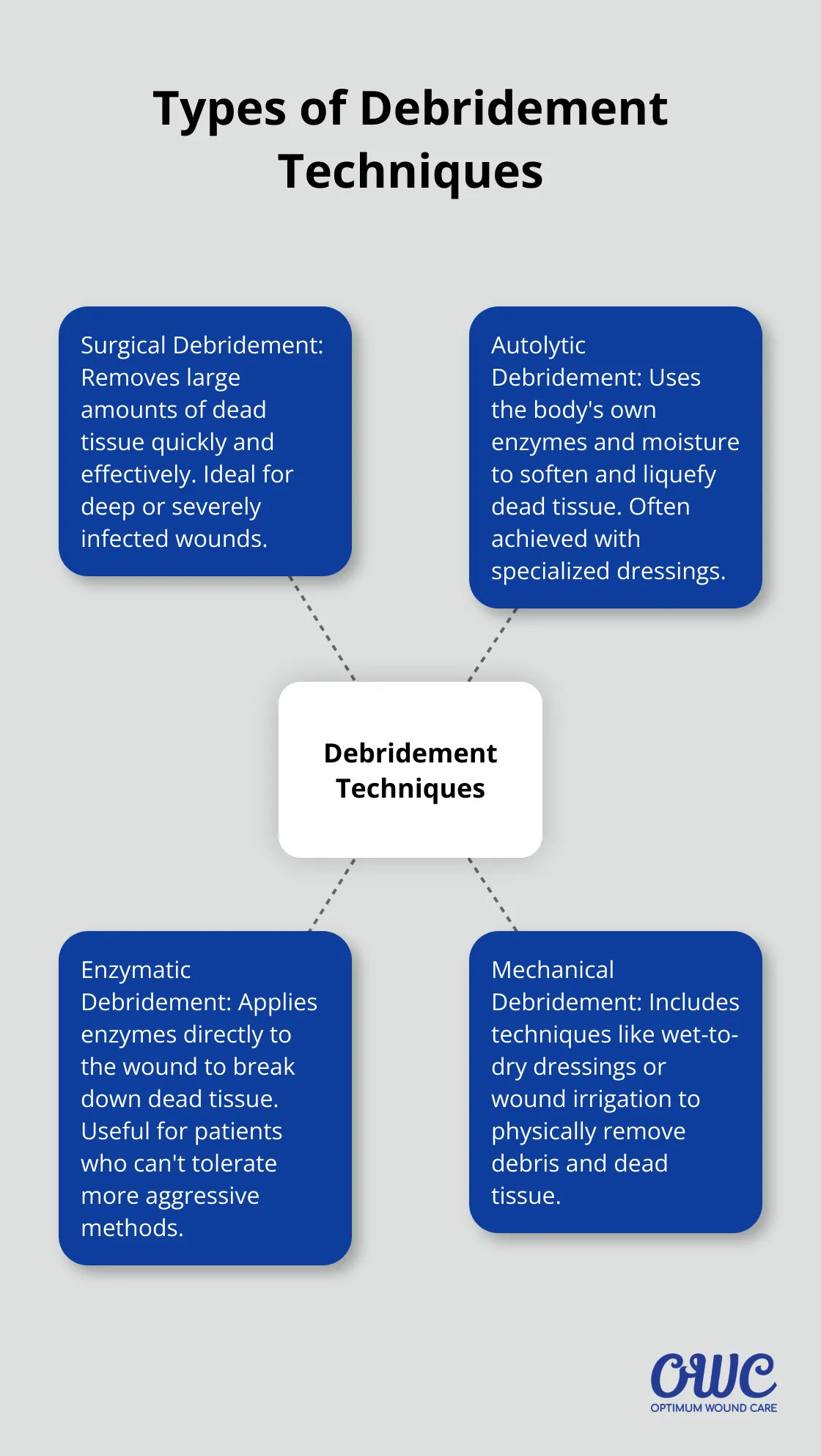
At Optimum Wound Care, we employ various debridement methods, each tailored to different wound types and patient needs:
- Surgical Debridement: This method removes large amounts of dead tissue quickly and effectively. It works particularly well for deep or severely infected wounds. The primary goal of debridement is to remove all the devitalized tissue from the wound bed to promote wound healing.
- Autolytic Debridement: This gentler approach uses the body’s own enzymes and moisture to soften and liquefy dead tissue. Specialized dressings often achieve this effect.
- Enzymatic Debridement: This technique applies enzymes directly to the wound to break down dead tissue. It proves useful for patients who can’t tolerate more aggressive methods.
- Mechanical Debridement: This includes techniques like wet-to-dry dressings or wound irrigation to physically remove debris and dead tissue.
The Science of Wound Healing
Debridement plays a key role in the wound healing process. It removes barriers to healing, allowing new, healthy tissue to form more quickly. It also reduces the risk of infection, a major concern in wound care.
The Centers for Disease Control and Prevention and Healthcare Infection Control Practices Advisory Committee provide guidelines for the prevention of surgical site infection, which includes proper wound care practices.
Professional Assessment
At Optimum Wound Care, our experienced team (led by Wound Specialist Mosayeb “Moe” Karimi) assesses each wound carefully to determine if and when debridement is needed. We use advanced techniques to ensure the most effective and comfortable treatment for each patient.
Early intervention in wound care makes a significant difference. If you have a wound that’s not healing properly, seek professional help. Proper wound management, including timely debridement, can accelerate your healing journey.
The next section will explore when wound debridement becomes necessary, helping you recognize the signs that indicate a need for this important procedure.
When Do You Need Wound Debridement
Types of Wounds That Require Debridement
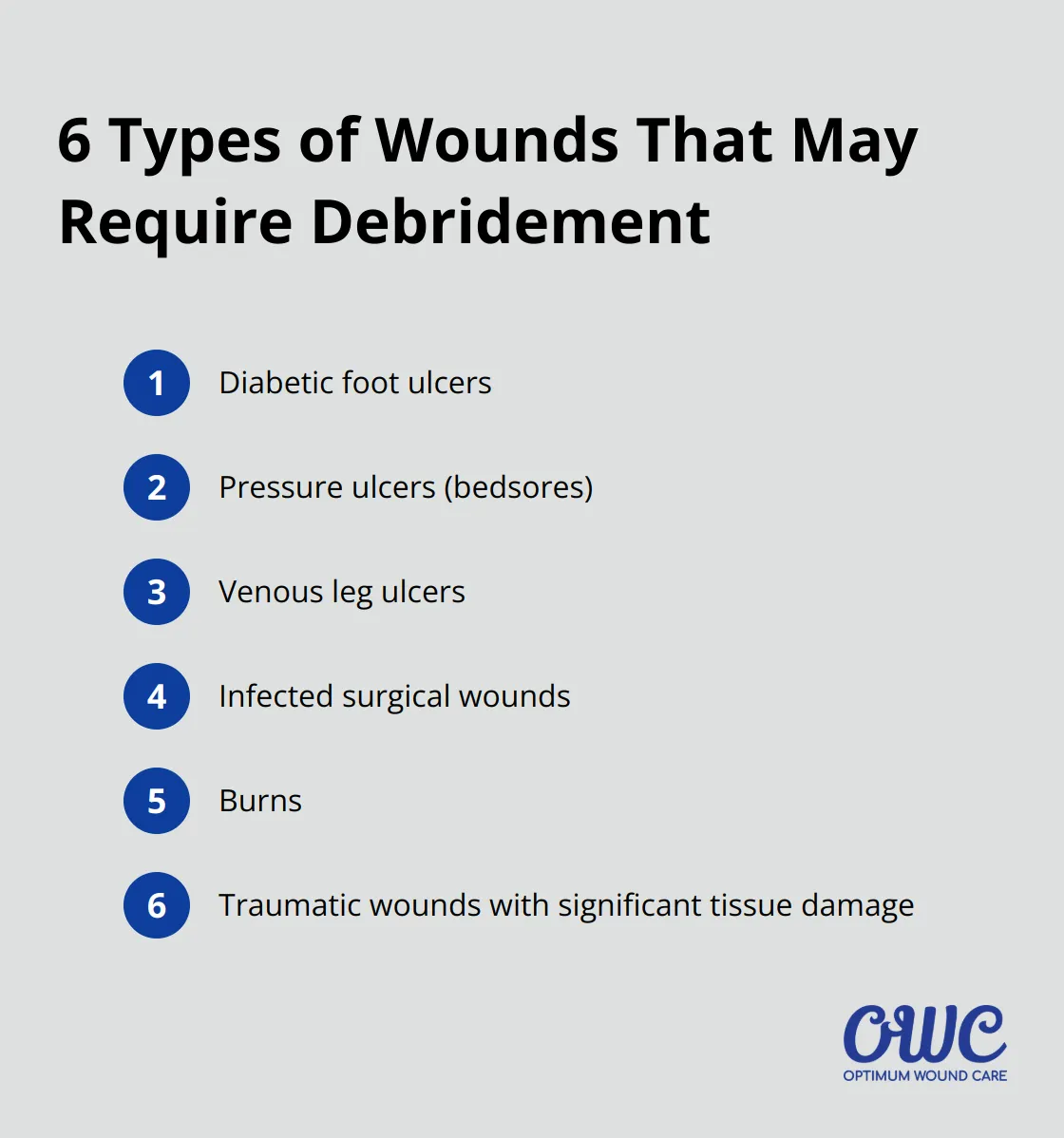
Wound debridement is not necessary for every wound. At Optimum Wound Care in Louisville, we assess each case individually to determine if debridement is the right course of action. Certain wounds are more likely to need debridement:
- Diabetic foot ulcers
- Pressure ulcers (bedsores)
- Venous leg ulcers
- Infected surgical wounds
- Burns
- Traumatic wounds with significant tissue damage
Wound debridement is a necessary part of treating the infective component of chronic wounds and should precede any antibiotic therapy. Our Louisville clinic observes this trend, especially among patients with diabetes or circulatory issues.
Signs That Indicate the Need for Debridement
Identifying when a wound needs debridement is essential for timely intervention. Here are some signs to watch for:
- Presence of dead (necrotic) tissue: This appears as black, brown, or gray tissue in the wound.
- Slough in the wound: This is a yellow or white tissue that adheres to the wound bed.
- Foul odor: An unpleasant smell often indicates the presence of dead tissue or infection.
- Lack of healing progress: If your wound hasn’t improved in 2-4 weeks, debridement might be necessary.
- Signs of infection: Redness, swelling, increased pain, or fever can indicate an infection that may require debridement.
At Optimum Wound Care, we use advanced diagnostic tools to assess wound depth and tissue viability, ensuring we only perform debridement when absolutely necessary.
Risks of Delaying Debridement
Postponing needed debridement can lead to serious complications. The risks include:
- Prolonged healing time: Dead tissue impedes the growth of healthy new tissue.
- Increased risk of infection: Necrotic tissue is an ideal breeding ground for bacteria.
- Sepsis: In severe cases, untreated wound infections can lead to life-threatening sepsis.
- Amputation: For diabetic foot ulcers, delayed treatment can result in the need for amputation.
Early diagnosis of wounds can lead to shorter healing times. This underscores the importance of seeking professional wound care promptly.
Professional Assessment
Our experienced team at Optimum Wound Care (led by Wound Specialist Mosayeb “Moe” Karimi) assesses each wound carefully to determine if and when debridement is needed. We use advanced techniques to ensure the most effective and comfortable treatment for each patient.
Early intervention in wound care makes a significant difference. If you have a wound that’s not healing properly, seek professional help. Proper wound management, including timely debridement, can accelerate your healing journey.
Now that we understand when wound debridement becomes necessary, let’s explore the actual process of wound debridement in Louisville.
How Does Wound Debridement Work in Louisville?
At Optimum Wound Care in Louisville, wound debridement is a meticulous process that promotes healing and prevents complications. Our approach combines thorough assessment, precise technique, and comprehensive aftercare to ensure the best possible outcomes for our patients.
Pre-Procedure Assessment
Before any debridement procedure, our wound care specialists conduct a detailed evaluation. This includes:
- Examination of the wound’s size, depth, and location
- Assessment of the patient’s overall health status
- Review of the patient’s medical history (focusing on factors that might affect healing, such as diabetes or circulatory issues)
During this assessment, we use advanced diagnostic tools to determine the extent of tissue damage and the presence of any infection. This might involve wound cultures, blood tests, or imaging studies. Our goal is to create a tailored treatment plan that addresses the unique needs of each patient.
The Debridement Procedure
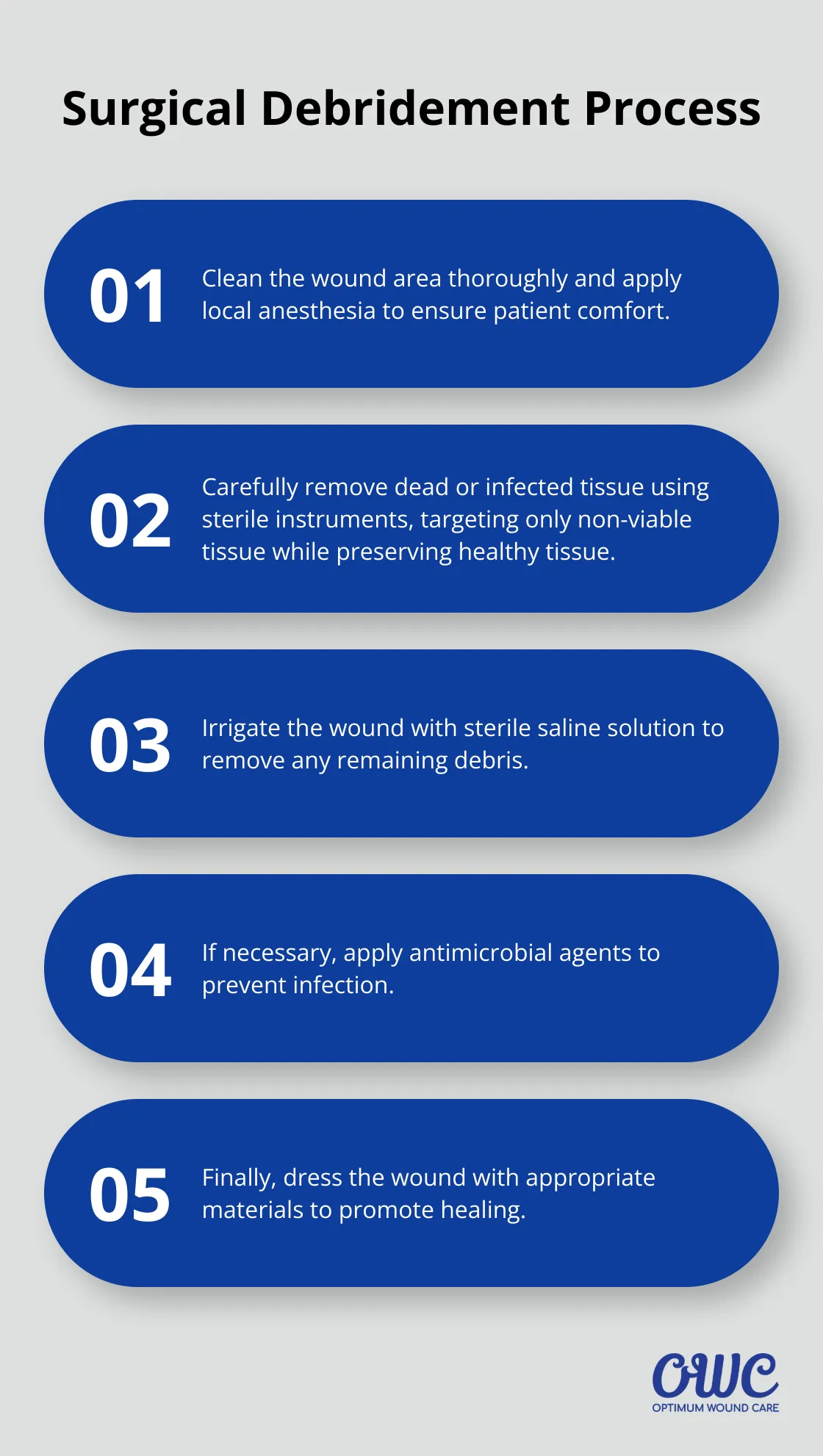
The actual debridement process varies depending on the wound type and the chosen method. For surgical debridement, which is often the most effective for large or severely infected wounds, we follow these steps:
- We clean the wound area thoroughly and apply local anesthesia to ensure patient comfort.
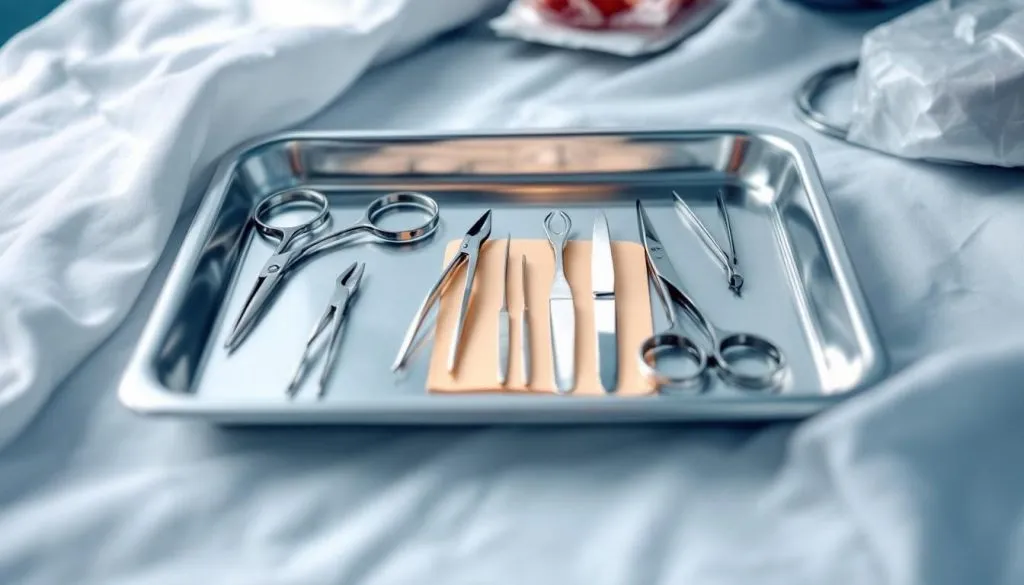
- Our specialist removes dead or infected tissue carefully using sterile instruments. This process is precise, targeting only non-viable tissue while preserving healthy tissue.
- We irrigate the wound with sterile saline solution to remove any remaining debris.
- If necessary, we apply antimicrobial agents to prevent infection.
- Finally, we dress the wound with appropriate materials to promote healing.
For less invasive methods like enzymatic or autolytic debridement, we apply specialized dressings or ointments that work over time to break down dead tissue. These methods often require multiple applications and regular wound checks.
Post-Procedure Care
After debridement, proper follow-up care is essential for optimal healing. We provide detailed instructions for wound care at home, including:
- How to change dressings
- Signs of infection to watch for
- When to seek immediate medical attention
We schedule regular follow-up appointments to monitor the wound’s progress. During these visits, we assess healing, adjust treatment plans if necessary, and perform additional debridement if required. Our team also addresses any concerns or questions patients may have about their recovery process.
Patient Education
At Optimum Wound Care, we emphasize patient education throughout the debridement process. We believe that informed patients are better equipped to participate in their own care, leading to improved outcomes. Our wound care specialists (led by Wound Specialist Mosayeb “Moe” Karimi) take the time to explain each step of the procedure and aftercare, ensuring that patients feel confident in managing their wound at home.
Final Thoughts
Wound debridement plays a vital role in effective wound care, promoting healing and preventing complications. This process creates an optimal environment for new tissue growth, which proves especially important for patients with chronic wounds or complex conditions. Professional care for wound debridement in Louisville ensures accurate assessment, appropriate treatment methods, and comprehensive management.
Optimum Wound Care offers expert wound debridement services tailored to each patient’s unique needs. Our experienced team utilizes advanced techniques and technologies to provide effective and comfortable treatment. We perform necessary debridement procedures and offer thorough aftercare instructions to facilitate optimal healing.
Patients with wounds that show signs of infection or fail to heal properly should seek professional help promptly. OWC care supports comprehensive wound care services, helping patients heal faster and improve their quality of life. Early action and expert treatment (including timely debridement) lead to the best possible outcomes for wound care patients.
