
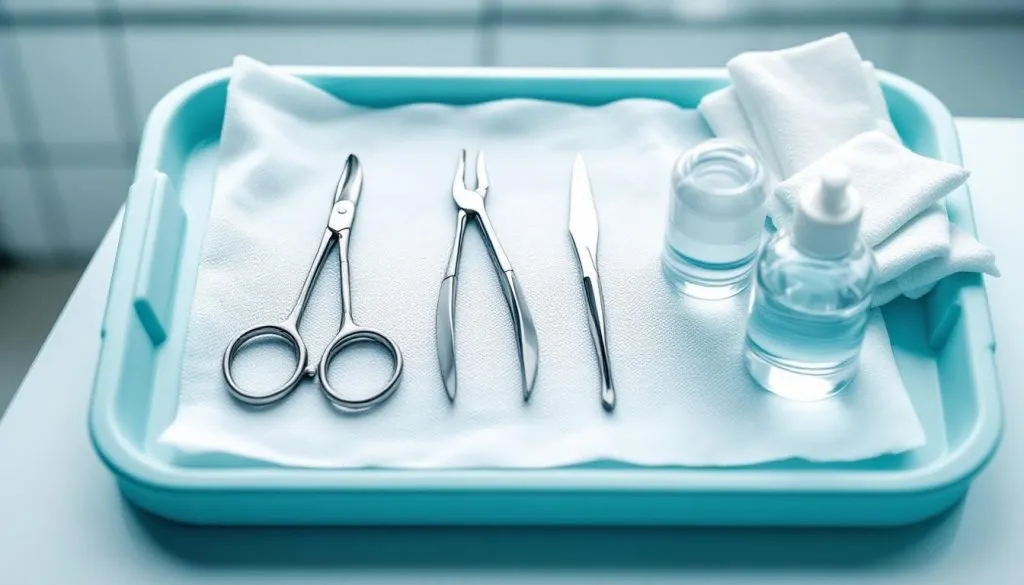
What Is Wound Debridement and When Is It Needed?
Wound debridement is a critical procedure in the healing process of certain injuries.
In this post, we’ll explore what wound debridement entails, the various methods used, and the situations that call for this important medical intervention. We’ll also discuss the potential risks of neglecting proper wound care and how professional assessment can make all the difference in recovery outcomes.
What Is Wound Debridement?
Definition and Importance
Wound debridement is a vital medical procedure that removes dead, damaged, or infected tissue from a wound to promote healing. This essential treatment helps patients recover faster and prevents complications. The process eliminates barriers to healing, creating an environment that allows healthy tissue to grow and the wound to close properly.
The primary goal of debridement is to remove all the devitalized tissue from the wound bed to promote wound healing. This significant improvement underscores the importance of timely and effective debridement in wound management.
Common Debridement Methods
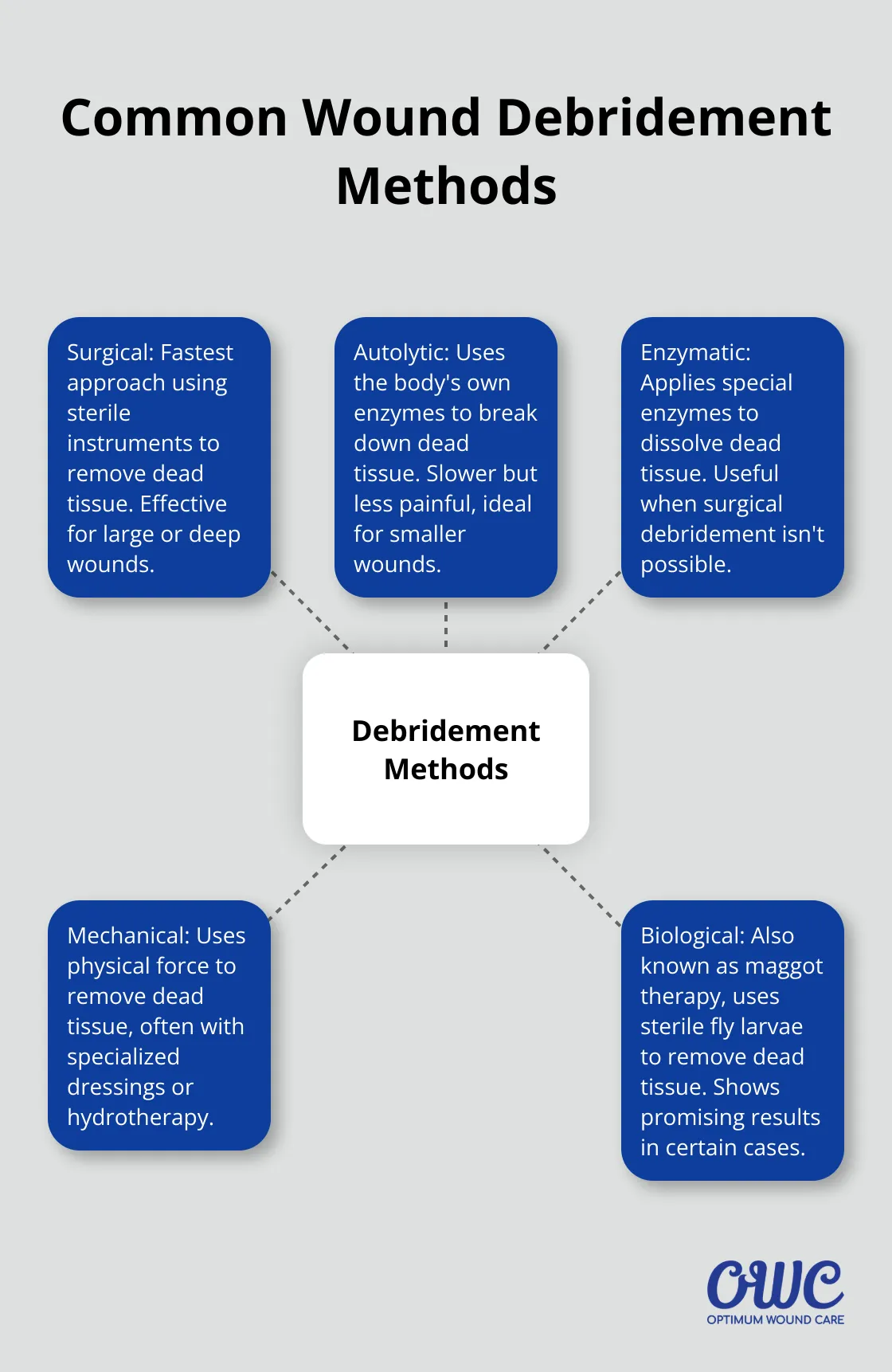
Several methods of wound debridement exist, each suited to different types of wounds and patient needs:
- Surgical Debridement: This method (the fastest approach) involves a healthcare professional using sterile instruments to remove dead tissue. It’s particularly effective for large or deep wounds.
- Autolytic Debridement: This technique uses the body’s own enzymes to break down dead tissue. It’s slower but less painful and can be ideal for smaller wounds.
- Enzymatic Debridement: Special enzymes are applied to the wound to dissolve dead tissue. This method proves useful when surgical debridement isn’t possible.
- Mechanical Debridement: This involves using physical force to remove dead tissue, often with specialized dressings or hydrotherapy.
- Biological Debridement: Also known as maggot therapy, this method uses sterile fly larvae to remove dead tissue and has shown promising results in certain cases.
The Impact of Proper Debridement
Effective debridement doesn’t just speed up healing; it also reduces the risk of complications. If the process of wound healing is impaired and the wound progresses, then the risks of infection, amputation, morbidity, and mortality increase, particularly in cases such as diabetic foot ulcers.
At Optimum Wound Care, we assess each wound individually to determine the most appropriate debridement method. Our experienced team uses the latest techniques and technologies to ensure optimal outcomes for our patients.
When Professional Debridement Is Necessary
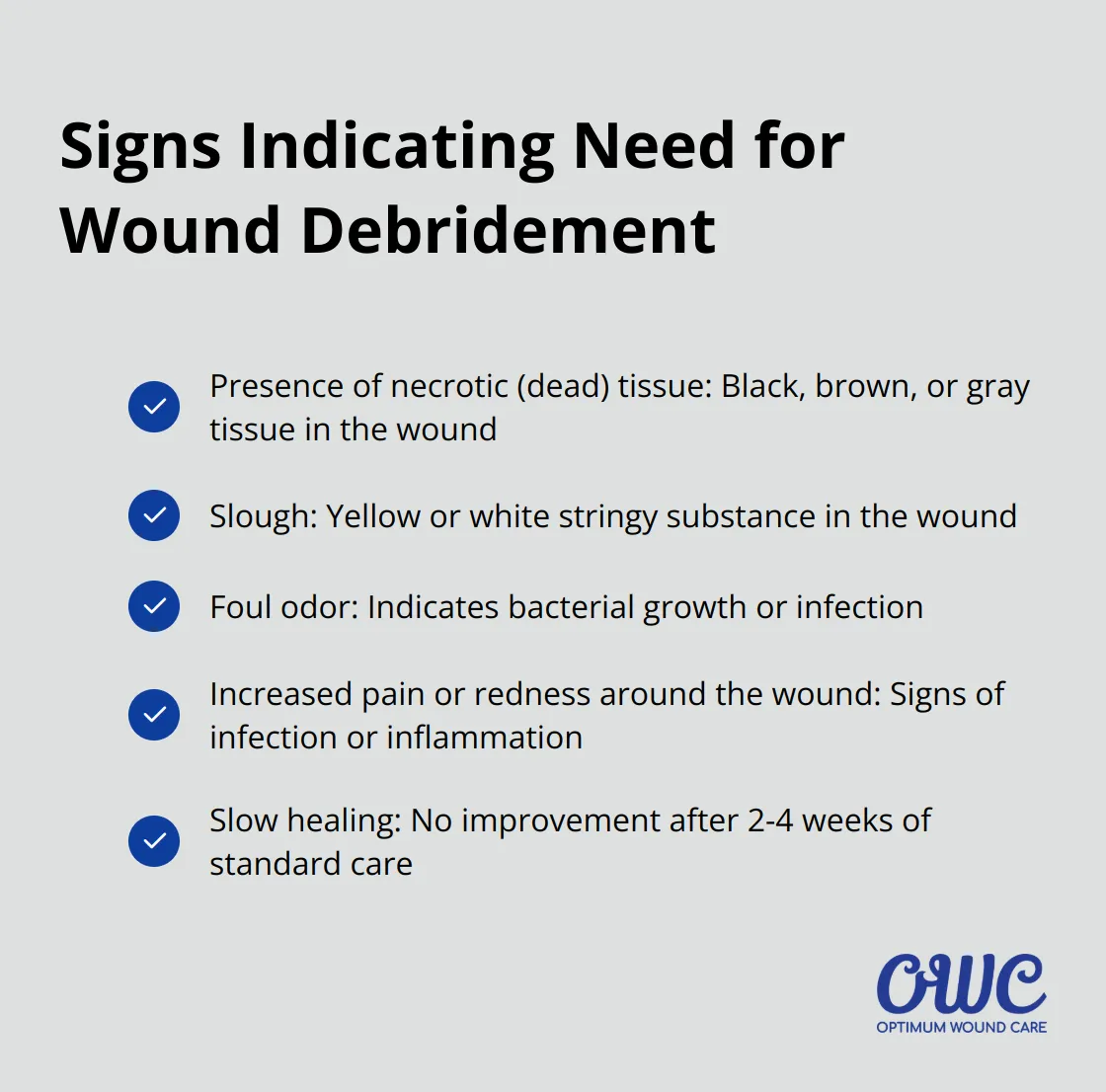
While some minor wounds can heal on their own, many require professional intervention. Signs that a wound may need debridement include:
- Slow healing or no improvement over time
- Presence of dead, dark, or discolored tissue
- Foul odor from the wound
- Increased pain or redness around the wound area
If you notice any of these signs, it’s important to seek professional help. Optimum Wound Care provides comprehensive wound assessments and tailored treatment plans to address specific needs.
As we move forward, it’s essential to understand when wound debridement becomes necessary and the potential risks of neglecting proper wound care. Let’s explore these aspects in the next section.
When Do You Need Wound Debridement?
Types of Wounds That Require Debridement
Wound debridement is not necessary for every wound. However, certain types of wounds often require this procedure:
- Diabetic foot ulcers
- Pressure ulcers (bedsores)
- Venous leg ulcers
- Severe burns
- Infected surgical wounds
Diabetic foot ulcers often need debridement due to poor circulation and nerve damage associated with diabetes. Principles of wound care include the use of topical agents with dressing and debridement, along with diabetes control.
Signs That Indicate the Need for Debridement
Identifying when a wound needs debridement is essential for proper healing. Watch for these signs:
Advanced imaging techniques can help assess wounds accurately, detecting issues that might not be visible to the naked eye.
Risks of Delayed Debridement
Failure to perform debridement when needed can lead to serious complications:
- Infection: Dead tissue provides an ideal environment for bacteria to thrive. Patients affected by necrotizing soft tissue infections represent a distinctive subset within the surgical site infection population, posing a grave threat.
- Delayed healing: Necrotic tissue and debris can physically obstruct new tissue growth.
- Sepsis: In severe cases, untreated wound infections can lead to sepsis (a life-threatening condition). According to the World Health Organization, there were 48.9 million cases and 11 million sepsis-related deaths worldwide in 2020, representing 20% of all global deaths.
- Amputation: For diabetic foot ulcers, delayed treatment can lead to amputation.
Professional Assessment is Key
While these signs can indicate the need for debridement, only a healthcare professional can make the final determination. If you’re concerned about a wound, don’t hesitate to seek professional help. Early assessment and treatment can make a significant difference in your healing process and overall health.
At Optimum Wound Care, our team of specialists uses state-of-the-art techniques to ensure optimal outcomes for our patients. Our experienced clinical team, led by Family Nurse Practitioner and Wound/Ostomy Specialist Mosayeb “Moe” Karimi, MSN, FNP, WOC, combines clinical expertise with cutting-edge wound care techniques to deliver personalized, effective treatment.
Now that we understand when wound debridement is necessary, let’s explore the actual process of wound debridement and what patients can expect during this procedure.
How Does Wound Debridement Work?
Pre-Procedure Assessment
At Optimum Wound Care, we conduct a thorough assessment before any debridement procedure. Our team evaluates the wound’s size, depth, and type of tissue present. We consider the patient’s overall health, including factors like diabetes or circulation issues that might affect healing.
We use advanced imaging techniques to get a detailed view of the wound. This helps us identify areas of dead tissue that might not be visible to the naked eye. We also take cultures to check for any bacterial infections that need to be addressed.
The Debridement Procedure
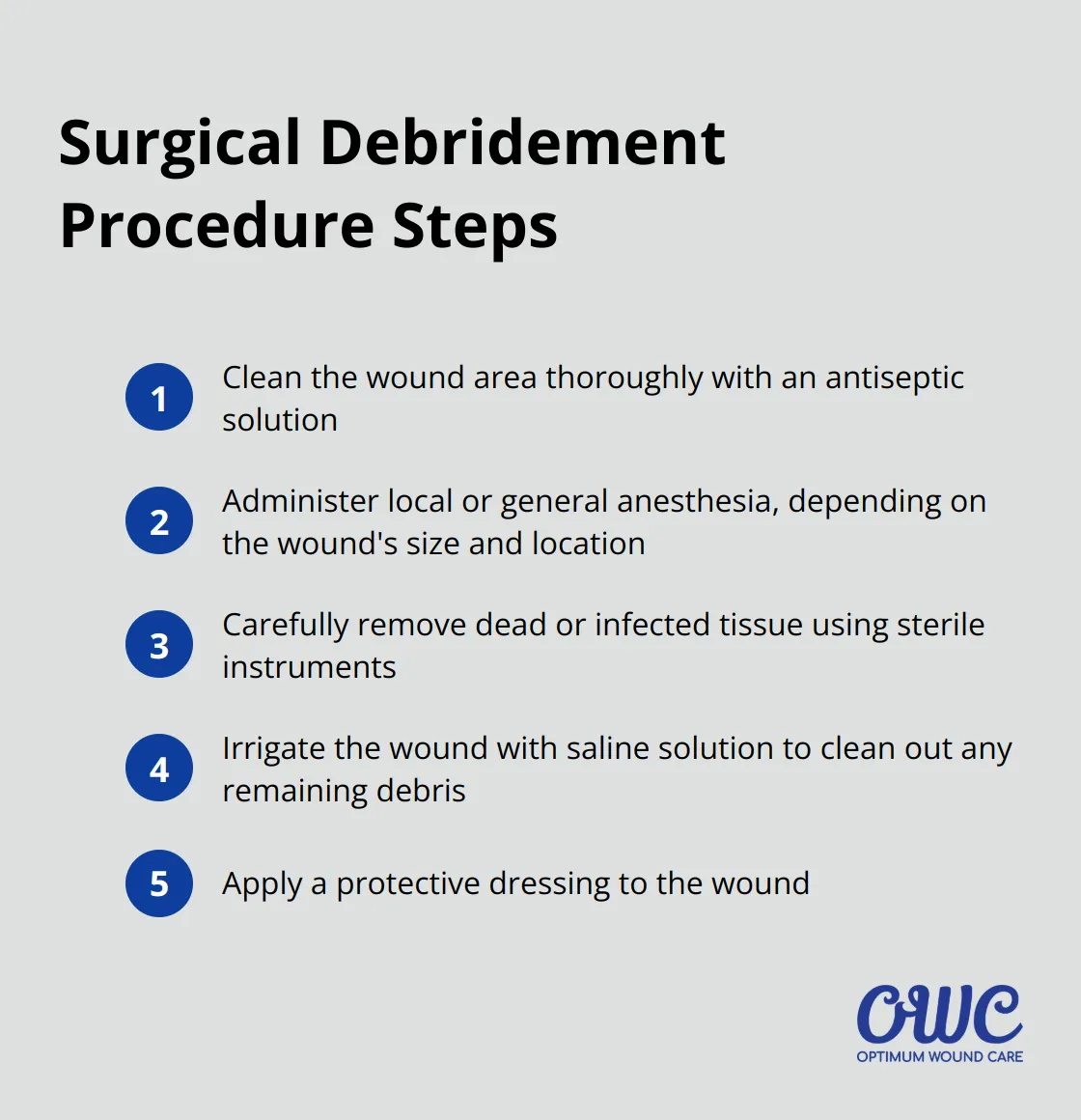
The actual debridement process varies depending on the method chosen. For surgical debridement (often the fastest and most effective method), we follow these steps:
For enzymatic debridement, we apply a specialized ointment containing proteolytic enzymes to the wound. This ointment breaks down dead tissue over time, usually requiring multiple applications.
Autolytic debridement involves the use of moisture-donating or moisture-retentive dressings such as hydrogels, hydrocolloids or transparent films. This method creates a moist environment, allowing the body’s own enzymes to break down dead tissue. This method is slower but can be less painful for the patient.
Post-Procedure Care
Proper follow-up care is essential for optimal healing after debridement. We provide detailed instructions to our patients, which typically include:
- Keep the wound clean and dry
- Change dressings as instructed (usually daily)
- Monitor for signs of infection (such as increased pain, redness, or fever)
- Attend follow-up appointments for wound checks and possible additional debridement
We also emphasize the importance of good nutrition in wound healing. A diet rich in protein, vitamins A and C, and zinc can significantly boost the body’s healing capacity.
Advanced Wound Care Techniques
At Optimum Wound Care, we use advanced wound care products that promote faster healing. We often employ negative pressure wound therapy (NPWT) after debridement. This technique aims to optimize the physiology involved in wound healing by applying sub-atmospheric pressure to help reduce excess fluid and promote healing.
Ongoing Treatment
Wound healing is not a one-time event. Depending on the wound’s severity and the patient’s overall health, multiple debridement sessions may be necessary. Our team at Optimum Wound Care provides ongoing support and adjusts the treatment plan as needed to ensure the best possible outcomes for our patients.
Final Thoughts
Wound debridement serves as a cornerstone in the healing process for many types of wounds. This procedure removes dead, damaged, or infected tissue, creating an optimal environment for healthy tissue growth and wound closure. Professional expertise proves essential in determining when wound debridement becomes necessary and selecting the most appropriate method for each unique case.
At Optimum Wound Care, we specialize in providing comprehensive wound management services tailored to each patient’s specific needs. Our experienced clinical team combines clinical expertise with cutting-edge wound care techniques to deliver personalized, effective treatment. We offer a range of advanced therapies, including various debridement methods, specialized dressings, and negative-pressure wound therapy.
Our patient-focused approach ensures that you receive the most appropriate care for your wound, with continuous monitoring and education to support your healing process. Whether you face a diabetic foot ulcer, a pressure wound, or any other complex wound, our team stands ready to help you heal faster and regain your quality of life. Don’t hesitate to reach out if you have concerns about a wound or need professional wound care services.
